SA Scientists Unlock Secrets Hidden in Birdsong
Good Things Guy | 24.02.2026 21:00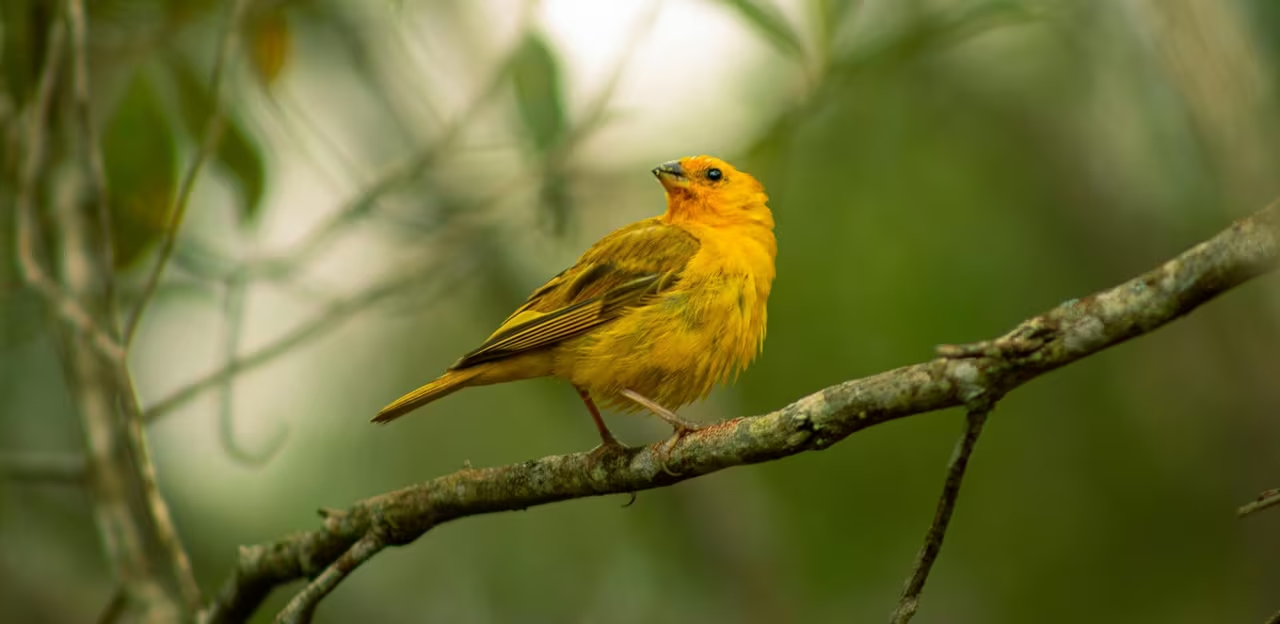
Birds are telling secrets that better help scientists understand and conserve one of the most threatened ecosystems in South Africa…
Free State, South Africa (24 February 2026) – Toka Mosikidi, a PhD student in the Department of Zoology and Entomology at the University of the Free State (UFS), focuses on the fascinating connection between birdsong and wetland environments.
Moskidi and his team have analysed data from what’s called the ‘dawn chorus’, the UFS shares.
The dawn chorus is the period just before and after sunrise when birds are at their chirpiest. In South Africa, this is amplified between September and February, when birds are in breeding season. In these months, they become more vocal in defending their territories and attracting mates.
“To humans it might sound like a bit of a cacophony,” says Moskidi. “But to the ‘real’ audience (females of the species), it is highly attractive and it’s important to still find the right mate among all those gentleman singers.”
Toka and his team use hours of recorded birdsong from three wetland species – the African yellow warbler, the lesser swamp warbler and the little rush warbler – to track exactly when they begin singing at dawn and how their timing shifts in response to changes in the environment.
They found patterns. On warmer mornings, the birds started singing earlier; on colder mornings, they delayed their performance. Other elements like humidity, wind, rainfall and even the brightness of the moon affected each species differently. Some sang earlier when it was windy. Others delayed their calls after rainy nights or full moons.
This data revealed valuable secrets around how birdsong corresponds with shifting conditions in the wetland.
Under the guidance of Prof Aliza le Roux in UFS’ Department of Zoology and Entomology, the research now feeds into a much bigger goal of understanding what birds can tell us about one of South Africa’s most threatened ecosystems.
“Birdsong can act as a proxy for wetland health,” Toka explains. “When there’s less variety or intensity in their calls, it could mean that the environment is under stress from pollution, water changes, or habitat degradation.”
This kind of data can help scientists monitor ecosystem health in a practical, non-invasive way which can ultimately help guide decisions about protection, restoration and management. In essence, the birds become early messengers revealing clues about the state of the water, vegetation and overall balance of life in the wetland!
“We were among the few to use acoustic monitoring like this in such an environment,” says Toka “It wasn’t easy, but it was incredibly rewarding.”
Sources: Linked above.
Don’t ever miss the Good Things. Download the Good Things Guy App now on Apple or Google.
Do you have something to add to this story? Please share it in the comments or follow GoodThingsGuy on Facebook and Twitter to keep up to date with good news as it happens, or share your good news with us by clicking here or click the link below to listen to the Good Things Guy Podcast with Brent Lindeque – South Africa’s very own Good Things Guy. He’s on a mission to change what the world pays attention to, and he truly believes there’s good news around us. In the Good Things Guy podcast, you’ll meet these everyday heroes and hear their incredible stories:
Or catch an episode of Good Things with Brent Lindeque or our Weekly Top 5 below. The videos here are always changing, updated with the latest episodes from these two shows. Both are part of Good Things TV, created to bring South Africans balance at a time when the news can feel overwhelmingly negative. Our goal is simple: to remind you that there are still so many good things happening in our country – and to leave you feeling a little more proudly South African.