The all-you-can-eat buffet that's France's favourite restaurant
BBC | 20.01.2026 20:00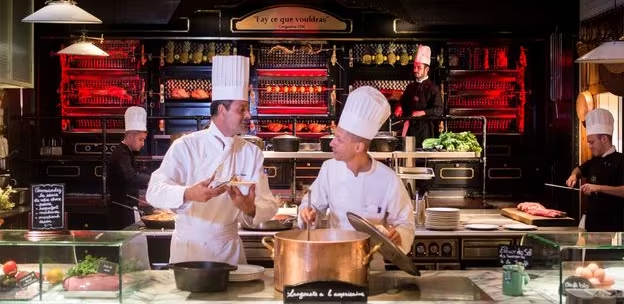
France's highest-grossing restaurant isn't a Michelin-starred bistro or a Parisian institution, but an all-you-can-eat buffet on the outskirts of Narbonne. Serving everything from pressed duck to truffles for just €67.50 (£58.74), Les Grands Buffets has become a national obsession and a pilgrimage for French food lovers.
As I pulled into a nondescript carpark opposite a McDonald's on the outskirts of Narbonne, in southern France, I didn't expect that in less than half an hour I would be watching one of the most revered rituals of French culinary theatre.
To the swelling soundtrack of Wagner's Ride of the Valkyries, a server emerged wearing a crisp white shirt and black apron, holding a whole roasted duck skewered vertically above a naked flame. He presented it to the assembled diners as if bearing the Olympic torch. Then a deep, dramatic voice rang out:
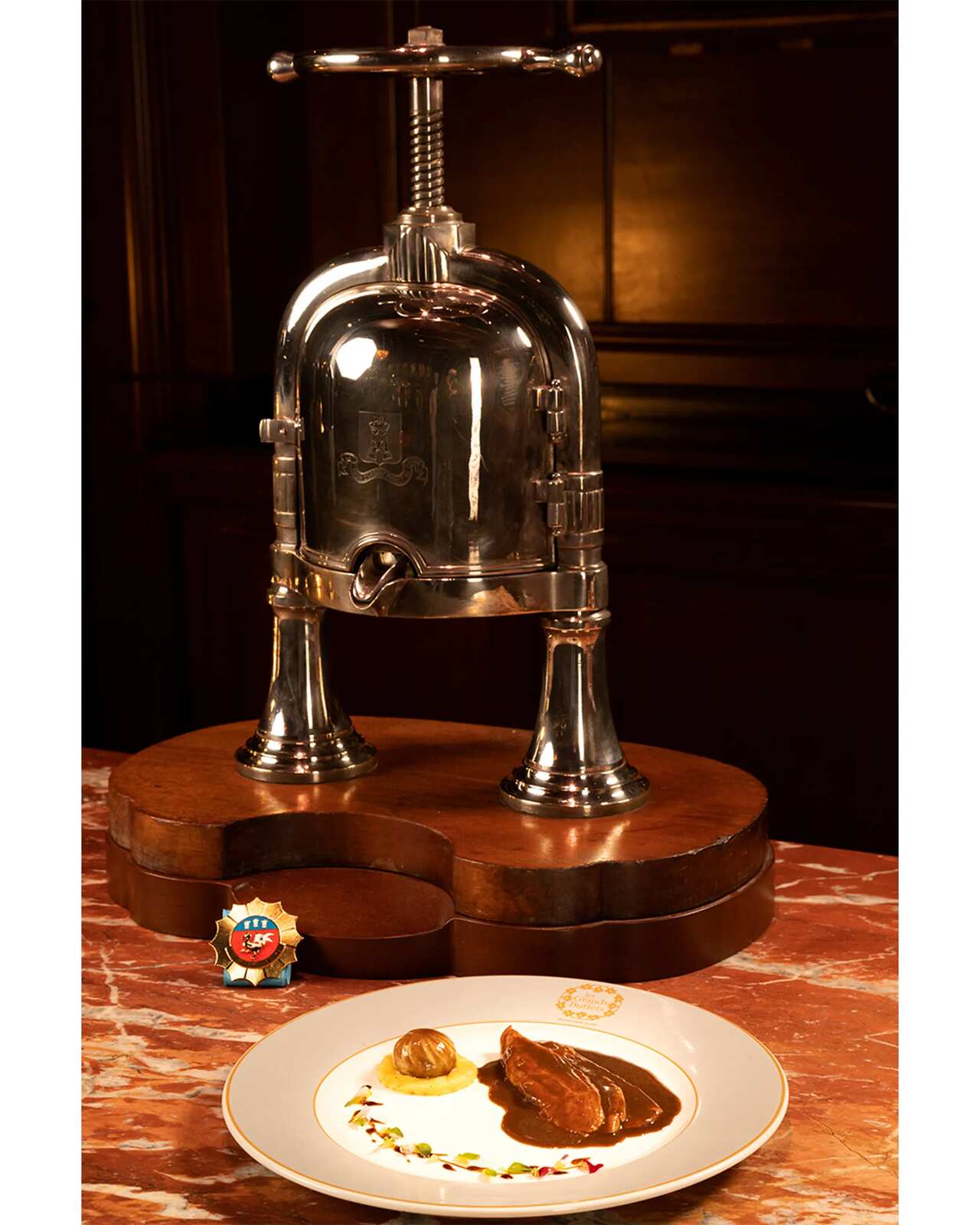
"Ladies and gentlemen, this is the ritual of canard au sang, a tradition conceived in the 19th Century. The duck is roasted on the spit and then brought to the table, where the duck master uses a silver duck press to crush the carcass, extracting the blood and natural juices, which are then incorporated into the sauce."
I watched as the duck was filleted on a marble workbench; the bones placed in a silver press and crushed. A dark liquid, unmistakably blood, trickled out, was flambéed and poured back over the meat.
However queasy it made me feel, there was no doubt that this is one of the great classics of French gastronomy – and one that rarely appears menus today, let along prepared with such ceremony. In fact, there is only one restaurant in France that serves pressed duck at every lunch and dinner service. And that's exactly where I was: Les Grands Buffets.
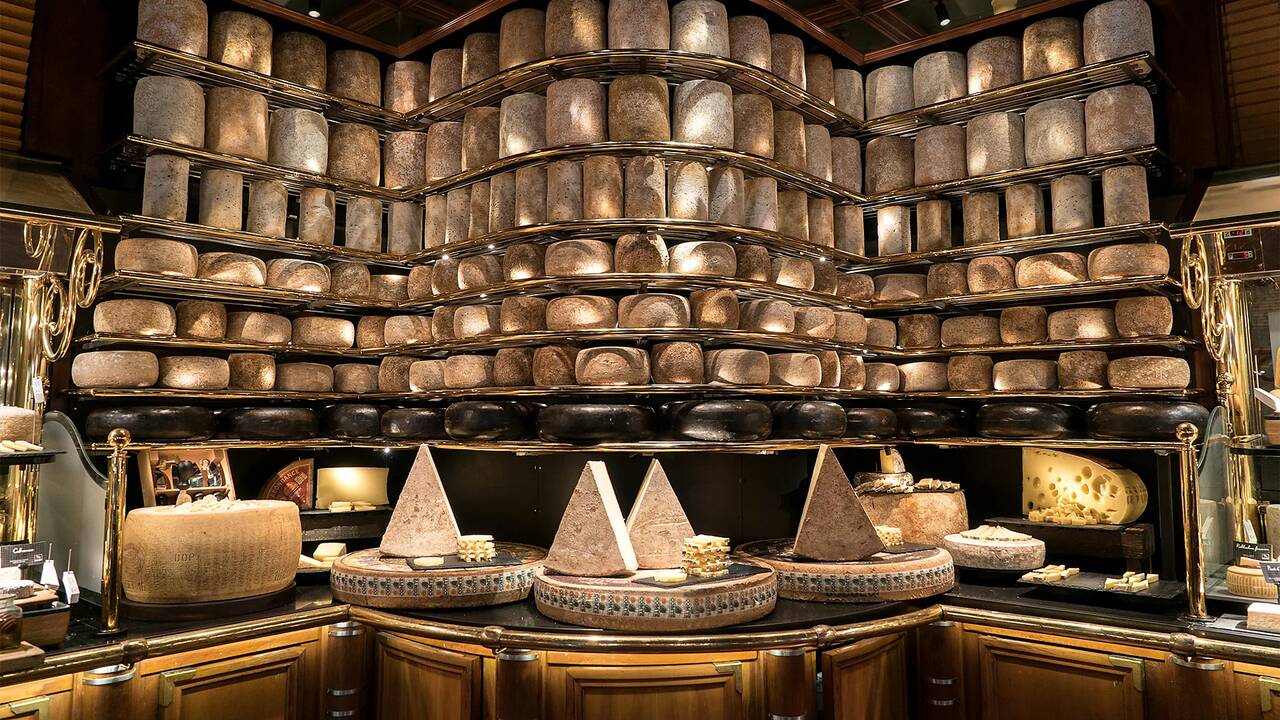
Literally translated as "The Big Buffets", Les Grands Buffets is exactly what it sounds like: an all-you-can-eat restaurant – and the largest of its kind in the world. Yet it's about as far removed from the suburban buffets of my Australian childhood as it is possible to be. Those certainly didn't feature a seven-tiered lobster fountain, nine varieties of foie gras, more than 50 desserts or hold the world record for the most varieties of cheese commercially available in a restaurant (111, to be precise). All of this comes for a fixed price of €67.50 (£58.78/ $79.17) per person.
Founded in 1989 by Louis and Jane Privat, Les Grands Buffets has become one of France's most coveted dining experiences – a place many French people hope to visit at least once in their lives. Reservations are made months in advance, and diners willingly make the pilgrimage to Narbonne, a town of around 56,000 people near the Spanish border. The restaurant welcomes around 400,000 diners a year – 86% of them French – and receives some 3.5 million reservation requests annually. With its 2025 revenue totalling €30m (£26m/$34.8m), it's also France's highest-grossing restaurant.
"When we opened, there wasn't a single all-you-can-eat buffet in France," Louis Privat told me as we toured the restaurant before the lunch service. "The concept just didn't exist."

Others had tried, he said, but found the model financially unviable. "Yet, what was very famous at that time was Club Med and its buffet." A qualified accountant, Privat believed he could make the concept stick. "I was a real fan of the formula, and I was sure that the general public would adore it, too."
The French, after all, have long embraced all-inclusive holidays. They are also fiercely proud of their national cuisine. Les Grands Buffets sits precisely at the intersection of those two impulses.
As the restaurant evolved, Privat discovered that, almost unintentionally, it was spotlighting recipes from a single chef above all others.
"I am deeply attached to traditional cuisine," he said. "So I asked our chefs to focus on classic dishes: tripe, daube [a Provençal stew], snails. One day, I realised that all the recipes we were working with were recorded in Auguste Escoffier's Le Guide Culinaire."
Often described as the father of modern French cuisine, Escoffier codified classical French cooking at the turn of the 20th Century. His Guide Culinaire, first published in 1903, remains a foundational reference for chefs worldwide.
In 2024, both Privat and executive chef Philippe Munos were inducted as disciples of Escoffier by the Fondation Auguste Escoffier, which preserves the chef's legacy. The foundation also recognised Les Grands Buffets as a Vitrine Mondiale de la Cuisine d'Auguste Escoffier, or a "global showcase for Auguste Escoffier's cuisine".
"The restaurant is genuinely done in the spirit of Auguste Escoffier," said Michel Escoffier, the chef's great-grandchild and honorary chairman of the foundation
That spirit continues to shape the menu. Late last year, Les Grands Buffets introduced truffles, making it the only all-you-can-eat buffet in the world to serve the prized and pricey ingredient, according to Privat.
"Since Escoffier presents 1,200 truffle recipes in his repertoire, we felt that if we are to continue to be recognised as the global showcase of his cuisine, we had to feature truffles," he said.
At the dedicated truffle station, I picked up a truffle and foie gras soup topped with puff pastry, as well as a plate of organic scrambled eggs finished with generous shavings of black truffle. The dish was cooked in front of me at a wide, polished wood counter.
 Getty Images
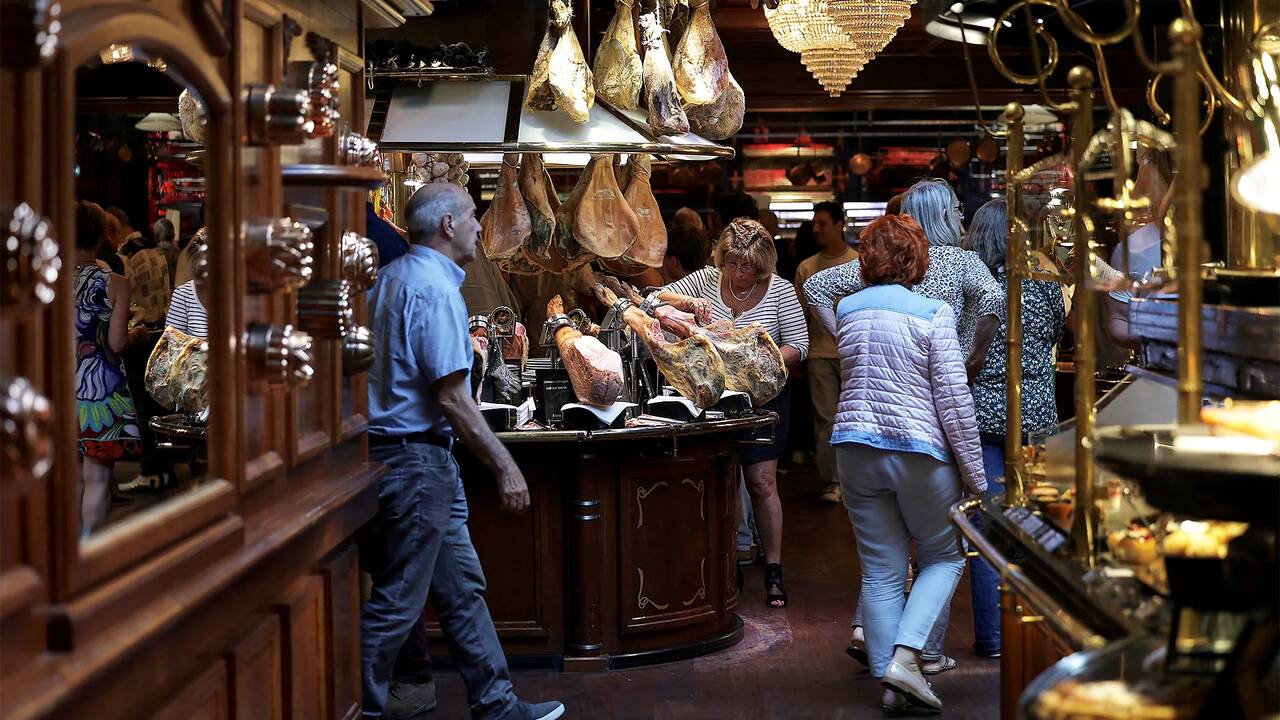
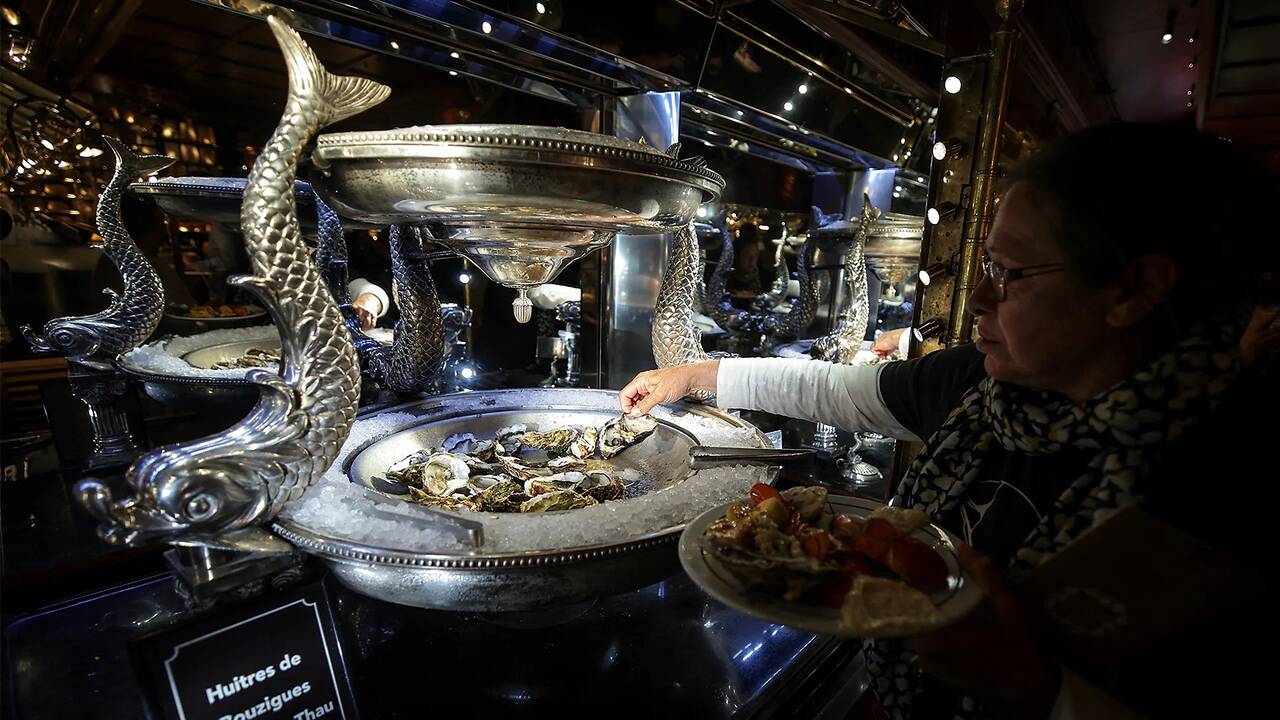
I was struck by how very civilised it all was. There were no elbows out at the lobster fountain, and people served themselves a respectful half-dozen oysters at a time rather than piling a mountain onto their plates. They queued patiently for hot dishes made to order – an indulgent list that included poached lobster, tournedos Rossini (beef filet with truffle and foie gras) and a south-western French classic, cassoulet from nearby Castelnaudary.
When we opened, there wasn't a single all-you-can-eat buffet in France. The concept just didn't exist – Louis Privat
Around 150 dishes are drawn directly from Le Guide Culinaire, each annotated with its original page number. I was careful to pace myself as I didn't want to miss out on cheese and dessert; luckily, diners are given time to let courses settle. For the lunch service, guests arrive in 15-minute increments from noon and can stay until 16.30. At dinner, doors open at 19:00 and close at midnight.
Beyond the food, Les Grands Buffets also celebrates the arts de la table, or the staging and setting of a meal. Privat has assembled an impressive collection of French culinary heritage, including a silver Christofle duck press from Paris' legendary La Tour d'Argent restaurant, purchased at auction for €40,000 ($46,432) in 2016, and a silver trolley from Nice's Belle Epoque icon, Le Negresco, now used to prepare crêpes Suzettes tableside.
Four dining rooms branch off from the main service area, where tables are set with white tablecloths, polished cutlery and glassware. Each has its own theme; one is named for British sculpture artist Ann Carrington, whose works hang in institutions such as London's Victoria & Albert Museum. Privat purchased one of her bouquets, made out of cutlery, from her stand at Portobello Market a decade ago; it now occupies pride of place in the room.
More like this:
"He had a good eye as he chose the best piece," said Carrington. "The restaurant is also the perfect location for a sculpture made from cutlery, how fitting!"
But I couldn't leave without asking about wastage. Privat, forever the accountant, he has meticulously tracked exactly how much people eat: for instance, an average of 49g of foie gras per person. Leftovers from the buffet are kept for the team; more than 100 employees receive lunch and dinner every day. And while some waste is inevitable, it remains minimal: "We throw out 10kg a day and serve 1,000 people, so that's 10g per person wastage," Privat said.
Food fashions, he added, matter little when the menu is rooted in classics. That said, the restaurant has upped its macaron production in recent years to 500,000 annually and is about to scrap the crudités counter. "No one eats them anymore," he shrugged.
Change is also coming to the building itself. Privat is undertaking a multi-million-euro expansion, working with French architect Jacques Garcia on a new entrance styled like a gallery from the Napoléon III-era. He is also opening a boutique selling regional crafts. Despite its low-slung exterior – easily mistaken for a bowling alley – the Narbonne location remains key to its success. "We couldn't afford to be increasing in size if we were in Paris," Privat said.
Today, Les Grands Buffets is one of Narbonne's biggest tourism drivers. Diners spend an average of 3.5 days in town, exploring Roman remains and a soaring Gothic cathedral alongside their reservation.
"Les Grands Buffets couldn't be anywhere else," said Carol Delga, president of the Regional Council of the Occitanie region, where Narbonne is situated. "Occitanie is the land of eating well."
She believes its appeal lies in access, offering people the opportunity to taste products they don't usually encounter in everyday life.
She adds: "And when a restaurant offers the world's largest cheese platter, it's enough to make anyone want to visit – and to come back again."
If you liked this story, sign up for The Essential List newsletter – a handpicked selection of features, videos and can't-miss news, delivered to your inbox twice a week.