This Beloved Chinese Condiment Makes Prime Rib 100x More Delicious
The Kitchn | 15.12.2025 23:24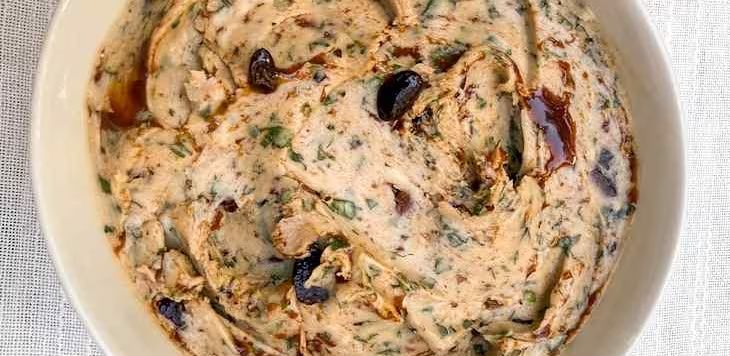
We independently select these products—if you buy from one of our links, we may earn a commission. All prices were accurate at the time of publishing.
Prime rib deserves your A-game — the kind of attention you give any holiday centerpiece dish. You wouldn’t throw it together on a whim: There are steps to follow with intention, especially with a cut that’s special and let’s admit, a splurge. But there is one small step you can take that will deliver a giant result, and it’s surprisingly quick and easy: Make a compound butter that’s built around fermented black soybeans.
If you’ve ever ordered anything with black bean sauce from your local Chinese takeout spot, then you’ve already met fermented black beans (aka douchi) and the salty, funky, deeply savory punch they bring. Their umami is so immediately satisfying that the first time I blended them into butter, I knew I was onto something that would turn my prime rib from impressive to unforgettable.
Slathering this compound butter over a prime rib doesn’t just season the meat while it roasts, it also infuses the drippings for an umami-rich gravy that everyone will want to sop up with bread or drench over their mashed potatoes. If your recipe doesn’t call for butter on the roast, you can mold the butter into a log and slice pats to melt onto individual servings. But it doesn’t stop there: Toss the flavorful butter with steamed green beans or carrots, or rub it under the skin of a chicken before it goes into the oven, or even spread it on toasted bread topped with chopped tomatoes for an unexpected spin on bruschetta. You can take the compound butter in whatever direction you like: Add a little chile for heat, stir in fresh herbs, or include minced scallions for a pungent note.
I’ve made black bean paste from scratch using fermented black beans, and it’s delicious, but it does take a little prep and stovetop time with aromatics and seasonings. So when time is pressed, a full menu is on the docket, and every burner is claimed, I take an easier route by using prepared black bean garlic sauce. It’s easily found in most Asian grocery stores, and still brings the same savory notes. The sauce, (really a thick, concentrated, paste), is ready to be stirred into softened butter. It will taste like you spent hours building bold complex flavor when really all you did was open a jar.
1. Soften butter. Cut 2 sticks (a half-pound) of unsalted butter into 4 thick pats and place in a medium bowl. Let the butter soften for 20 to 30 minutes (depending on how warm your kitchen is). The butter should be firm but soft enough to press your thumb into and leave a clear indent.
2. Chop herbs. Finely chop about 1/2 cup of picked fresh parsley leaves — once chopped, it comes out to roughly 2 tablespoons. You want the pieces small so they blend evenly into the butter.
3. Incorporate parsley and black bean paste. Break up the butter into small pieces using the tines of a fork. Add the parsley and 2 tablespoons fermented black bean sauce (I like Lee Kum Kee brand). Smash and stir the butter and add-ins together until smooth and spreadable.
4. Use now or later. Use the butter immediately to slather over the top of your prepared prime rib and roast as directed; or store it covered in the refrigerator until ready to use, for up to 3 days.
- More about fermented black beans: These are actually black soybeans, so don’t mistake them for the black turtle beans you find in grocery stores and are commonly used in soups and stews. You’ll find fermented black beans in vacuum-sealed packages at most Asian grocery stores or online, and they’re surprisingly inexpensive.
- You can make your own paste: If you decide to make your own fermented black bean paste from scratch, make certain to rinse the beans first to help mellow their saltiness and soften them slightly. Sauté them with aromatics and finish with a splash of rice wine and soy sauce. I love the version Andrea Nguyen shares on her site; it’s straightforward and simple. For my own homemade batch I include minced ginger and finely chopped scallion whites for added pungency.
- Stick with unsalted butter. The salty nature of fermented black beans means you won’t want additional salinity. You can speed the process by using the microwave in very short intervals (5 to 10 seconds), but be careful — you don’t want any of the butter to melt.
- Freeze for advance prep. The herbs make it necessary to use up this butter in a few days if you are storing it in the refrigerator, but if you freeze it it will last for up to 5 to 6 months.
- Play with flavors. Switch up the herbs if you like: Thyme and rosemary or cilantro can work — but pay attention to amounts. Since rosemary and thyme have stronger flavors than parsley, you’ll want to use less. And for rosemary, make sure to mince it very finely; the needle-like leaves will be tough unless chopped well.