If We All Work Together, We Could Get a Pangolin Emoji!
Good Things Guy | 23.02.2026 18:00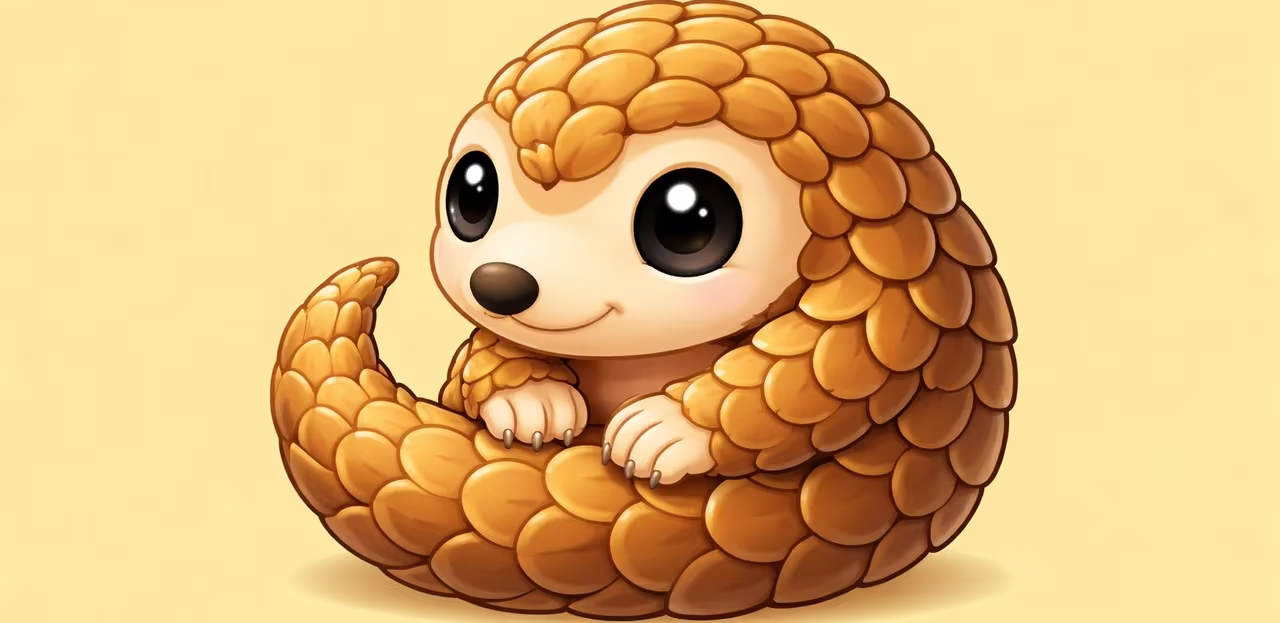
Quick question. How is it that we have a unicorn, a dinosaur and even a dodo emoji…but not a pangolin?
South Africa (23 February 2026) – That’s the question Pangolin.Africa is asking, and we’re with them. Because if any animal deserves its own emoji, it’s the pangolin.
With World Pangolin Day just having passed, now’s the perfect time to push for it!
Pangolins are unlike anything else on Earth. They’re the only mammals covered in scales. They shuffle around at night, use their long sticky tongues to feast on ants and termites, and when threatened, they roll into the world’s cutest (and toughest) little armoured ball.
They’re shy, gentle, and so wildly unique. They’re also the most trafficked mammals in the world. And yet… most people have never even seen one.
That’s where this campaign comes in. The team at Pangolin.Africa believes emojis shape how we talk about nature. When elephants 🐘 and rhinos 🦏 pop up in everyday chats, they stay visible and relevant.
A pangolin emoji wouldn’t just be cute (though, it would be adorable). It would be another reminder that the species exists and needs protecting.
Back in 2019, someone tried to get a pangolin emoji approved by the Unicode Consortium – the global body that decides which emojis make it onto your keyboard. It was rejected.
Then 2020 hit, and suddenly the whole world was Googling ‘pangolin’. Search interest spiked dramatically. But that awareness was tied to a world health crisis, and not conservation.
“A pangolin emoji was proposed to Unicode in 2019 and was summarily declined,” says Emma Bracher, Programme Director at Pangolin.Africa. “Then COVID-19 hit, and suddenly everyone was searching for pangolins because of the virus’s suspected origins. Search traffic spiked dramatically. But we can’t rely on a global pandemic to generate awareness. We need sustained, organic interest—and we’re building that now.”
How to Push for a Pangolin Emoji!
So how do we actually help? It’s actually surprisingly simple.
Unicode doesn’t consider petitions or hashtag campaigns. What they do look at is real, measurable public interest, especially Google search data. So if we want a pangolin emoji, we need people searching.
That’s it.
You can help by:
- Googling the word ‘pangolin’
- Doing an image search and a video search
- Searching ‘Pangolin Africa’
- Clicking through to their website
- Taking their free 15-minute Pangolin Guardians course
Every search contributes to the data Unicode evaluates.
Are You the World’s Next Top Pangolin Emoji Designer?
More fun news. From 15 March 2026, Pangolin.Africa will open submissions for people to design the actual pangolin emoji. Designers who complete the Pangolin Guardians course can submit their ideas, and the best ones will be put forward for official consideration.
Imagine being the person who designs the world’s first pangolin emoji…that’s cool!
A tiny emoji can spark a conversation and awareness, and awareness can change outcomes. So today, instead of scrolling reels, take 30 seconds and Google ‘pangolin.’ Let’s celebrate this remarkable little creature properly and get it the emoji it deserves!