Exeter's Ridl banned for two matches after Bath clash
BBC | 07.01.2026 00:51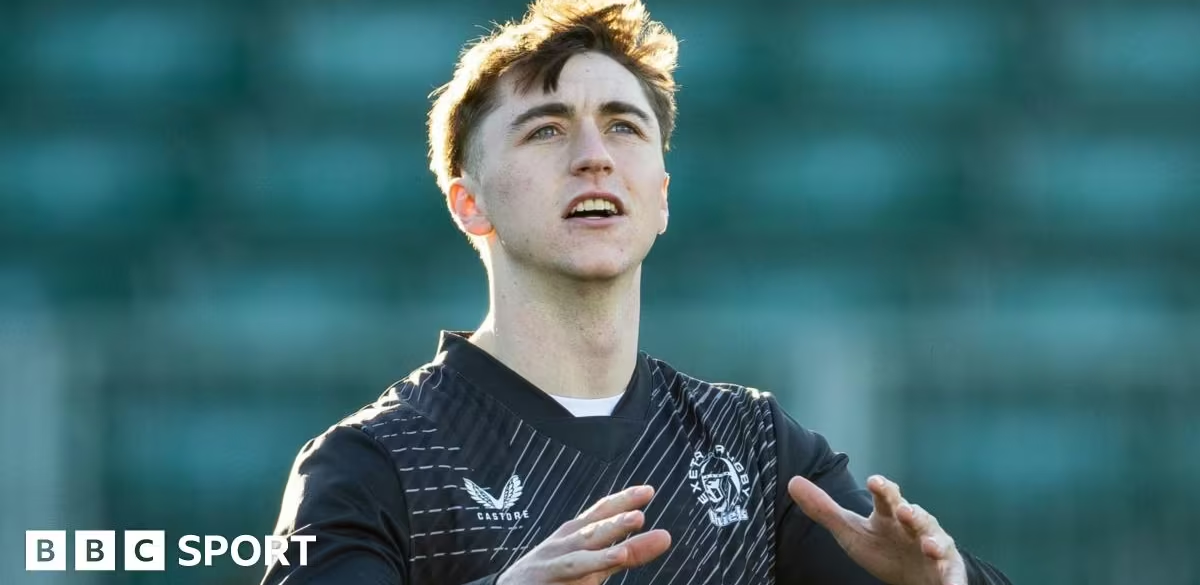
Exeter winger Campbell Ridl has been banned for two matches after his 20-minute red card for a dangerous challenge on Bath's Henry Arundell.
The 20-year-old winger mistimed his jump for a high ball and clashed with Arundell in the air, causing the Bath winger to land on his head during Saturday's game at The Recreation Ground.
Ridl was initially yellow-carded by referee Luke Pearce before the incident was upgraded following a video review.
An RFU disciplinary hearing held on papers by sole judicial officer Charles Cuthbert heard Ridl accepted the charge of foul play and he was subsequently banned for two matches.
He will be unavailable for the Chiefs' third European Challenge Cup Pool Three trip to Paris to face early leaders Stade Francais on Saturday and the visit of Cardiff to Sandy Park on 18 January.
"It's a really difficult skill, because to catch a high ball is difficult enough, but to be able to do it and have to have a period where you have to kind of take your eyes off the ball - because you have to judge where the opposition are going to be jumping as well - makes it makes it doubly hard," Exeter director of rugby Rob Baxter told BBC Sport.
"He's just taken off too late, probably with an expectation that he's going to be meeting the ball at the same time as opposition and the opposition have jumped earlier than him.
"It's one of those things, sometimes you've got to go through it to learn it and probably for Campbell he's needed to get through that."
The incident is the first blip in Ridl's short, but impressive first team career at Exeter.
Having broken his hand in pre-season the England Under-20 international made a try-scoring debut in the Prem Rugby Cup win over Bristol in November.
He impressed the following week as a much-changed Chiefs side were held to a draw at Racing 92 before starting the next three Prem games - including scoring a try in the victory over Leicester just after Christmas.
"He's got a very good rugby background at school level in South Africa, played at a very good rugby school, played within their first-team structure there, so he's probably had a little bit more high-end rugby than people think," added Baxter.
"But I do think actually he's really got his head around being a professional sportsman in the last six months or so, and that's obviously what's catapulted him into having the potential to come into the group and play well and do well.
"It's getting your head around everything and not expecting the process to get you there, and I keep saying this to the young guys - being within an academy structure or being within a professional rugby structure isn't what gets you to being a good first team player, it's what you do within those systems and those opportunities.
"The guys who really embrace it and grab it tend to be the guys who come through, the other guys who kind of wait to be delivered at the end of the process rarely do come through."