Germany news: Plans for Rwanda migrant hub come under fire
DW | 17.11.2026 12:13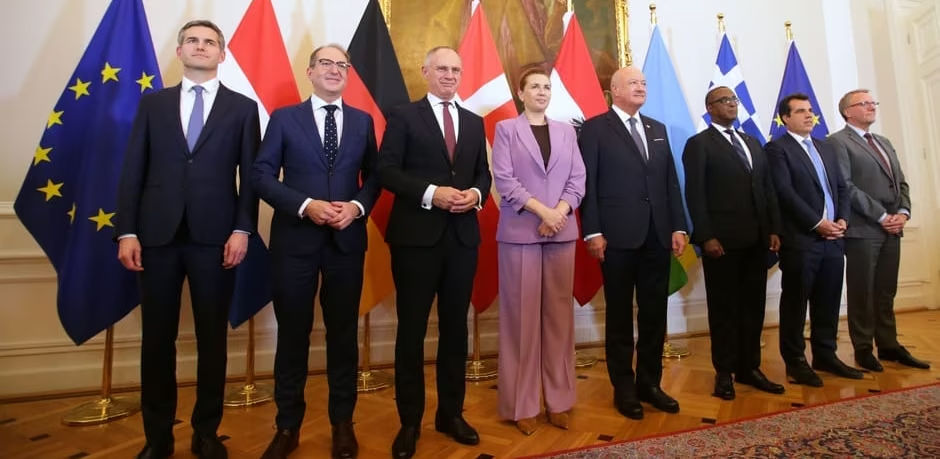
Some 286,000 new businesses are expected to be founded in 2026, a rise of 3.4% compared with last year and the highest level of start-ups since 2015, according to the National Association of German Cooperative Banks (BVR).
The BVR said the boom in start-ups could be partly attributed to the fact that developments in artificial intelligence (AI) and a difficult situation on the labor market were making self-employment more profitable.
However, the association warned that the increase was fragile, as it was largely driven by government support and exports rather that the private investment needed for more sustained growth.
In July, the German government adopted a start-up strategy that aimed to cut bureaucracy and provide support for future technologies, thus creating favorable conditions for young entrepreneurs.
The BVR also cautioned that the number of people in the 30-40 age group — those most likely to start a business — was falling, meaning that the surge will probably not last.
The association also said that even though there was a rise in AI-related start-ups in 2026, Europe needed to do more for AI development to keep up with the US and China.
Edited by:Alex Berry
Copy link
23 minutes ago
Rwanda migrant deportation hub scheme condemned by rights groups
A number of human rights groups have spoken out after Germany, along with Denmark, Austria, Greece and the Netherlands, announced plans to set up a hub for rejected migrants in Rwanda.
The deportation center would be the first such facility outside the European Union.
The Germany-based refugee advocacy group Pro Asyl said on Tuesday that the plans would end in a "shipwreck."
Pro Asyl managing director Karl Kopp said that even rejected asylum seekers had rights.
"Rwanda is not a model democracy. Opposition figures there are arrested and sometimes tortured," he said.
"If those affected need help, we will stand at their side with legal support."
In a statement issued after the announcement of the plans, 45 NGOs from 15 countries also condemned the move.
"These plans allow people without a right to stay in the EU to be sent to countries with which they have no connection at all," the statement said.
"These policies shift people, and responsibility for their safety and rights, out of public sight and beyond scrutiny," it said.
Criticism from within the coalition
The junior partner in Germany's coalition, the center-left Social Democrats, has also maintained its criticism of the plans, which are heavily supported by Interior Minister Alexander Dobrindt of the Bavarian Christian Social Union (CSU), the sister party of Chancellor Friedrich Merz's Christian Democrats (CDU).
"Dobrindt's plans are short-sighted with regard to foreign policy and harm Germany's credibility," SPD foreign policy spokesman Adid Ahmetovic told the Reuters news agency.
"Rwanda violates the sovereignty of its neighbors and supports the M23 rebels in eastern [Democratic Republic of] Congo," he said.
"Such a regime must not receive any political concessions just because it is to take in refugees from Germany," he said, adding: "Human rights are not bargaining chips for deportation deals."
Rwanda deportation hub planned for 2027
The announcement of the plans comes after an EU reform of its migration policy this year granted broader detention powers and allowed for the creation of return hubs.
According to Austrian Chancellor Christian Stocker, the aim is for the first center to be set up in Rwanda next year.
Diplomatic sources say the Rwanda hub will be initially run as a pilot with some 100 people, 20 from each of the five nations.
Edited by:Rob Turner
https://p.dw.com/p/5PX2g
Copy link
27 minutes ago
Welcome to our coverage
DW's newsroom on the Rhine in Bonn wishes all readers a guten Tag!
Plans announced by Germany and four EU partner states to deport rejected asylum seekers to a hub in Rwanda have provoked a wave of criticism from human rights groups.
Migration hard-liner Interior Minister Alexander Dobrindt, one of the main advocates of the plan, has, however, given assurances that it will be executed "in line with human rights" and "in accordance with European and German law."
Meanwhile, more new businesses are expected to open in Germany this year than has been the case since 2015, a rise partly driven by the growing presence of artificial intelligence.
And internal documents leaked by whistleblowers from Deutsche Bank, a lender that has had more than its fair share of scandals in the past, have exposed more cases of malpractice and misconduct in recent years, media say.
Read on here for more on these and other German stories!