South Africa’s jobs crisis deepens as 345,000 join unemployed
Scrolla | 12.08.2026 14:27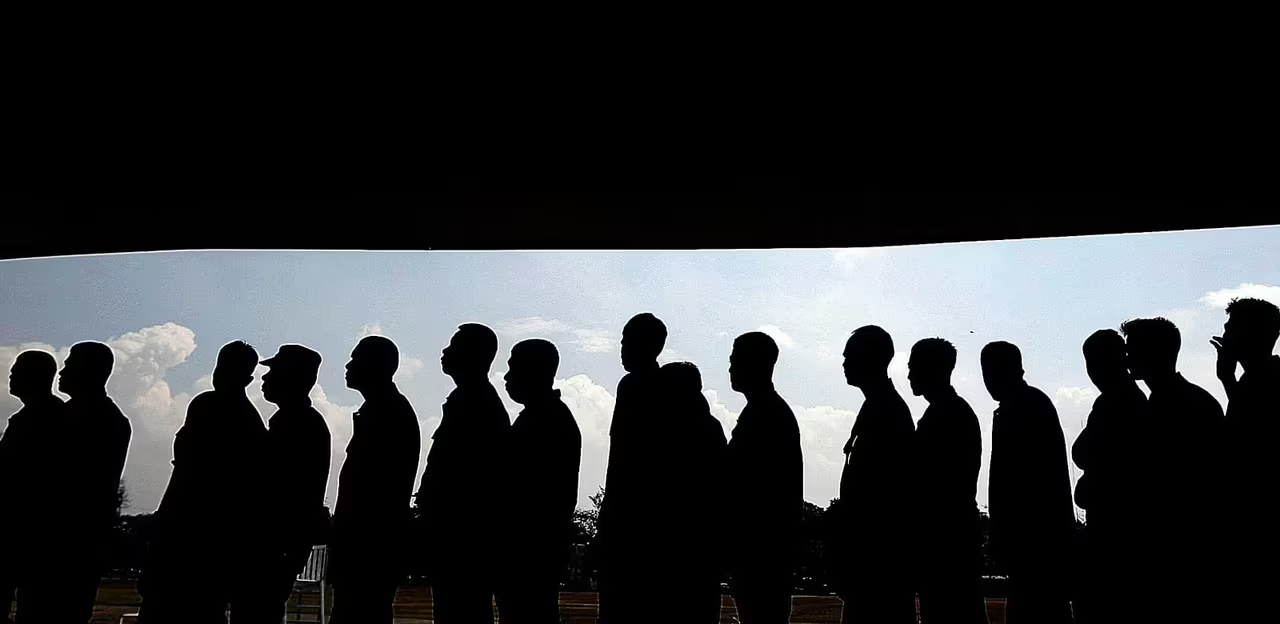
By Palesa Matlala
• South Africa’s official unemployment rate rose from 32.7% to 33.6%, leaving about 8.5 million people officially without jobs.
• Congress of South African Trade Unions warns the crisis is even worse for young people, with youth unemployment above 62%.
South Africa’s jobs crisis is getting worse, with another 345,000 people joining the unemployment queue in just three months.
The country’s official unemployment rate climbed to 33.6% in the second quarter of 2026.
That is up from 32.7% during the first three months of the year.
Statistics South Africa released the latest Quarterly Labour Force Survey on Tuesday, showing just how difficult it remains for millions of people to find work.
The number of officially unemployed people increased by 345,000 to about 8.5 million between April and June.
At the same time, the number of people with jobs dropped by 16,000 to 16.7 million.
The labour force also grew as more people entered the job market looking for work.
But the economy did not create enough jobs to absorb them.
The Congress of South African Trade Unions said the figures should be treated as a national crisis rather than just another set of statistics.
The federation’s Parliamentary Coordinator Matthew Parks said unemployment has become so common that South Africans risk becoming used to it.
“It’s a crisis and I think for far too long, we’ve allowed ourselves to normalise it,” Parks said.
He said the situation becomes even more frightening when people who have given up looking for work are included.
Parks said about 12 million people cannot find work under the broader measure of unemployment.
Young people are among those being hit hardest.
“For young people, it’s even worse. It’s over 62%,” Parks said.
He said about five million young people are unable to find jobs.
Parks warned that South Africa risks creating a generation of people who spend years unable to enter the workplace.
“We’re in danger of creating a permanent class of unemployed persons,” he said.
The latest figures also show that job losses were not spread evenly across the economy.
Community and social services, mining, agriculture and manufacturing were among the industries that recorded job losses during the quarter.
Some other industries created jobs, but the gains were not enough to stop the national unemployment rate from climbing.
There was some movement among people who had previously stopped looking for work.
The number of discouraged job seekers fell by 227,000 to about 3.7 million.
But that does not mean the jobs crisis has eased.
South Africa’s broader unemployment figures remain extremely high when people who want work but are not actively searching are taken into account.
The latest figures are another blow for people who have spent months or even years sending out applications without finding employment.
They also show that the problem is continuing despite more South Africans entering the labour market and looking for opportunities.
Cosatu wants unemployment to be treated with greater urgency, particularly because of the impact it is having on young people.
For families without a working breadwinner, the unemployment figures are more than percentages on a Statistics South Africa report.
They can mean households depending on social grants, relatives or small informal jobs to survive.
And for young South Africans trying to get their first opportunity, the latest numbers show just how difficult getting a foot into the workplace remains.
With 8.5 million people officially unemployed and millions more outside the official count, South Africa still faces a massive challenge to create enough jobs for its growing workforce.
Pictured above: Millions of South Africans remain without work as the official unemployment rate climbed to 33.6% in the second quarter of 2026.
Image source: File.