5 Healing SA Plants That Also Support Wildlife (And Vice Versa!)
Good Things Guy | 03.03.2026 22:00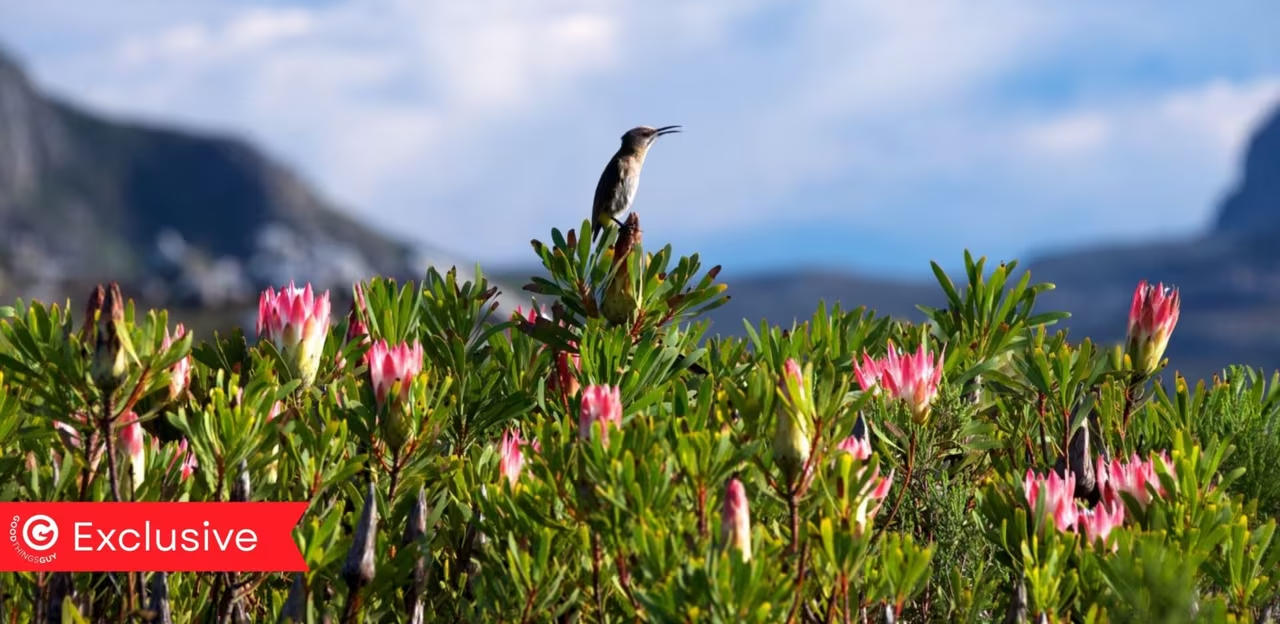
We’ve got healing plants that only grow here. Wildlife that only lives here. And an endlessly fascinating relationship between the two!
South Africa (03 March 2026) – Every year on 3 March, World Wildlife Day asks us to think about the animals and ecosystems we stand to lose if we don’t act.
This year’s theme is ‘Medicinal and Aromatic Plants: Conserving Health, Heritage and Livelihoods’…
At first thought it might seem like an unusual choice for a day dedicated to wildlife! Plants aren’t animals. But the the truth is, you can’t separate the two.
SA’s unique fynbos biome is home to the many of the indigenous medicinal plants that we grow locally, and it’s one of the most biodiverse ecosystems on the planet.
Fynbos supports eight bird species found nowhere else on Earth, including the Cape sugarbird and the orange-breasted sunbird which have co-evolved so closely with proteas and ericas that they depend on each other for survival. Cape sugarbirds can visit up to a few hundred protea flower heads in a single day, pollinating as they go!
Then there’s ants found in the fynbos that through a process called ‘myrmecochory’ bury seeds underground for safekeeping from predation, which in turn enables many plant species to regenerate after fires.
To add, nectar from fynbos wildflowers sustain nearly 120 different bird species, 30% of which are endemic to Southern Africa, and smaller mammals like bontebok, grysbok, and the endangered geometric tortoise also rely on fynbos plants for food and shelter.
The deeper you dig, the more you’ll realise that we, plants, and wildlife are all inextricably connected. With that said, happy World Wildlife Day! We’re celebrating this year’s theme by shining the light on 5 interesting indigenous medicinal and aromatic plants that rely on and support wildlife, too!
5 Healing South African Plants
1. Rooibos
Rooibos grows only in the Cederberg region of the Western Cape, literally nowhere else on Earth. The Khoikhoi people used it for centuries, and today it’s South Africa’s most important exports with a variety of health benefits. Rooibos belongs to the one of the most diverse plant genera in the entire fynbos biome. Its shrubs provide nesting cover for ground-nesting birds, and the fynbos community it belongs to is the primary habitat of the Cape sugarbird and the orange-breasted sunbird, both of which are found nowhere else on Earth!
2. Buchu
To the Khoisan people, buchu was sacred. It is said that traditional healers burned the leaves to cleanse body and spirit, and brides would rub it on their skin before ceremonies. Practically speaking, it has long been touted for its health benefits! Like most fynbos plants, Buchu relies almost entirely on insects for pollination. Bees, butterflies, and other pollinators are drawn to its flowers and its seeds can also be dispersed by ants through myrmecochory.
3. Devil’s Claw
Found in the Kalahari and the more arid regions of the Northern Cape, Devil’s Claw plant gets its menacing name from the hooked spines on its fruit. The Khoisan used it traditionally for medicine and today, it’s one of the most studied medicinal plants in southern Africa. Its connection with wildlife is the most fascinating! Devil’s claw cannot spread its seeds on its own and it depends entirely on animals. The hooked fruit latches onto the fur and hooves of springbok, wildebeest, and other Kalahari wildlife, which carry the seeds across the desert before they eventually fall free.
4. African Wormwood / Wilde Als
African wormwood is one of the most widely used traditional medicines in Africa, found across South Africa. In traditional practice the plant is used to treat a variety of ailments. The same aromatic oils that make it medicinally potent are also touted for deterring pests, which protects surrounding plants and indirectly benefits small reptiles, birds, and insects that find shelter in it.
5. Honeybush
A close relative of rooibos, honeybush is a caffeine-free herbal tea that has a naturally sweet flavour, almost like honey. Its found in the fynbos of the Western and Eastern Cape, and contains a wealth of antioxidants and immune-boosting properties. Honeybush also provides ground-level cover that species like the endangered geometric tortoise – one of the world’s most threatened tortoise species, found only in the South African fynbos. Its flowers also support pollinators.
Sources: Linked above.
Don’t ever miss the Good Things. Download the Good Things Guy App now on Apple or Google.
Do you have something to add to this story? Please share it in the comments or follow GoodThingsGuy on Facebook and Twitter to keep up to date with good news as it happens, or share your good news with us by clicking here or click the link below to listen to the Good Things Guy Podcast with Brent Lindeque – South Africa’s very own Good Things Guy. He’s on a mission to change what the world pays attention to, and he truly believes there’s good news around us. In the Good Things Guy podcast, you’ll meet these everyday heroes and hear their incredible stories:
Or catch an episode of Good Things with Brent Lindeque or our Weekly Top 5 below. The videos here are always changing, updated with the latest episodes from these two shows. Both are part of Good Things TV, created to bring South Africans balance at a time when the news can feel overwhelmingly negative. Our goal is simple: to remind you that there are still so many good things happening in our country – and to leave you feeling a little more proudly South African.