War, weather and tariffs squeeze South Africa’s citrus farmers
Scrolla | 09.08.2026 16:47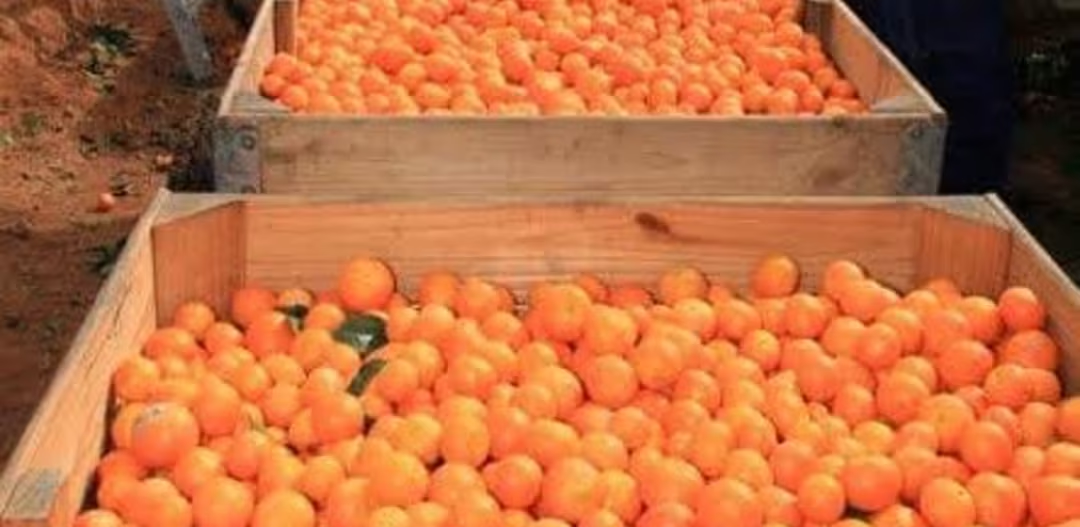
By Palesa Matlala
• South Africa has cut its citrus export forecast from almost 209.5-million to just over 205-million cartons after a difficult season for growers.
• Middle East conflict has disrupted a market that normally buys about 19% of South Africa’s citrus, forcing costly shipping changes and longer journeys.
South Africa’s citrus farmers are being squeezed from all sides.
Bad weather, new United States tariffs, expensive shipping and conflict in the Middle East have combined to make this a tough season for growers.
Some farmers may not make a profit at all.
The Citrus Growers’ Association of Southern Africa has now cut its export forecast for the season.
Growers are expected to export just over 205-million cartons of citrus, with each carton weighing 15kg.
That is down from an earlier forecast of almost 209.5-million cartons.
Although the new estimate is still slightly higher than last year’s 204-million cartons, the association says the number of boxes exported does not tell the full story.
Farmers are also battling lower prices and an exchange rate that has worked against them.
Paul Hardman, chief operating officer of the Citrus Growers’ Association, said the Middle East conflict has been one of the biggest blows.
The region is an important customer for South African citrus and normally takes about 19% of the country’s exports.
A large amount of fruit is shipped through the Strait of Hormuz.
Hardman said the outbreak of conflict at the start of the export season immediately changed the picture for growers.
“It immediately changed the way this season is going to look,” he said.
“We send a lot of fruit through the Strait of Hormuz and the type of fruit is almost customised for that market, so it is not easy to then channel it into other markets.”
Finding somewhere else to sell the fruit is not as simple as putting it on another ship.
Growers must find buyers while dealing with longer routes and already expensive shipping costs.
Those delays can also damage the product.
“The rerouting adds a couple more weeks, which has some implications for fruit quality as well,” Hardman said.
The problems come on top of bad weather in important citrus producing regions and new tariffs in the United States.
For farmers, the biggest concern is what remains in their pockets at the end of the season.
Hardman said growers are receiving lower prices while facing difficult trading conditions.
“We’re also experiencing much lower prices, and obviously the exchange rate has worked against us,” he said.
“So the returns to growth this year are not looking good and we do expect some growers to not be making a profit just because of the circumstances they’re facing.”
The local fruit processing industry is taking as much of the citrus that cannot be exported as possible.
But that does not remove the financial pressure on growers.
The latest forecast means South Africa could still export more citrus than it did last year.
For farmers, however, a bigger crop does not necessarily mean a bigger payday.
After surviving difficult weather, trade barriers and international conflict, some could finish the season having shipped millions of cartons overseas but with little or no profit to show for it.
Pictured above: Oranges
Image source: File.