Businessman Alleges KwaZulu-Natal Police Chief Linked to Bribery and Intimidation
iReport South Africa | 14.03.2026 20:47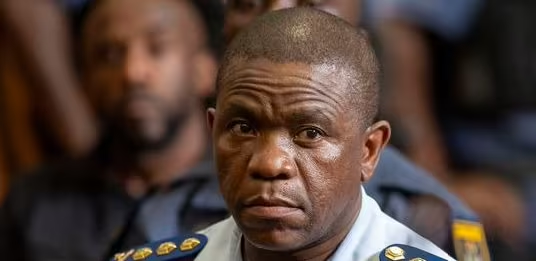
Businessman and controversial figure Samkeliso Mlotshwa has made a series of explosive allegations against the Nhlanhla Mkhwanazi, the KwaZulu-Natal Provincial Police Commissioner, during testimony before a committee investigating alleged misconduct linked to high-ranking law enforcement officials.
Mlotshwa accused Lt-Gen Mkhwanazi of being connected to a series of questionable actions related to criminal investigations and alleged attempts to influence legal proceedings. His testimony forms part of an ongoing inquiry examining allegations of corruption, abuse of power, and interference within police structures in KwaZulu-Natal.
According to Mlotshwa, he was approached with what he described as a financial incentive intended to influence the withdrawal of cases against Mkhwanazi. He told the committee that businessman Esmael Nangy allegedly contacted him regarding an offer of R5 million to drop legal actions linked to the provincial police chief.
“The meeting between General Mkhwanazi and businessman Vusi ‘Cat’ Matlala did happen,” Mlotshwa told the committee, adding that the alleged offer was communicated shortly after that meeting. He claimed the proposal was intended to settle matters that could potentially implicate senior officials.
Mlotshwa further alleged that his encounters with authorities were marked by intimidation and coercion. In earlier testimony, he claimed that he was subjected to degrading treatment while in detention and pressured to provide statements that could implicate other individuals.
The allegations have drawn significant public attention as they involve one of the most prominent law enforcement figures in the province. Lt-Gen Mkhwanazi has previously been regarded as a key figure in the fight against organized crime in the region, making the accusations particularly serious.
The committee has indicated that Mlotshwa’s claims will be carefully examined alongside other evidence presented during the inquiry. Members emphasized that the proceedings are aimed at establishing the truth and ensuring accountability where necessary.
Meanwhile, police authorities have not yet issued a detailed response to the latest claims made during the hearings. Observers say the allegations, if proven, could have far-reaching consequences for the leadership of the South African Police Service in the province.
Legal analysts note that testimony presented before such committees must still be corroborated through independent evidence before any formal conclusions can be reached.
The inquiry continues to hear testimony from several witnesses, and investigators are expected to review documentation and communications linked to the alleged events. The outcome of the proceedings could play a significant role in determining whether further legal or disciplinary action will follow.
Business leader Mavuso Msimang has warned that Paul Mashatile should never become president of South Africa, arguing that the era of State Capture is far from over. Speaking during a recent public discussion on governance and corruption, Msimang said the country remains vulnerable to the same political and institutional weaknesses that allowed state capture to flourish during the administration of former president Jacob Zuma.
Msimang stressed that although several commissions and investigations have exposed widespread corruption, the underlying networks that enabled the looting of state resources have not been fully dismantled. He argued that placing individuals with questionable political associations in the highest office would risk reversing progress made in rebuilding public institutions.
State capture is not over, Msimang said, warning that South Africans must remain vigilant about who leads the country in the future. His remarks come as internal debates intensify within the ruling African National Congress over potential leadership succession ahead of future national elections. Mashatile, who currently serves as the country’s deputy president and deputy leader of the ANC, is widely viewed as a potential contender for the presidency.
However, Msimang said leadership choices should prioritize integrity and accountability, particularly after the damage caused by years of corruption and weakened governance structures. He noted that the country’s recovery depends on restoring trust in government institutions, strengthening law enforcement bodies, and ensuring that political leaders are beyond reproach.
The controversy surrounding state capture was extensively documented by the Zondo Commission, which uncovered how private interests allegedly influenced government appointments, contracts, and decision-making processes. Msimang’s comments have reignited debate within political and civil society circles about leadership standards and the future direction of South Africa’s governance.
While Mashatile has not publicly responded to the remarks, political analysts say the statement reflects growing anxiety among reform-minded leaders who fear that unresolved corruption networks could undermine efforts to rebuild the state. As the country approaches another critical political cycle, Msimang urged citizens and political parties alike to ensure that the lessons of the state capture era are not forgotten. He said South Africa’s democratic institutions can only be protected if ethical leadership remains the central priority.