Marikana families still wait for justice 14 years later
Scrolla | 16.08.2026 17:58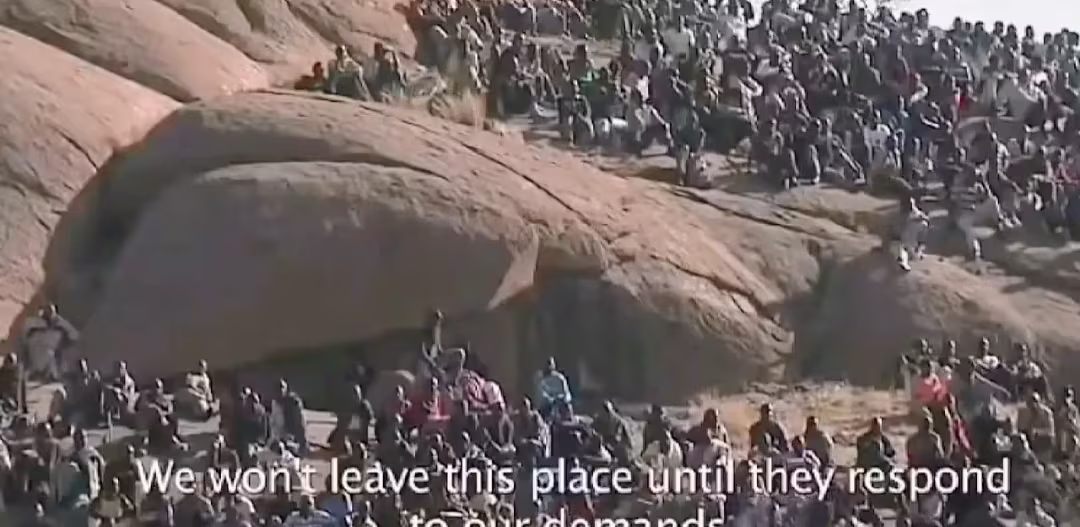
• Police shot dead 34 striking Marikana mineworkers on 16 August 2012, but 14 years later no successful prosecution has followed.
• Ten other people died before the massacre, while unions say poverty, inequality and unanswered questions still haunt the Marikana community.
Fourteen years have passed since 34 striking mineworkers were shot dead by police at Marikana, but their families are still waiting for justice.
Sunday, 16 August, marks the anniversary of one of the darkest days in democratic South Africa.
On 16 August 2012, police opened fire on striking workers at Lonmin’s platinum mine near Rustenburg in North West.
The workers had been demanding a monthly salary of R12,500.
By the end of the shooting, 34 mineworkers were dead and dozens more were wounded.
But the bloodshed at Marikana did not begin on 16 August.
Ten other people, including mineworkers, police officers and security guards, were killed during violent clashes in the days leading up to the massacre.
That brought the number of people killed during the Marikana violence to 44.
Thousands of workers, union representatives and community members were expected to gather at the Marikana koppie on Sunday to remember those who died.
For many families, the anniversary is not only about remembering their loved ones.
It is also about the long wait for someone to be held responsible.
The Socio-Economic Rights Institute, which represents families of mineworkers killed at Marikana, says the lack of accountability remains a serious failure of justice.
Fourteen years after the massacre, there has been no successful prosecution for the police killings.
Police officers who previously faced charges have since been acquitted, leaving families with unanswered questions over who should be held responsible.
Some compensation claims have been settled.
But wider legal battles over accountability have continued, including civil cases involving former Lonmin executives and President Cyril Ramaphosa.
A commission of inquiry was set up after the killings to investigate what happened at Marikana between 11 and 16 August 2012.
The commission examined the conduct of police, Lonmin, unions and others during the deadly strike.
It found that Lonmin had failed to respond properly to the threat of violence and had not done enough to protect its workers.
The commission also criticised how the South African Police Service and the National Union of Mineworkers handled the situation.
Despite years of investigations, court action and public debate, families say the central question of accountability for the 34 deaths remains unresolved.
But there are also different views about how South Africa remembers Marikana.
The National Union of Mineworkers says most attention has been placed on the 34 workers killed by police on 16 August.
The union believes the people killed during the violence before the massacre should also be remembered.
Those victims included its members and leaders, police officers and security guards.
The Association of Mineworkers and Construction Union says the anniversary should also focus attention on the conditions workers still face.
The union says many workers continue to struggle with poverty and inequality despite the sacrifices made at Marikana.
The government has previously committed to acting on recommendations flowing from the Marikana Commission, including changes to public order policing.
But for the families who lost fathers, husbands, brothers and sons, the passing years have not ended their search for answers.
The koppie where the workers gathered in 2012 remains a powerful symbol of the tragedy.
Fourteen years later, people are returning there to remember the dead.
The shootings lasted only a short time.
The fight for answers has lasted more than a decade.
Pictured above: Mineworkers and community members gather at the Marikana koppie, where striking workers were killed in August 2012.
Image source: File