The Politics of Conservation Reversal
Medium | 12.12.2025 01:03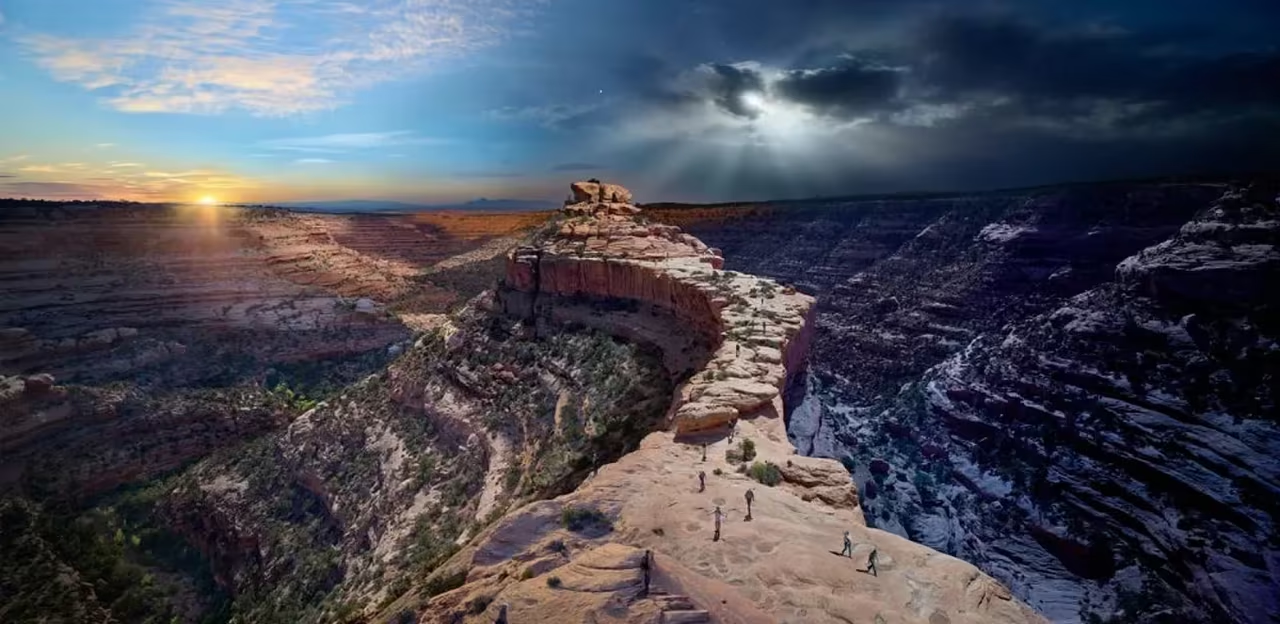
The Politics of Conservation Reversal
2 min read
·
Just now
--
In 2016, the creation of Bears Ears National Monument marked a milestone for conservation in a society built around colonial land exploitation.
For the first time, a national monument was designed with and for tribal nations. The Hopi, Navajo, Ute Mountain Ute, Zuni, and Ute Indian Tribe formed the Bears Ears Inter-Tribal Coalition, asserting something this country has tried for generations to forget: these lands have always had original caretakers.
Bears Ears wasn’t a normal monument. It was a gesture toward healing, an admission of wrongdoing and a rare moment when the federal government acknowledged that stewardship, cultural continuity, and Indigenous sovereignty matter.
A step, however small, toward repairing centuries of extraction, broken treaties, and taking. It took one election to reverse this progress.
In 2017, President Trump issued the largest reduction of a national monument in U.S. history, cutting Bears Ears by 85%. The removed acreage aligned exactly with areas coveted by private companies seeking to mine uranium and other minerals.
Land that had been recognized as sacred, ancestral, and culturally irreplaceable was suddenly treated as a commodity again.
Bears Ears was restored by the Biden administration but the story still matters. Especially in a world where land is being grabbed by tech giants for data centres without very little public input.
Progress isn’t linear, healing is fragile,
and public lands aren’t just “public”. They are political, vulnerable, and will be contested.
When Indigenous nations lead, the health of land and culture are strengthened together. And when that leadership is dismissed, the damage is felt far beyond the boundaries of any map.
Bears Ears shows in every fight over land, and in every moment we choose between exploitation or reciprocity with natural resources.
Image: Stephen Wilkes – Bears Ears National Monument, Utah, Day to Night