Turkey's ornate Ottoman-era 'bird palaces'
BBC | 19.12.2025 20:00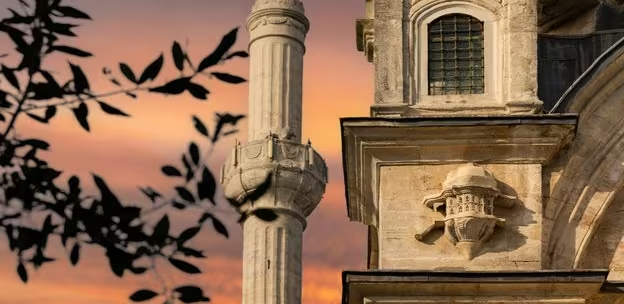
Many of Istanbul's visitors are unaware that the city is home to half-a-millennium-old stone-carved bird houses that reflect the Ottomans' reverence for the animals.
On a corner lot in Istanbul's old city, there's what some might call a fixer-upper: a stone-built duplex with gabled roofs and lots of windows. Parts of its exterior walls are crumbling, but there's a unique feature affixed to its walls that makes it a perfectly fine home for its many residents – the city's birds.
Too grand to be called mere birdhouses, dozens of masterfully stone-carved kuş sarayları ("bird palaces") or kuş köşkleri ("bird pavilions") in varying states of repair are perched under the eaves of Ottoman-era mosques, tombs and other structures in central Istanbul. Largely built between the early 16th and 19th Centuries, these intricately designed relics of Istanbul's past largely go unnoticed by the city's nearly 16 million human residents, despite their cultural, historical, religious and ecological significance.
"Each bird palace has its own unique architectural style and detailed beauty that also represents a thoughtful display of compassion," says Öykü Demir, an Istanbul-based tour guide who took a special interest in the structures after spotting them on the walls of various historical sights.
Charity is one of the five pillars of Islam, and in Ottoman times, this extended to animals across the empire. Religious foundations were endowed to feed strays or treat wounded creatures, and small basins were cut into cemetery stones to collect rainwater for dogs, cats and birds to drink. While horses, camels and donkeys played vital roles in transportation, and dogs were valued as neighbourhood guardians, birds held a special place within the empire because they were symbolically linked to the soul reaching for the heavens.
"In Istanbul, you often find birdhouses on the qibla walls of mosques (those facing Mecca) so the sound of birds becomes associated with the sound of prayer, with both human voices and birds' voices fluttering up to the sky," says Christiane Gruber, a professor of Islamic art history at the University of Michigan.
More like this:
Integrating birdhouses into the construction of official buildings is believed to date back to the Seljuk Empire, a Sunni Muslim dynasty that preceded the Ottomans by some 200 years and stretched across Central Asia into modern-day Turkey. The earliest-known examples beginning in the 13th Century were simply small holes carved into high parts of a building's facade to allow small birds like sparrows, swallows and finches to nest undisturbed. But by the early 16th Century during Ottoman rule, some of these avian sanctuaries had started to resemble miniature versions of the architecture of the time, often carved from leftover material used to build the main structure.
The practice reached its creative peak during the 18th Century, a period of prosperity in which there was a new emphasis on public space and leisure. During this time, Ottoman art and architecture transformed under the influence of the Baroque and Rococo movements from Europe. "This style was ascendant globally. You could find it in Goa, in the New World, in the Middle East," says Gruber. "In Turkey, the Ottoman Baroque was called 'the new style' and emphasis was placed on novelty and creativity, on new kinds of stonework in a florid style."

This era yielded such flights of architectural fancy as the gabled, opulent bird dwelling on the wall of the Imperial Mint near Topkapı Palace, adorned with a trio of cupola roofs, miniature staircases and delicate latticework on its balcony railings. Other notable examples that are still in good condition include two bird houses on the wall of the Yeni Valide Mosque in the Üsküdar district that are themselves shaped like small mosques, each complete with a pair of minarets.
While bird palaces have been documented all around Turkey, from the western city of Edirne, a former Ottoman capital, to the cities of Van and Doğubeyazıt in the country's far east, Istanbul seems to have been their main showcase.
"There were many stonecutters in Istanbul at the time, so these [bird houses] may have functioned like maquettes or models, as a way to experiment with form, though not all of their designs would have been implementable on a real scale," says Gruber. "As an opportunity for stonecutters to showcase their mastery and their skills, they were in a way acting as business cards as well."
As visually delightful as these compact constructions are, they were also very practical, encouraging birds to perch and nest in these designated areas rather than in places where their activities might damage the buildings. And according to ecologist and birder Kerem Ali Boyla, they were highly functional avian habitats as well.
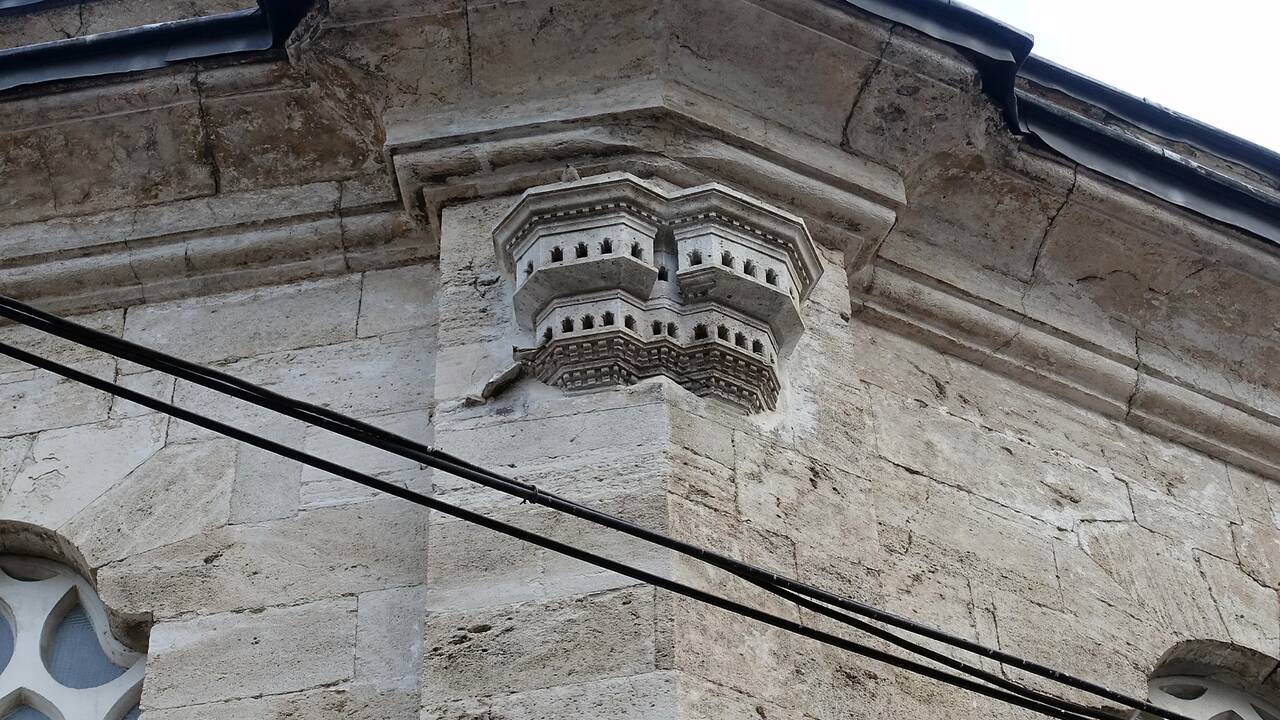
"I think the people who made them really thought about them, about the size of the opening, and whether it faced to the south or the north, which is important in terms of heat control and protection from the wind," says Boyla. "The birdhouses many people put up today have entrances that are too big – they don't realise how small birds are under their feathers – which means that larger birds like crows can raid the nests."
Despite being a densely populated megacity, Istanbul is still rich in birdlife, with nearly 300 different species spotted in the city by birdwatchers this year alone. It sits along major migratory routes between Europe and Africa, bringing formations of white storks gliding over the Bosporus and starling murmurations swooping through the skies over Taksim Square. A resident grey heron colony nests in the tall plane trees of Gülhane Park, and a dozen different species of seagulls dart in the wake of the city's ferries.
Gruber speculates that the Ottoman bird houses may have been a form of "atonement" for clearing forested or marshy habitats to construct mosques, bridges and other buildings at that time. But in a modern era where development pressure on nature is stronger than ever, these old sanctuaries are disappearing along with open space.
"Bird palaces were generally made of soft küfeki stone [a type of local limestone], which wears down over the years due to factors such as rain and wind," says Demir. Many now are so eroded that only a suggestion of walls remain. Others are obscured behind fences or later construction, and only a scant few new ones have been built since the 19th Century, likely due to a parallel decline in hand craftsmanship and evolving ideas about urban wildlife that came along with industrialisation and modernisation.
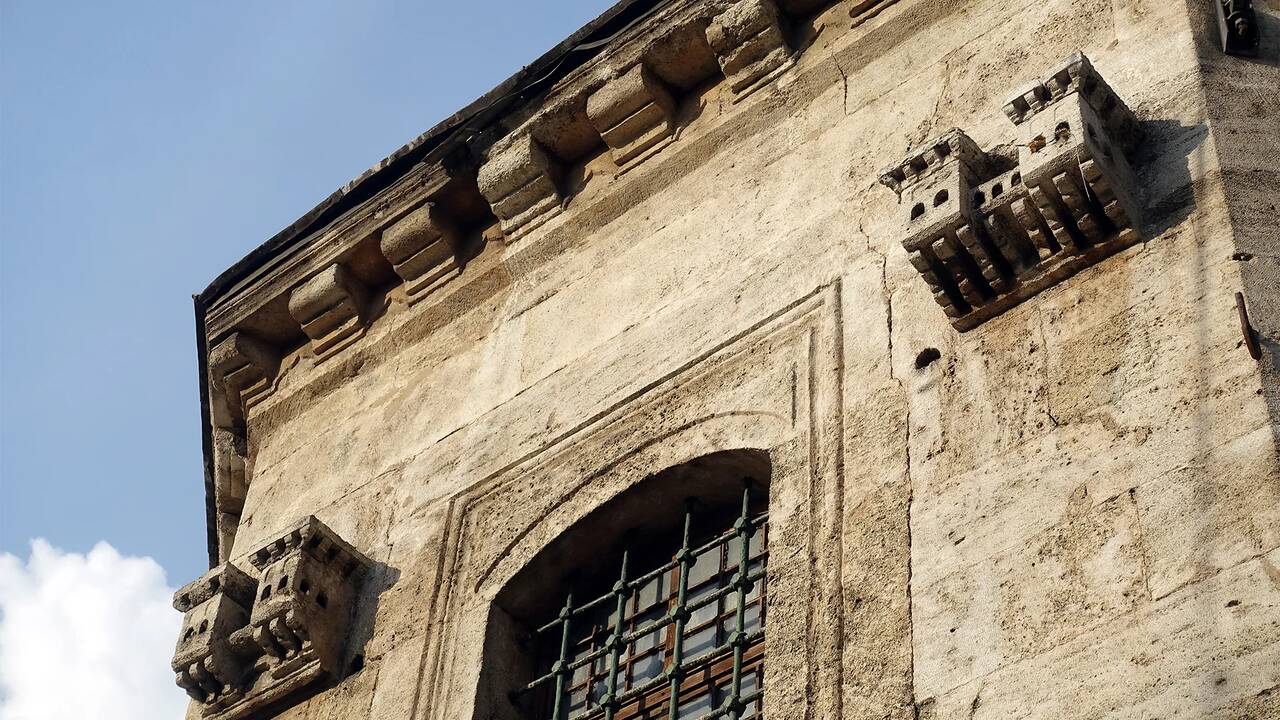
"These bird houses represent a very old tradition of hospitality, and an idea… that says the city belongs not just to humans," says Gruber. "They reveal a different way that people related to the environment in the past and might give us a blueprint for ways to reconcile that relationship in the future."
If you liked this story, sign up for The Essential List newsletter – a handpicked selection of features, videos and can't-miss news, delivered to your inbox twice a week.