Just Imagine Your Wife Doing This: EFF Ramabodu Reacts Viral Pics Jacinta With Another Man
iReport South Africa | 08.05.2026 13:52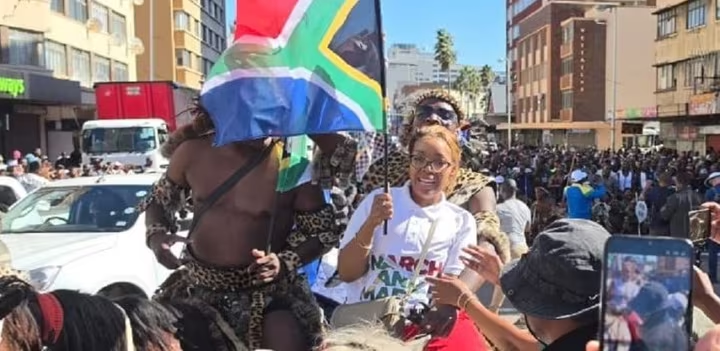
Obakeng Ramabodu has sparked controversy on social media after posting a photograph of Jacinta Ngobese during a public demonstration linked to anti-illegal immigration protests in South Africa.
The image showed Ngobese riding on horseback while holding a South African flag during a march organised by the March and March Movement. A man dressed in traditional attire featuring leopard-print garments and feathered regalia appeared alongside or behind her during the procession. The event took place in an urban setting surrounded by protesters, flags and spectators.
Ramabodu accompanied the image with a caption suggesting he would feel embarrassed if his wife participated in such an event “at the March on March.” The remark quickly triggered backlash online, with many social media users accusing the Economic Freedom Fighters official of mocking and sexualising a woman participating in political activism.
A large number of replies criticised the post as disrespectful and inappropriate, arguing that Ngobese was being targeted for her appearance and participation in a political protest rather than the substance of the movement’s demands. Others accused Ramabodu of attempting to undermine women involved in activism by reducing them to personal or gender-based commentary.
The reaction also exposed deeper political tensions surrounding recent anti-illegal immigration protests, particularly in KwaZulu-Natal, where demonstrations have intensified public debate around undocumented migration, informal trade and crime.
Supporters of Ngobese defended her role in the movement, describing her as a vocal activist representing citizens frustrated by unemployment, weak border controls and alleged illegal business operations. Some users also criticised political parties for turning social media into a platform for personal attacks instead of constructive engagement.
The controversy further fuelled tensions between supporters of the Economic Freedom Fighters and activists aligned with anti-illegal immigration campaigns. Political commentators noted that discussions around immigration have become increasingly emotional and polarised, often spilling into online confrontations and public disputes.
Neither Ramabodu nor Ngobese had issued further public statements addressing the backlash at the time of reporting. However, the incident has reignited debate over political conduct on social media, gendered criticism in activism and the growing intensity of South Africa’s immigration-related discourse.