Deportivo a Courna CEO Benassi tells CM the secrets behind the revival: "From Aubameyang to Amatucci, here is our transfer plan. Italy has talent"
Goal | 17.11.2026 08:00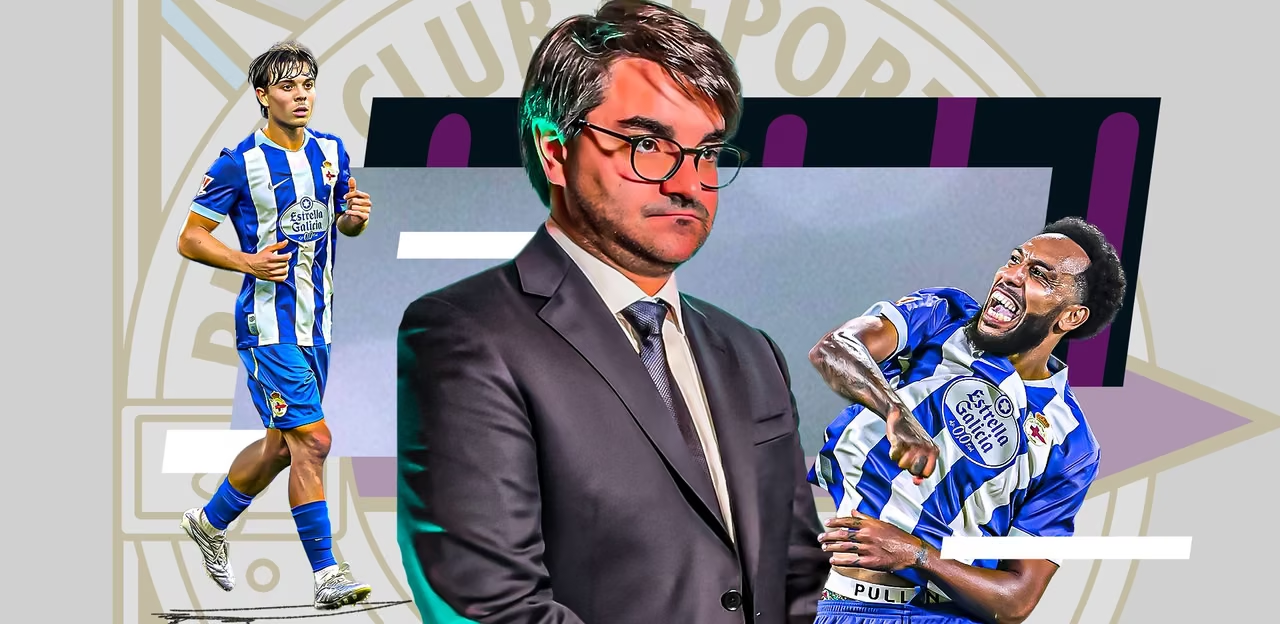
From Serie C to La Liga three years ahead of schedule, Deportivo de A Coruna are finally back in the spotlight. CEO Massimo Benassi has been a driving force behind this remarkable revival, and spoke to us exclusively.
The club's revival goes beyond results on the pitch. Deportivo de A Coruna have returned to La Liga after climbing from Spain's third division to the top flight, reaching their original target several years ahead of schedule. Massimo Benassi has helped drive that rise. The Galician club's CEO has strong ties to Italy.
An Italian from Pordenone who has long lived in Spain, Benassi spoke to Calciomercato and Goal about the club's strategy, ties to Italian football, transfer decisions and infrastructure investment. He wants to keep growing without losing sight of where the club came from.
Italian fans used to call the club Deportivo La Coruna, but it is now Deportivo de A Coruna. Why did the name change? Is it part of your rebranding project?
"In fact, it was a longstanding situation. The city has been called that for a long time, many, many years. It is called A Coruna, and all we did was hold a referendum among members and season-ticket holders, who decided the club should be called Real Club Deportivo A Coruna to bring it into line. The response was extraordinary, with more than 80% of season-ticket holders and members making that choice, so it seemed the right thing to do,"
You speak Italian very well, though your accent now has a hint of Galician. How did you go from Pordenone to becoming CEO of a club back in the spotlight?
"Yes, I'm from Pordenone, but I've lived in Spain since 2017. I've completely lost my accent, unfortunately, but I'm proud to be Italian. My story is one of a lot of work, little sleep and plenty of travel. In the end, I'd say my story and the club's are similar."
Deportivo have emerged from some dark years and returned to the top flight. What's the vision behind the revival?
"Ours is a story of hard work. When we arrived, the club were in the third tier, the equivalent of Italy's Serie C, and in three seasons we returned to La Liga. Our strategic plan had envisaged that happening in 2029; we managed it three years early. But work, when it is done methodically, usually delivers results."
You've recruited extensively from Italy in recent years, both at management level and on the pitch. What is the link between Italy and Deportivo de A Coruna?
"We always follow the Italian leagues closely, and it is no coincidence that we have signed Italian players in recent years, such as Quagliata and Mulattieri last year — Quagliata then stayed — and that we signed Amatucci this summer. But I want to stress that they all had, and have, qualities we needed and did not have in the squad. We did not sign them just because they are Italian. When we sign players, we do not look at their passports.
Will you keep looking to the Italian league for signings?
"I admit that, as an Italian, it is a pleasure to have them in the squad. I'm proud to have them here and to be able to help young Italian players develop in Spain's top flight. There is a lot of talent in Italy that I think is not being used, and perhaps we can recruit more in future windows. Italy has talent, it always has. Historically, we have always been a people of innovators, a people who have always known how to adapt and reinvent themselves, so football is certainly full of talented young players too.
Are you looking to grow beyond Italy too?
"Yes, internationally we have been to the United States, Mexico, Argentina, Venezuela, Brazil, England and Portugal. This summer we played two friendlies against Fiorentina and Genoa in Italy and held a training camp at Coverciano. So Italy is obviously an important country for us, with an important fanbase. We believe Deportivo left some people with bad memories and others with good ones (laughs, referring to the 4-0 win against AC Milan), and that is something we want to change.
Your first-team approach seems clear: young talents alongside older stars such as Aubameyang and Traoré, who remain important to the team.
"Yes. Since we started in 2023, we have set ourselves internal rules for building the team, the squad: 25% of the first-team players come from our youth academy, and at least half the team are under 26. For us, having a mix of young players and others with experience is ideal. This summer Aubameyang arrived, Traoré arrived, Angelino arrived, as did Gimenez from Atletico Madrid and Casado from Barcelona. Although Casado is very young, he has still played the last three seasons in La Liga's top division. So it is important for us to develop a strong core of young players who can grow with the club and surround them with players who have a great deal of international experience.
Is a return to Europe the target this season, or is it too soon? "Our target this season is 45 points. We have 15 and need 30 more. We are a club that, as we have always said, put humility first. We came from the third tier and will never forget the Serie C years, so we need to grow, but with our feet firmly on the ground. Things are going really well for us in Spain. The club are one of the most interesting projects in football. We are fortunate to have owners who want to invest not just on the pitch. We have built a new training centre that is practically finished; we will complete this final phase over the next 11 months. We have renovated the stadium. It is a project that I truly believe can bring great satisfaction in the future."