“EFF Has Boycotted SMWX Because of their MKP Differences with My Father,” Sizwe Mpofu-Walsh Hits Out
iReport South Africa | 03.04.2026 16:59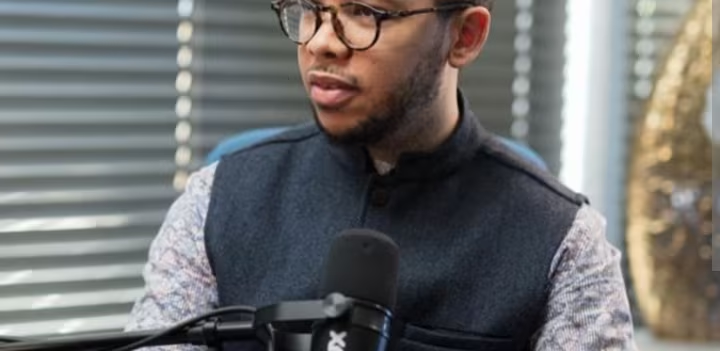
A political rift between the Economic Freedom Fighters (EFF) and student movement SMWX has deepened, with Dr. Sizwe Mpofu-Walsh declaring the organization stronger despite an ongoing boycott.
Speaking candidly, Mpofu-Walsh attributed the fallout to internal political differences linked to the MKP, as well as personal associations involving his father, senior advocate Dali Mpofu, and EFF leader Julius Malema.
“The EFF has boycotted @_SMWX because of their MKP differences with my father,” he said. “Julius Malema took a public stand because I’m Advocate Dali Mpofu’s son. But if anything, we don’t need them as SMWX—but they’re still welcome if they wanna come, and our numbers have doubled since they boycotted us in their 3rd NPA of December 2024.”
The statement highlights growing tensions between political formations and youth-driven movements in South Africa’s evolving political landscape. While the EFF has not officially responded to Mpofu-Walsh’s latest remarks, the boycott is believed to stem from ideological disagreements and shifting alliances ahead of broader political realignments.
Despite the split, Mpofu-Walsh struck a tone of resilience, emphasizing growth within SMWX. According to him, the organization has seen a surge in participation and engagement since the EFF’s withdrawal, suggesting that the boycott may have unintentionally strengthened its base.
Political analysts note that such fractures are not uncommon in South Africa’s activist and student politics, where alliances are often fluid and shaped by both ideology and personality. The involvement of high-profile figures like Malema and Dali Mpofu adds further weight to the dispute, blurring the lines between generational activism and established political influence.
SMWX, which positions itself as a progressive youth platform, now appears to be charting an independent course, even as it leaves the door open for reconciliation. “They’re still welcome,” Mpofu-Walsh reiterated, signaling a willingness to rebuild bridges despite current tensions.
As the dust settles, the situation underscores a broader question about unity within progressive movements—and whether ideological differences can be managed without splintering collective action. For now, SMWX appears focused on consolidating its gains, while the EFF’s next move remains closely watched.