The problem with Hugo Broos
Explain | 29.06.2026 15:47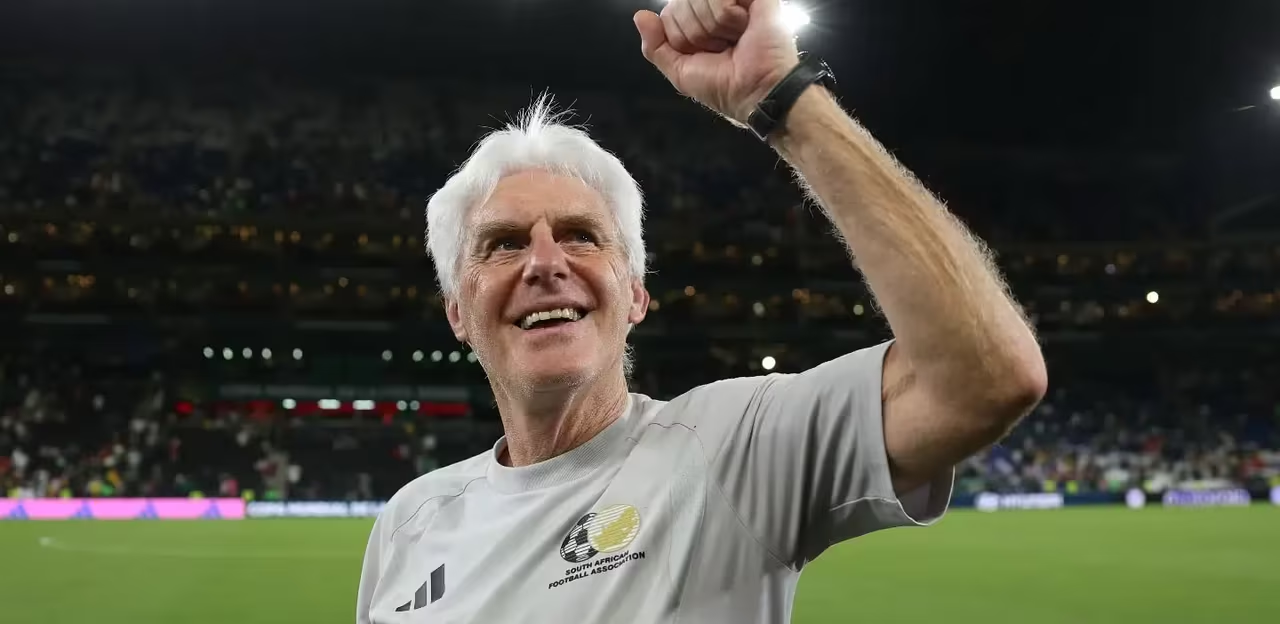
Hugo Broos deserves his flowers. Probably a whole NetFlorist subscription, actually.
When the Belgian coach took over Bafana Bafana in May 2021, the national team had failed to qualify for the 2018 and 2022 FIFA World Cups; supporters had grown accustomed to disappointment, and belief in Bafana had given way to a weary national shrug.
Broos changed that. He rebuilt the team around a younger, largely locally based squad. He gave Bafana structure, discipline and a clear identity. South Africa finished third at the 2023 Africa Cup of Nations, their best Afcon showing since 2000, and then reached the 2026 FIFA World Cup knockout stages for the first time in the country’s history. That is not a small achievement. That is a genuine restoration job.
So let us say this clearly: Broos has left South African football in a far better place than he found it.
With Hugo Broos yet to decide whether he will retire, continue coaching elsewhere, or remain involved with SAFA in a less demanding role, questions about who could eventually succeed him have already begun to surface.
But the 1-0 defeat to Canada on 28 June also showed the limits of what he has built.
Tweet
Bafana defended bravely. Ronwen Williams was excellent again. The team was organised, committed and hard to break down. For much of the match, that looked like enough. But it also looked, worryingly, like the plan was to survive rather than win. Canada pushed, South Africa absorbed. Canada looked for the moment, South Africa tried to avoid one. Then Stephen Eustáquio heartbreakingly scored in stoppage time, in the 92nd minute, and suddenly Bafana remembered they could be brave… but it was too late.
That is the danger of playing only not to lose. Sometimes you still lose, just later.
Broos’s explanation after the match was typically honest. He pointed to the gap in speed, power and physicality between South Africa and teams such as Canada. He is not wrong. Modern football is brutally athletic, and South Africa’s domestic system is not consistently producing enough players capable of matching the pace and intensity of the best international sides. Pretending otherwise would be cute, but useless.
Still, sport is not only a spreadsheet with boots on. Coaches do more than arrange tactics and count sprints. They shape what a team believes is possible.
That is where the comparison with Rassie Erasmus becomes useful, even if rugby and football are very different beasts, and even if some fans understandably hate the comparison. Erasmus was appointed SA Rugby’s first director of rugby in 2017 and Springbok head coach in 2018, after a grim period for the Boks. In 2017, SA Rugby recorded a R62.4m group net loss, flagged immediate solvency concerns, and endured results that included a record 57-0 defeat to New Zealand and a 38-3 defeat to Ireland.
South African rugby was bruised, broke-ish and politically under pressure over transformation. But of course, rugby still had a world-class talent pipeline, stronger commercial muscle, and far more institutional support than South African football. SA Rugby in crisis was still not SAFA in crisis.
And this is where football’s tragedy is sharper. Bafana are not a small national brand. Football is South Africa’s most popular sport, and the 2026 World Cup should be a massive commercial opportunity. Yet SAFA remains financially fragile, with reported losses and liabilities that make any serious rebuild harder. FIFA’s World Cup money helps, but a windfall is not a strategy.
Rugby’s reset was not just about finding cash. It was about governance, alignment and giving Erasmus the authority to rebuild from the top. Broos, by contrast, has mostly had to perform a miracle from the touchline.
That matters because the Rassie comparison is not really about pretending rugby and football have the same resources. They do not. It is about asking whether South African football has the courage to do the same kind of serious structural reset: align the national team with the domestic game, repair trust with sponsors, invest in development, and stop expecting the Bafana coach to compensate for every administrative failure with a low block and a prayer.
But Erasmus also did something beyond systems and spreadsheets. He convinced a wounded team, and then a wounded country, that impossible things were still available to us. Belief became part of the strategy.
Broos, by contrast, is a pragmatist. That has been his strength. He sees the limits, builds around them and refuses to sell fantasy. It is why Bafana became competitive again.
The problem is that pragmatism can become a ceiling. At some point, a team has to move from being grateful to be there to believing it can hurt the opposition. From defending the badge to imposing it. From “let us not embarrass ourselves” to “why not us?”
Broos gave Bafana the foundation. He restored credibility, pride and structure. History should be kind to him.
But the next phase requires something more: a coach who respects reality, but does not worship it.
Bafana no longer need to be taught that they belong.
They need to be taught that they can win.