Hugo Broos and Manqoba Mngqithi Clash Over Tactics After South Africa’s 2-0 World Cup Defeat to Mexico
Diski 365 | 12.06.2026 16:56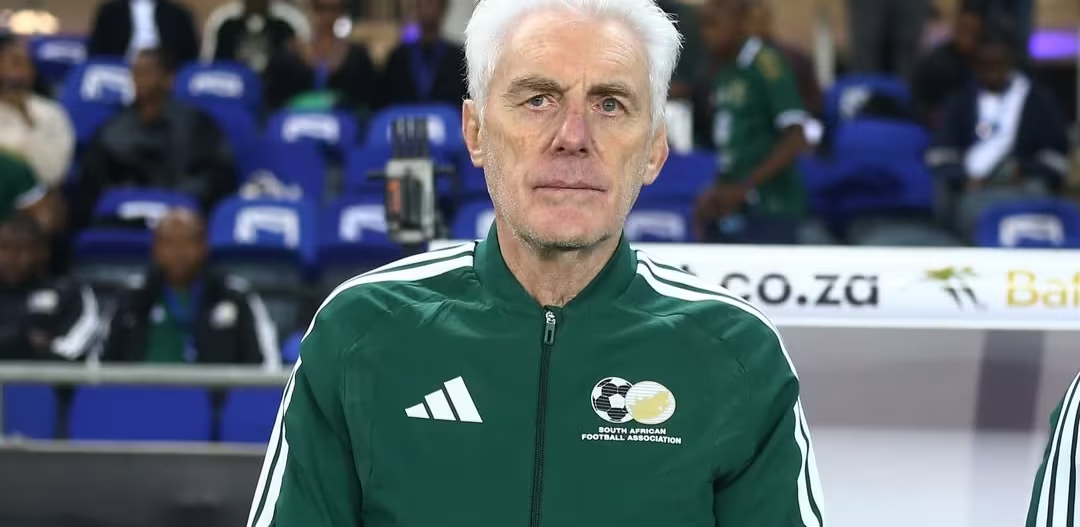
South Africa’s 2026 FIFA World Cup campaign opened with a damaging 2-0 defeat to Mexico, but the fallout has extended beyond the result as tactical decisions have come under heavy scrutiny. The Group A match, played at Estadio Azteca, ended with goals from Julian Quinones and Raul Jimenez and left Bafana Bafana bottom of the group after the first round of fixtures. South Africa also finished the match with nine men after red cards to Sphephelo Sithole and Themba Zwane, which further worsened an already difficult outing. While Mexico strengthened their position in the group, South Africa now face immediate pressure to recover in their remaining matches. The performance has triggered a wider debate about game management, selection choices and attacking intent at the highest level.
Head coach Hugo Broos defended his tactical approach after the defeat, insisting that his team showed structure and discipline despite the scoreline. He set up South Africa with a cautious system designed to remain compact and limit Mexico’s attacking spaces, especially in dangerous areas. For long periods, the plan worked as Mexico struggled to break through cleanly, even though they controlled possession. Broos argued that his players were well prepared for the challenge and showed enough organisation to remain competitive before the game shifted due to errors and red cards. However, he also admitted that the team needed to be more effective in attacking phases and create more offensive threat.
Broos emphasised that the defensive organisation was one of the few positives from the match. He noted that Mexico at times looked frustrated and uncertain in possession, suggesting that South Africa’s structure disrupted their rhythm. Despite conceding two goals, he felt the overall defensive shape was sound until individual mistakes and disciplinary issues changed the course of the match. The coach maintained that competing at World Cup level requires discipline first, and he believed that foundation was present. At the same time, he accepted that the lack of attacking output was a major concern that needed immediate improvement.
Speaking as a studio analyst for SABC, Manqoba Mngqithi offered a far more critical assessment of the same performance. The former Mamelodi Sundowns coach questioned Broos’ tactical setup, arguing that it limited South Africa’s natural attacking strengths. He pointed to the use of a back five combined with a midfield trio of Jayden Adams, Sphephelo Sithole and Teboho Mokoena, which he believes removed creativity from the team. According to Mngqithi, this structure made South Africa too defensive from the start and prevented them from playing with confidence or attacking rhythm. He stated that the team did not arrive with a mindset to play, but rather to contain.
Mngqithi placed particular focus on the midfield imbalance, especially Sithole’s role as the central figure in the three man midfield. He argued that Sithole was exposed by Mexico’s movement and struggled to cope with the intensity in that position. This vulnerability eventually contributed to South Africa’s instability, which was later compounded by his red card following a costly defensive error. Mngqithi felt that the positioning created unnecessary pressure on a player who was already facing a demanding tactical responsibility. In his view, the structure invited problems rather than solving them.
Beyond criticism of the midfield, Mngqithi also highlighted missed attacking opportunities and selection decisions that he believed could have changed the game. He argued that South Africa failed to use their pace and direct attacking options early enough, allowing Mexico to settle defensively. He pointed to Oswin Appollis’ short cameo as evidence that more aggressive personnel could have caused Mexico problems. He suggested that players such as Tshepang Moremi, Iqraam Rayners, Lyle Foster and Evidence Makgopa could have been introduced earlier to exploit space behind Mexico’s defence. According to him, the game clearly offered opportunities for a faster, more direct attacking approach.
Mngqithi also referenced specific moments where South Africa could have exploited Mexico’s defensive weaknesses, particularly through pace against slower defenders. He pointed to an incident involving Khuliso Mudau and Cesar Montes as an example of how direct running created problems. He believed Montes, despite his technical ability, lacked the speed to handle sustained pressure from quicker attackers. In his assessment, a more aggressive attacking plan would have forced Mexico into more errors and created better scoring chances for Bafana Bafana. Instead, he felt South Africa remained too conservative for too long.
Despite the defeat, both Broos and Mngqithi agreed on one key point, South Africa failed to show enough attacking threat. Broos focused on structure and defensive discipline as a foundation to build on, while Mngqithi argued that the structure itself restricted performance and prevented the team from expressing its strengths. The disagreement highlights a deeper tactical debate around South Africa’s identity at the tournament and how they should approach high level opposition. With two group matches remaining against Czech Republic and Republic of Korea, the team now faces a critical period where both results and tactical clarity will determine their World Cup fate.