Why Facts Don’t Change Minds (And the 4 Things That Actually Do)
Medium | 29.01.2026 21:02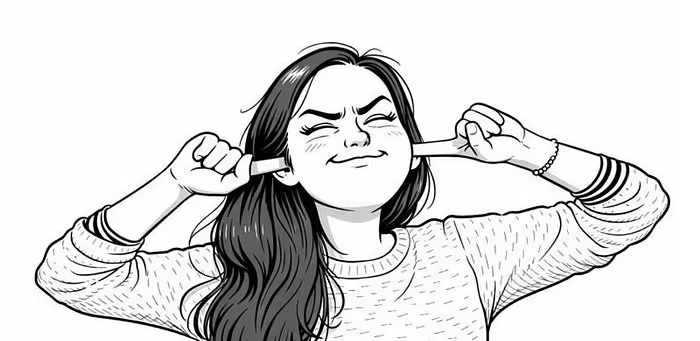
Why Facts Don’t Change Minds (And the 4 Things That Actually Do)
The truth about persuasion no one wants to admit
6 min read
·
1 hour ago
--
Listen
Share
That awkward moment when you know that winning the argument won’t change anything…
It happens at a dinner, on Twitter, in a WhatsApp group, on the street… Someone says something you know is wrong during a conversation and, politely, you explain why it’s wrong, you give them data, sources to check if needed.
And the other person doesn’t hesitate for a second.
They even double down on their position.
And then the uncomfortable question arises: why don’t facts work, even when they’re true? Why is it so hard to change someone’s mind?
Here’s the answer.

1. The mistake we all make when trying to persuade
We believe people change their minds by receiving better arguments.
Well, no.
That’s the dominant intuition: if I explain it better, if I show more data, if I’m clearer… I’ll win. But experience (and psychology) show exactly the opposite. The more facts we throw at someone, the more entrenched they become. And the striking thing isn’t that they don’t understand what you’re explaining — it’s that they don’t want to understand it.
The key difference almost no one sees is this:
- Being right is one thing.
- Getting someone to change their mind is something entirely different.
And the reason is simple: we almost never defend ideas — we defend identities.

2. Why people don’t change their minds
Resistance to change isn’t intellectual; it’s emotional and social.
The mind’s basic function isn’t to understand the universe. Its function is to keep us alive. 2: belonging to the group. Being outside the tribe was lethal, and cooperation was the most efficient way to thrive in a hostile world.
What does this mean?
That changing your mind means no longer belonging to the group that holds that belief.
It’s deeply uncomfortable because it feels like a threat to our own identity — who we are, everything that idea represents, and the people it connects us to. That’s why many discussions feel like a battle of identities, of ego.
- No one struggles to change their mind about tomorrow’s weather.
- We struggle enormously to change political or religious ideas.
The first has no social factor; the second defines the lives of certain people.
Saying this is what I think often means this is who I am. Some beliefs survive without being true simply because they’re socially useful. From the outside they seem absurd. From the inside, they serve a key function: maintaining cohesion.
That’s Turner’s social identity theory.
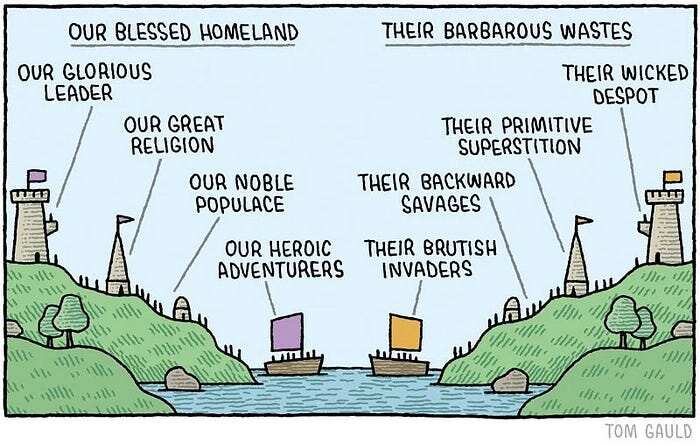
Simply belonging to a group makes you overvalue it compared to others.
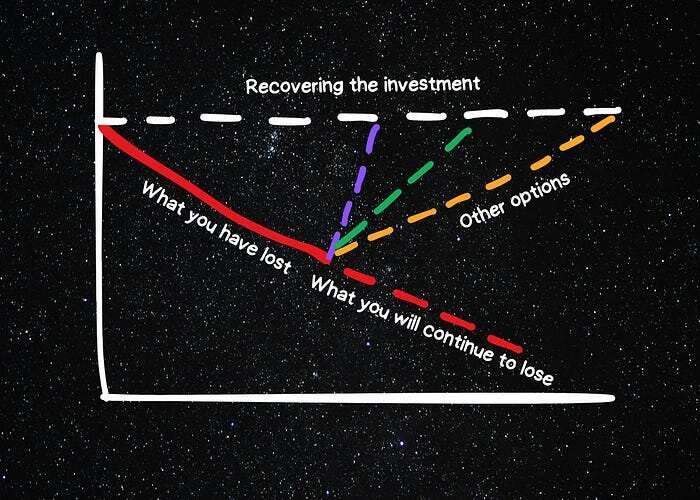
And on top of that comes the strong effect of the sunk cost bias. The greater the investment you’ve made in something, the more you’ll value continuing to invest in it just for the hope of recouping what you’ve already invested (Arkes & Blumer, 1985).
That’s why the longer you’ve supported an idea, the harder it is to change it.

3. Ideas don’t change — contexts do
Persuasion has nothing to do with logic.
Get Mental Garden’s stories in your inbox
Join Medium for free to get updates from this writer.
Subscribe
Subscribe
It’s not about making better arguments to convince someone else. It’s about creating the right conditions, provoking the right feelings so that someone reconsiders a belief.
And this requires three basic things: safety, time, and relationship.
- Without safety, they defend themselves because they fear the risks of change.
- Without time, they cling on because sudden change creates a lot of friction.
- Without relationship, they don’t listen to you because you’re not someone close or part of their group.
The worst way to get someone to change their mind is to attack their ideas.
Because their ideas represent them, and they feel attacked.
That’s why being right is one thing, and getting someone to change their mind is another.

4. How to influence without confrontation
If you want to change minds, stop trying to win arguments.
Here are four tools you can use to create change:
- Prioritize the relationship over the argument: People change more easily when the messenger matters to them. This helps you avoid the problem of distance.
- Reduce pressure: Public debates harden positions because no one wants to lose face in front of others — especially if they’re from your group and you care about them. Choose a low-pressure moment: private, personal, close, calm.
- Be gradual: Ideas live on a spectrum. If you’re at point 10 and the other person is at point 1, don’t try to take them to 10. Take them to point 2, then 3, and so on. Make the change so gradual that it feels like a personal evolution they arrived at on their own.
- Feed good ideas instead of fighting bad ones: Every time you criticize a bad idea, you repeat it. Share what you want to spread. Ignore what you want to disappear. Over time, if your idea is abundant, it will eventually sink in.
So now you know — the question isn’t whether you’re right, it’s what you’re looking for in this debate.
Sometimes, the smartest way to be right is not to prove it yet.

Want to know more? Here are three related ideas to go deeper:
- The obsession with labeling people: The Robbers Cave experiment and lessons about human behavior
- Why do we label people? “Us” vs. “Them”: Social Identity Theory
- How to argue about any topic without shouting or wanting to kill anyone: The Rapoport Protocol

✍️ Your turn: How many times have you tried to debate with someone who doesn’t change their mind no matter what?
💭 Quote of the day: “What we know matters, but who we are matters more.” — Brené Brown, Daring Greatly
🌱 Here I plant ideas. In the newsletter, I make them grow.
Daily insights on self-development, writing, and psychology — straight to your inbox. If you liked this, you’ll love the newsletter. 🌿📩
👉 Join 50.000+ readers: Mental Garden
See you in the next letter, take care! 👋

References 📚
- Arkes, H. R., & Blumer, C. (1985). The psychology of sunk cost. Organizational Behavior And Human Decision Processes, 35(1), 124–140. URL
- Tajfel, H., Billig, M. G., Bundy, R. P., & Flament, C. (1971). Social categorization and intergroup behaviour. European Journal of Social Psychology, 1(2), 149–178. URL