How a single meme can jeopardise your trip
BBC | 18.12.2025 20:00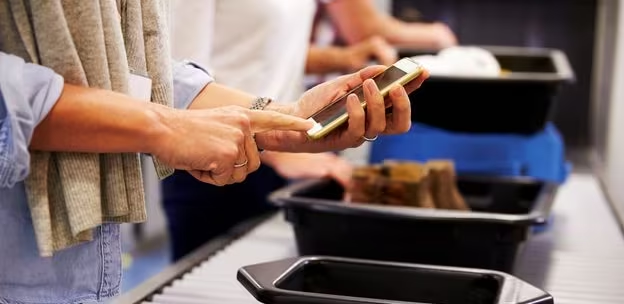
Social media posts deemed dangerous or offensive can increasingly lead to visa denial or online backlash. Here's what global travellers need to know.
Last week, the US government announced plans to scrutinise five years' worth of social media posts by visitors from dozens of countries who are eligible to visit the US for 90 days without a visa. While the specific details of the proposal remain unclear, the American public has several weeks to submit comments responding to the plan before it takes effect on 8 February 2026. Among other information, ESTA visa-free applicants will need to provide all email addresses used over the past 10 years.
The proposal reflects a recent trend of increased scrutiny of visitors to the US, where travellers' digital footprints may now be used as grounds to bar them from entering or to deport them from the country. Earlier this year, a Norwegian tourist claimed he was denied entry to the US after officials searched his phone and found a meme of Vice President JD Vance. US Customs and Border Patrol (CBP) denies the claim, stating that the decision was because of the Norwegian's "admitted drug use". The CBP site notes that "border searches of electronic devices are often integral to determining an individual's intentions upon entry to the United States".
Since returning to the White House in January, President Donald Trump has sought to secure the US's borders, citing national security reasons. But some experts say the new plan could pose an additional obstacle that deters would-be travellers.
Border searches go digital
Donald Rothwell, a law professor at Australian National University and regular commentator on international legal issues, is one of many who are now cautious of travelling to the US, as he says the visitor experience is becoming increasingly fraught.
If on arrival at a US border a foreign visitor fails to comply with a CBP border official request, they can be denied entry – Donald Rothwell
"Currently, under the Visa Waiver Program, which allows visitors from 42 countries to enter the US using the ESTA process, they possess very little rights at the border," he cautions.
"This partly arises because in applying under the Visa Waiver Program, [visitors] waive some of their US legal rights to contest certain decisions made by US CBP [Customs and Border Protection] at the border. So, if on arrival at a US border a foreign visitor fails to comply with a CBP border official request, they can be denied entry." His advice for visitors: be highly cautious about what you post online with respect to matters that may relate to US policy or individual Americans.
Looking further ahead, Rothwell theorises that increasing digitisation is likely to make high levels of scrutiny far more common – and easier to implement: "If travel is going to become 'borderless', it follows that more digital data will be collected on travellers." More data, he adds, provides authorities greater confidence that the visitor does not pose a security threat. "I suspect that we will see an increasing use of AI being used to make these decisions," he says.
Think before you post
The US is far from the only nation to implement such surveillance measures. Governments around the world are increasingly monitoring travellers' social media activity, and a person's digital footprint can still cause problems long after they cross a border. In 2018, New Zealand introduced what they said was the world's first law allowing border officials to demand access to travellers' phones, with hefty fines for those who refuse to share their passwords. The United Arab Emirates goes further still: authorities can detain foreigners who post or even repost defamatory content, as one Irishman discovered last year when he left a negative online review of a former local employer.
The risks are also rising because travellers are generating ever-increasing volumes of potentially sensitive content. A survey of British travellers by Virgin Mobile found that more than half "can't imagine not taking pictures on holiday", typically uploading seven images a week to social media. In the arms race of "travel porn", many users get competitive. One-in-10 survey respondents said they would go to extreme lengths for a holiday selfie, including standing on a cliff edge or posing with wild animals.
The problem is that those shots are often taken without regard for local norms, leading to backlash that can quickly escalate. In 2022, a Russian influencer and her husband were deported from Bali after staging a nude photoshoot under a sacred tree. Shortly after the photos were uploaded to social media, local politician Niluh Djelantic asked fellow citizens to report the influencer to the police. "She should be responsible for the cost of the cleaning ceremony to be carried out by villagers," Djelantik wrote. "Trashy tourist. Go home!"
Incidents like this have led to governments scrambling to educate their globe-trotting citizens, with web pages dedicated to ever-shifting social media etiquette abroad, or cultural norms that many travellers may not realise exist. Canada's government portal, for example, warns that in Thailand it is illegal to promote alcohol consumption, and you can be fined for posting pictures with alcohol on social media.
The spectrum of misunderstanding
Sucheta Rawal, a travel keynote speaker and children's book author, has experienced how quickly a holiday post can spiral. On a trip to Africa last year, one of her posts was viewed by a contact, who then angrily reshared it globally. "I didn't feel I was being insensitive," she says, "but it led to misinterpretation, blame and hostility towards me, which made the rest of my trip very difficult. All content is vulnerable – whether you are posting personally or privately. In today's environment, it is not very difficult to take comments out of context, or to thread them into stories that you did not intend to be told."
 Getty Images
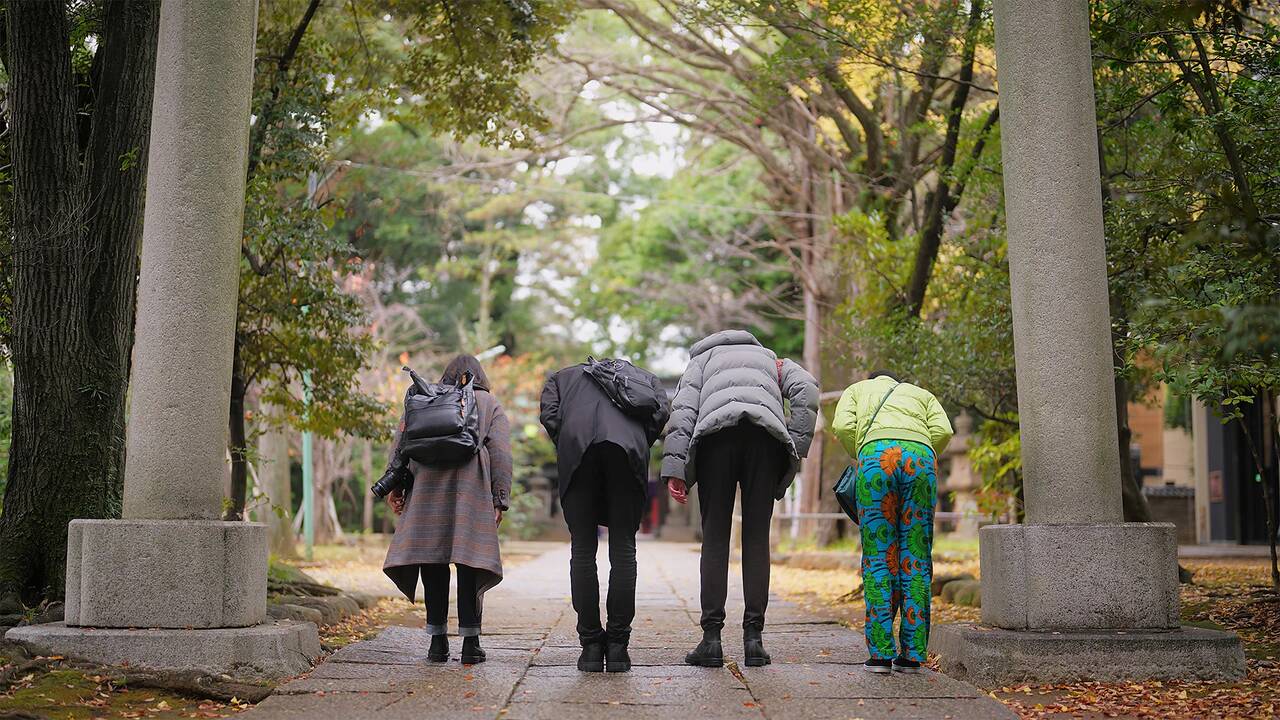
At a time when more travellers are becoming content creators and posting gigabytes of material every month, the scope for misunderstanding grows. "When I was writing Beato Goes to Japan," says Rawal, "I realised that I had to be mindful of so many subtle cultural nuances in my images." The wrapping of a yukata (summer kimono) differs between living people and corpses, she notes, while facing your back to a torii gate, the entrance to a Shinto shrine, is disrespectful.
More like this:
• Where are all the Canadians going?
As travel photography becomes increasingly performative, millions of people take selfies wearing local clothing or visiting religious shrines. Such missteps can offend those nearby long before an image is posted online.
Context is everything
Often, it is unfamiliarity with cultural norms – rather than malice – that lies behind these incidents. For example, Japan, along with many Asian and Middle Eastern nations, is an example of a "high-context society". In a talk on the subject, intercultural communication expert Erin Meyer explains that in such cultures, communication "is more implicit, or layered or nuanced", and much is said through symbolic gestures or implied understanding.
Travellers from "low-context societies", which prioritise direct verbal communication, may find such layered, understated communication a minefield of potential rudeness – one where even if you avoid words, you don't necessarily avoid causing offence. When social posts today come with the option of adding a plethora of emojis, a simple video upload at a foreign fruit market, with an accompanying watermelon icon could easily trigger viewers who see that as a sign of antisemitism or a racist stereotype against black Americans.
None of this means holidaymakers should censor themselves entirely for fear of backlash. Instead, the best approach may be to simply post more consciously, prioritising quality over quantity rather than feeding algorithms or expectations.
"Awareness is often gained by being fully aware and present of your surroundings," says Rawal. "Observe how people around you dress, speak, act, and try to blend in as best as you can. Don't turn local people into objects just because you are a traveller."
The result is not just a safer and more meaningful trip, but one where you connect respectfully with cultural sites rather than simply turning them into content.
--
If you liked this story, sign up for The Essential List newsletter – a handpicked selection of features, videos and can't-miss news, delivered to your inbox twice a week.