Ramaphosa Demand All Municipal Must Have Water Tanker To End Corruption & Tackle Water Mafia
iReport South Africa | 30.03.2026 17:25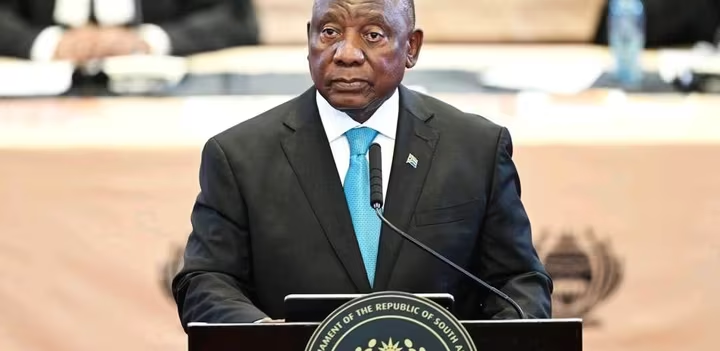
In a daring step aimed at breaking entrenched corruption networks and undermining the so-called water mafia, President Cyril Ramaphosa has called for a radical revamp of South Africa’s water distribution system. Mayors have been urged to construct and run their own fleets of water tankers, as part of this audacious initiative.
Speaking in the midst of mounting public frustration over ongoing water shortages, the President issued a warning that criminal syndicates and unscrupulous intermediaries have been using emergency water delivery systems for years, thereby raising costs and manipulating supply chains at the expense of areas who are particularly vulnerable.
According to Ramaphosa, the state must immediately retake control over the logistics of water distribution. He argued that the state’s reliance on private contractors has generated opportunities for bribery, price manipulation, and politically connected middlemen who profit from crisis conditions.
He emphasised that the ownership of water tankers by municipalities would considerably increase accountability, minimise reliance on services that are outsourced, and guarantee that the delivery of emergency water would be regarded as a public service rather than an opportunity driven by profit.
The moment has come for municipalities to directly own and control vital service assets such water tankers so that we remove corruption and close the space for criminal networks that thrive in our service delivery gaps Ramaphosa stated.
A further point that the President brought up was that the so-called water mafia has become an increasingly significant national worry due to suspicions of tender manipulation, inflated emergency procurement contracts, and coordinated involvement in local supply systems. He issued a warning warning that such activities not only undermine governance but also increase inequality in places that are already under water stress.
Officials from the government have stated that the proposal is implemented as a component of broader reforms that are intended to improve the capabilities of local governments and to restore public faith in key services. The experts, on the other hand, warn that the successful implementation of this plan would be contingent on the enhancement of municipal management maintenance capacity and the establishment of stringent oversight procedures to prevent internal corruption from merely transferring rather than becoming eliminated.
The words made by Ramaphosa have prompted a wide-ranging debate, with some individuals applauding the idea as a decisive action and others questioning whether or not struggling towns possess the logistical capacity to efficiently manage tanker fleets.
In the following months, the Presidency has stated that additional policy specifics will be produced in conjunction with the institutions of provincial and local governments.