Police accused of 'homophobic assumptions' over victims of blackmail on Grindr
BBC | 04.12.2025 13:02
Warning - this story contains distressing content and references to suicide
Police failed to properly investigate allegations that a gang was blackmailing men on the gay dating app Grindr, the BBC can reveal.
Our investigation has learned of five cases of suspected blackmail involving victims targeted on Grindr in one area, with at least four of them connected to the same gang, which remains at large.
In one instance, a suspected victim killed himself 24 hours after a group of men turned up at his home demanding he hand over his new Range Rover.
The Independent Office for Police Conduct (IOPC) watchdog has told Hertfordshire Police - the investigating force - to examine whether "homophobic assumptions" could have contributed to failures in the investigation.
Hertfordshire Police said it was "unable to discuss specific points" about the case, which has now been reopened, but said it is committed to "building and maintaining good working relationships with the LGBTQ+ communities".
The BBC has spoken to the family of another gay man who died after being targeted on Grindr.
Charities say there can be a lack of understanding when it comes to crimes targeting the LGBTQ+ community.
'It's a total blur'
In March 2024, Cameron Tewson was at his partner Scott Gough's home in Chandler's Cross, Hertfordshire, when a group of six men turned up and demanded the keys to Mr Gough's new car.
The gang, whom Mr Tewson described as "white and in their mid 20s", fled when he called the police and alerted a neighbour.
But they left behind a note addressed to the "owner of a white Range Rover" - Mr Gough's car - and included the number plate, as well as a phone number.
The note read: "I think it's in your best interest to give me a call."
Mr Tewson said that when Mr Gough, 56, got home, he was reluctant to talk about the incident and insisted he would deal with the police directly.
Mr Tewson believes his partner, who worked at a car dealership, was trying to hide the fact that he had been using Grindr - a dating app Mr Gough had used many times in the past.
The 32-year-old said: "I feel strongly he knew who they were, and he kept that from me."
The next day, he found a handwritten version of Mr Gough's last will and testament and, while on the phone to police, discovered his partner's body in his bedroom.
A coroner later recorded Mr Gough had died by asphyxiation. An inquest into the full circumstances around his death remains open.
"It's a total blur," Mr Tewson said. "The police were there, the neighbours were there. It was almost like I was watching it happen to somebody else."
Mr Tewson said when he told police about suspicions his boyfriend had been using Grindr without his knowledge, he felt the officers' attitudes changed.
"When it came up in conversations I felt like it was just a complete disregard," he added.
Police documents later revealed that at the time of Mr Gough's death, the phone number used by the gang was already known to police and had been involved in at least one previous investigation into alleged blackmail involving the use of Grindr.
They also show that officers were able to trace the registration number of the car used by the gang to identify a suspect, but the men identified were never spoken to by police as potential offenders.
No DNA evidence or fingerprints were taken from the note left on the doorstep, and police didn't collect rubbish left at the scene by the gang for DNA testing.
No arrests were made following the blackmail attempt.
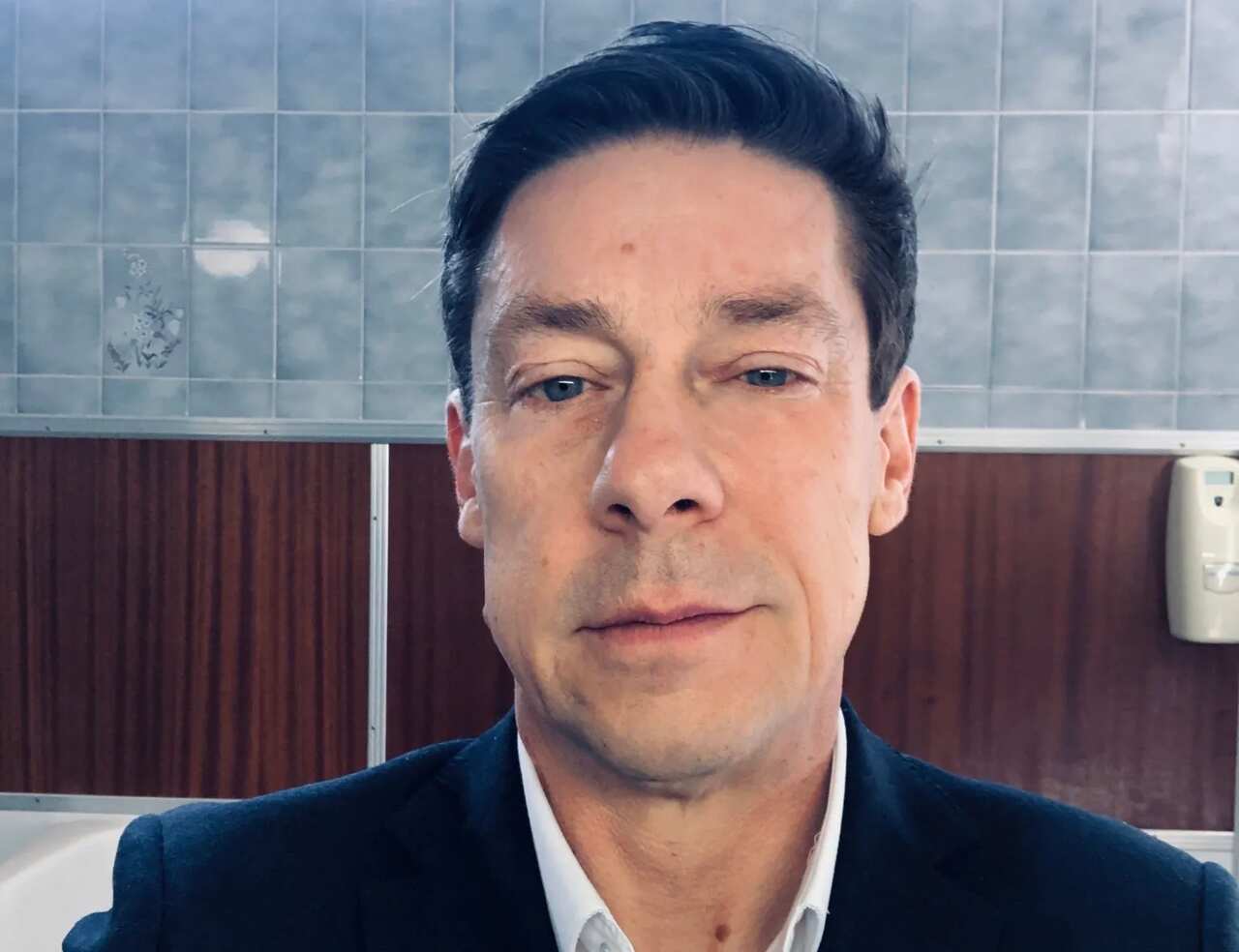
Mr Tewson has since complained to the force's professional standards department and to the IOPC about the handling of the case.
The IOPC report found that the attempted blackmailing of Mr Gough and potential links to his death had not been "robustly investigated," and that subsequent complaints about the investigation were also mishandled.
It upheld a complaint that the police made "several errors" following Mr Gough's death and "did not investigate [his] sudden death fully as a result".
The report also made a number of revelations about the suspected gang and how prolific their alleged crimes were.
It revealed:
- Within 10 days of Mr Gough's death, police received two more separate blackmail reports involving the same phone number that appeared on the note left at his house
- In both cases, the victims had arranged to meet someone on Grindr but were confronted by a group of young men who demanded money
- The group later presented themselves as "paedophile hunters" despite not giving police any intelligence supporting this claim
- Police treated the group as "individuals requiring safeguarding" rather than as potential offenders involved in extortion or blackmail
The IOPC has asked Hertfordshire Police to re-examine elements of the investigation into Mr Gough's death, as well as the force's handling of Mr Tewson's complaint.
A spokesperson for Hertfordshire Police said it "was unable to comment on the specifics" of Mr Tewson's complaint because "additional actions are being investigated" following the IOPC's instructions.
Supt Owen Pyle, Hertfordshire Constabulary's LGBTQ+ strategic lead, said the force was "committed to eliminating discrimination" against the LGBTQ+ community and that it wants to ensure complainants feel comfortable to approach the force. He said suspected victims of crime would be "taken seriously and treated with sensitivity".
'He was just my rock, and he was gone'
Charities have said that the true scale of crimes on dating apps such as Grindr is impossible to know and that police responses to such crimes can be varied.
"We know there are good police officers," said Bridget Symonds, director of services for LGBT+ anti-abuse charity Galop, "but it really is a lottery and it depends on who you're dealing with, where you are in the country."
There are no official stats to indicate how many dating app crimes are reported every year.
The BBC also spoke to the family of another man who died after being blackmailed on Grindr. Fashion student Liam McHale, from Buckinghamshire, lived just 15 miles from Mr Gough.
Nine weeks on from Mr Gough's death, the 24-year-old was found dead after researching fatal levels of drugs online and leaving behind a note.
The night before his death, he confided in friends that he was being blackmailed by a man he had met on Grindr, who was falsely claiming to be underage.
Mr McHale called the police to report it, but because he'd been drinking on a night out, they encouraged him to wait until the next day to file a report.
His mother, Julie Rice, told BBC News: "I told him I loved him, that he'd done the right thing telling the police and that he should enjoy his night out, and to call me if anything else happened. And that was the last time I spoke to him."
The next morning, she received a call from one of Mr McHale's friends who had visited his home and found his body in the bathroom.
"All I could say was 'No, no, no.' It was just a blur. He was my rock, and he was gone," she said.
A coroner's report later concluded that Mr McHale had died from asphyxiation and multiple drug intoxication "after recent issues in his personal life".
The coroner returned an inconclusive verdict on whether or not he had intended to take his own life.
Mrs Rice also fears her son's case was not investigated properly by police.
Emails seen by the BBC show that it has taken more than 18 months for Thames Valley Police, the force investigating the death, to be granted authorisation to access Mr McHale's phone or laptop for evidence.
She said: "We've not had any proper answers, but the police have told me he's not the only one who's been targeted.
"It just feels like it's been swept under the mat."
No arrests have been made in connection with Mr McHale's death. And BBC News has been unable to verify whether Mr McHale and Mr Gough were targeted by the same gang.
Thames Valley Police told the BBC an investigation into blackmail is ongoing and that inquiries are open.
The force made a mandatory referral to the IOPC in June 2024 because Mr McHale had been in contact with police before his death.
The IOPC deemed no further action needed to be taken and no misconduct investigation was required.
A spokesperson for Thames Valley Police told the BBC it had not received a formal complaint regarding the case but that it would be "inappropriate to comment on individual grievances outside the formal complaints process".
'Not easy crimes to solve'
Natalie Sherborn, head of White-collar Defence and Investigations at law firm Withers, said that dating apps had been "found wanting" in their response to crimes being carried out via their platforms.
"Romance fraud, harassment or blackmail are not easy crimes to solve," she said.
"There is a digital footprint but it's not always straightforward. It can be quite difficult to unpick the data in order to try and identify who is behind it."
She suggested that apps need to collect more data about their users' identities in order to weed out "bad actors", but stressed that any changes need to consider privacy concerns,.
A spokesperson for Grindr told the BBC that the company "works diligently to provide a safe environment," including cooperating with UK law enforcement.
It said: "Identity verification can be a safety risk for people who are not out at work, live with unsupportive families, or face discrimination.
"We build our systems intentionally to minimise data collection while still supporting law enforcement investigations."
A spokesperson for the IOPC said: "We work closely with members of the LGBTQ+ community, holding regular meetings with representatives from various organisations to explain our work and better understand their concerns.
"Our thoughts remain with Mr Gough's family, loved ones and all those affected by his tragic death. We are deeply sympathetic of their need to obtain answers to questions about the police investigation at the time of Mr Gough's passing, and their wish to be listened to and heard."
If you have been affected by any of the issues in this story you can find information and support on the BBC Actionline website.