When GDP Rises and People Stand Still
Medium | 22.12.2025 11:29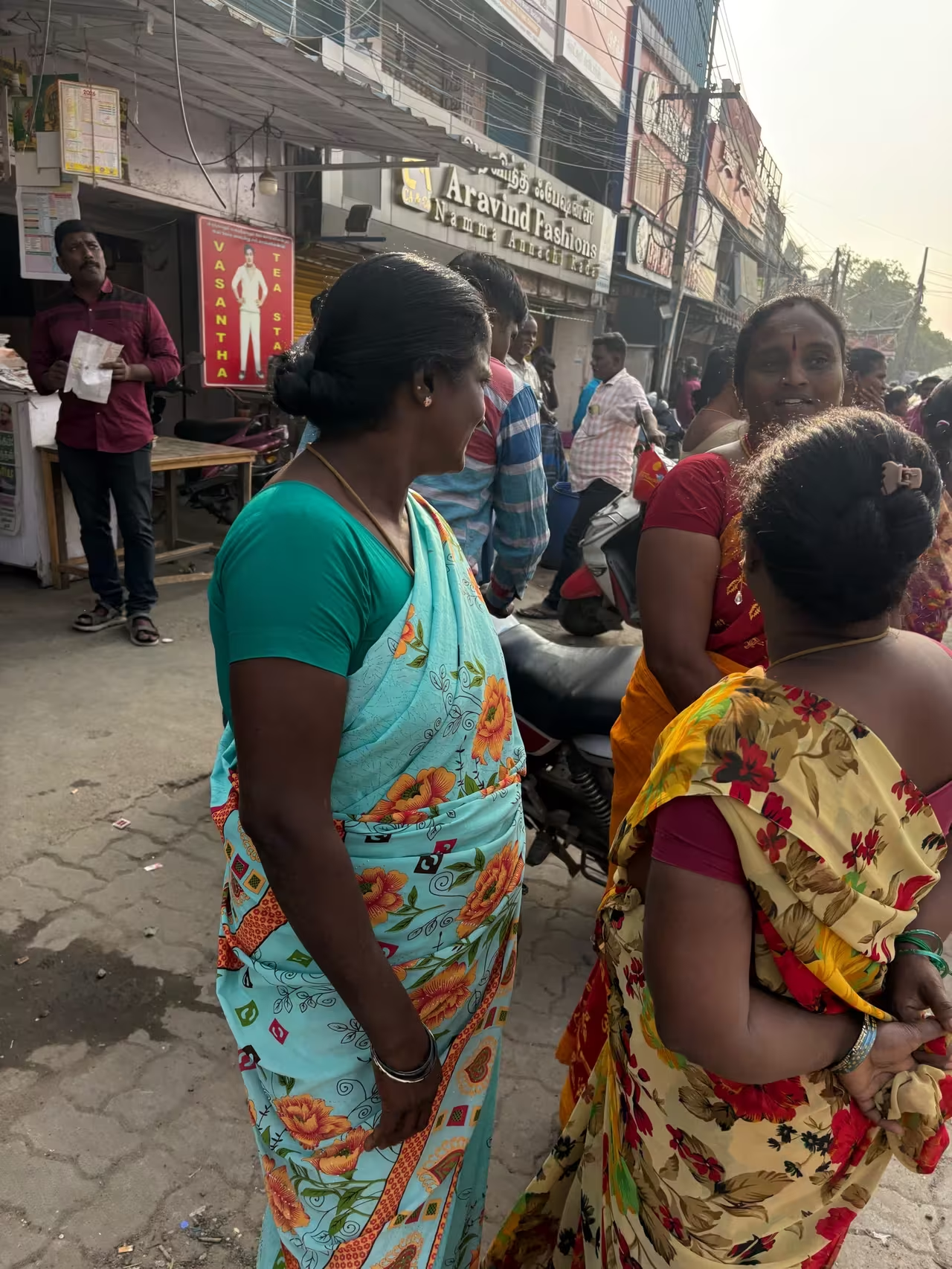
When GDP Rises and People Stand Still
Follow
3 min read
·
1 hour ago
Listen
Share
Every day, as I cross a familiar stretch of road, I see men standing quietly at the roadside, waiting to be chosen for a day’s labour. No contracts, no certainty – only hope mixed with resignation. Each time I pass them, something tightens in my chest. This is not poverty as a statistic; this is inequality as a lived, visible reality.
We often speak proudly of economic growth, global rankings, and national achievement. We repeat numbers that sound impressive and reassuring. Yet these men remain where they are – selling their labour by the day, unsure whether they will return home with wages or empty hands. That contradiction is not accidental; it is structural.
Get Mukesh Rajan’s stories in your inbox
Join Medium for free to get updates from this writer.
Subscribe
Subscribe
In India, wealth is sharply concentrated at the top. The top 1% controls roughly 40 – 45% of total wealth, the top 10% holds about 65 – 70%, while the bottom half of the population owns barely 3 – 6%. When economic shocks arrive – pandemics, inflation, recessions – it is not those at the top who absorb the impact. They are protected by assets, legal structures, and institutional cushions. The shock is pushed downward, absorbed by those who live closest to insecurity. Their bodies, health, and dignity become the economy’s buffer.
This is the central argument made by Joseph Stiglitz in The Price of Inequality. Inequality, he argues, is not a natural outcome of markets but the result of rules written to favour the powerful. Not all “rule of law” systems are just. Some laws exist less to protect the vulnerable from harm and more to shield the powerful from responsibility.
India proudly presents itself as the world’s fifth-largest economy. But what does that ranking mean when public spending on education and health remains among the lowest relative to need? What is the use of such numbers when millions must negotiate their worth on the roadside each morning? Growth, measured narrowly, tells us how busy an economy is – not how humane it has become.
GDP counts transactions, not dignity. It rises even when inequality deepens, even when insecurity becomes normalised. A nation can grow richer on paper while its people grow poorer in lived experience. The success of the system is celebrated, while the cost is quietly borne by those with the least voice.
The eyes of these workers tell a story no economic dashboard captures – fatigue without complaint, hope dulled by repetition. Their pain is not unseen because it is hidden; it is unseen because we have trained ourselves not to look. They remain essential to the economy, yet invisible in its measures of success.
An economy should ultimately be judged not by its global rank, but by how few people are forced to sell their labour in desperation. Until we align our idea of progress with human well-being, inequality will continue to stand silently by the roadside – present, persistent, and ignored.