Polina Chesnakova’s Savory French Toast
The Kitchn | 01.02.2026 22:00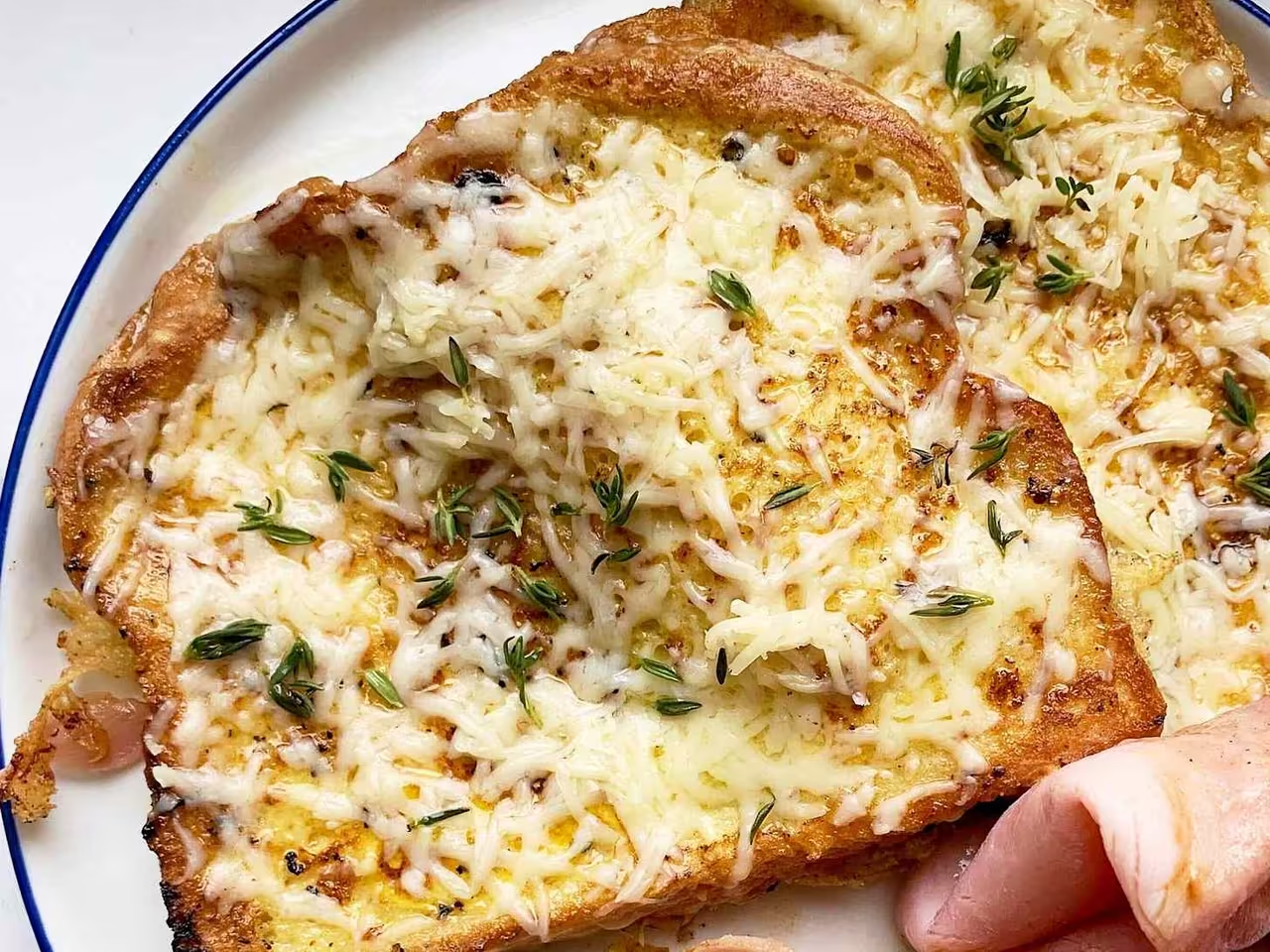
We independently select these products—if you buy from one of our links, we may earn a commission. All prices were accurate at the time of publishing.
I’m a savory girl at heart. I have a salty, umami soul, and there’s simply no sweet treat that can satisfy me in the same way. You’re never going to find me on a weekend morning making a stack of pancakes or a batch of classic French toast. That is, until I read through Polina Chesnakova’s new cookbook, Chesnok.
Chesnok is a love letter to the cuisine of Eastern Europe and the Caucuses — the food Polina grew up eating. Polina was born in Ukraine to Russian and Armenian parents from Georgia. The book is made up of a mix of recipes that find their roots in many different countries, but all made their way into the kitchens and bellies of Polina and her family.
There’s something for everyone, from weekend projects like vatrushki (farmer cheese stuffed buns) to quick and easy dishes that pack enormous flavor despite their simplicity. Polina’s take on French toast, called grenki, has only three ingredients, but takes the classic dish to a delightfully savory place I never considered it could go. It’s become an instant staple in our house — the kind of thing that no longer even requires consulting the recipe anymore, because that’s how much we make it.
I recently had the chance to ask Polina a few questions about what it was like to write a cookbook about her family’s food and how she translated dishes from the home kitchen to the page.
How was writing a cookbook about your family’s cuisine and your cultural diaspora different from books you’ve worked on in the past? Was it harder or easier to ideate what recipes wound up in the book?
My first two books, Hot Cheese and Everyday Cake, were single-subject and very straightforward, whereas Chesnok was both more personal and overall a much bigger project — more testing, research, writing, and thought went into it. That being said, of the three, Chesnok somehow ended up being the easiest to write because so much of the content just flowed out of me while working on it. With the first two I had to sit down, come up with the recipes out of thin air, and go into the kitchen to bring them to life. With Chesnok it’s all food I grew up eating with my family or in the wider diaspora, so the recipes and stories have been living inside me my whole life. When planning the table of contents, I just sat down and listed all the dishes I could think of and within about a half hour I was done. There were many recipes that didn’t make it into the book because of space considerations, and a few that, even though they would’ve made sense to include, I didn’t because I just don’t like them (looking at you, kholodets, aka meat aspic).
Most of the recipes came from my mother and my aunts’ repertoire. Some, like the Uzbek and Azeri plovs, the baked nalysnyky, weren’t family dishes, but I nonetheless had specific, poignant memories tied to them. For those, I would seek out the recipe from the person whom I associated them with. And of course, there were also a handful of foods that I ate growing up, but were usually bought at the local Eastern European store. For example, the pickled tomatoes, ryazhenka, and pelmeni. I did a lot of research to figure out how to make them in my own kitchen.
There is a saying in Russian, “na glaz,” which means “by eye,” and it’s the way all these recipes existed when I started to write them down. Measurements would be made with random kitchen cups and spoons that were totally non-standard but were the kitchen tools my family members had relied on for years. Or it was simply “a handful” of that or “a pinch” of this. Turning a “na glaz” recipe into a written recipe was a whole afternoon spent in the kitchen or on a call going step by step, making my mom or aunts slow down so I could take notes, weigh out amounts, ask for clarifications — and with no small amount of head-butting! In the end, though, I felt proud to have catalogued these recipes, which are so important to me and family, that it felt worth the struggles. And now that Chesnok is out in the world, I am hearing from readers in the diaspora that they are so excited to see the recipes of their childhood, which they had forgotten or since lost, recovered through my book.
A lot of this book is made up of recipes you grew up eating. Which of these recipes has the best memory for you?
This is an impossible question! But if I had to choose, maybe the blinchiki, Slavic-style crepes. They take me back to lazy Saturday mornings as a kid, when my mom or one of my aunts would whip up a stack of blinchiki (usually from a box of Bisquick, if I’m going to be honest) for breakfast. I would fold a crepe in half, roll it up like a carpet, and then dunk it in sour cream and Aunt Jemima syrup. I’d inhale one after the other this way, until I thought I was going to pop. Then I’d lumber over to the couch and watch cartoons for the rest of the day. Ah, to be a kid …
I know it can be hard for a cookbook author to pick a “favorite” recipe from the book, but is there a recipe (or recipes) that’s a staple in your kitchen?
There are a handful that are on frequent repeat in my house. My mom’s Tabaka-style adjika chicken is really the only way I roast chicken these days — its flavor and the way it keeps the meat juicy and tender can’t be beat. We eat the borsch and lobio (Georgian kidney bean stew) at least once a month, and the apple oladushki (kefir pancakes) have become a huge hit with my toddler! He loves to help me mix the simple batter up. And between the fermented dairy, fruit, and low sugar content, they’re pretty good for him, too!
Do you have any recommendations for online resources for Eastern European ingredients if people don’t have access to a local Eastern European grocery?
Kalustyan’s is also a good source for high-quality Georgian spices. Georgian matsoni (yogurt) can’t be bought here, but you can make your own with culture from Cultures for Health. The folks at Black Bear up in Maine are making beautiful, freshly-pressed sunflower oil.
As for other Eastern European ingredients, like buckwheat, farmer cheese, vanilla sugar, and kefir, I’m finding that they’re becoming more and more available at your run-of-the-mill grocery store!
- Generous 1/4 teaspoon
kosher salt
- Generous 1/4 teaspoon
freshly ground black pepper
- 1/4 to 1/3 cup
whole milk, depending on how eggy you want it
Unsalted butter, for cooking
- 4 to 6 slices
day-old white bread (a crusty artisan loaf also will work!), cut into thick slices
In a shallow dish, beat together the eggs, salt, and pepper until smooth and combined. Whisk in the milk to incorporate. Set aside.
In a large nonstick skillet, melt a knob of butter over low heat. When the butter has melted and starts to foam, increase the heat so that it starts to sizzle.
Place a slice of bread in the egg mixture and soak for a few seconds. Flip and let the other side soak — continue to flip and soak one or two more times until the bread is evenly saturated, but not mushy.
Shake off any excess egg and place in the pan with the sizzling butter. If your pan is large enough, add a second piece of soaked bread to the pan. Cook until the bottom turns golden-brown, about 2 minutes.
Flip and cook, adding more butter if needed to evenly coat the pan, another 2 minutes. The toast is done when you press on the center and it springs right back. If it doesn’t, keep cooking, flipping the slices from time to time, until done.
Transfer to a serving plate and repeat with remaining slices. Serve immediately while still hot.
Excerpted with permission from Chesnok: Cooking From My Corner of the Diaspora: Recipes from Eastern Europe, The Caucasus, and Central Asia by: Polina Chesnakova published by Hardie Grant North America, September 2025.