From potholes to hijacked buildings: The viral stunts driving Helen Zille’s Johannesburg campaign
Explain | 16.07.2026 16:32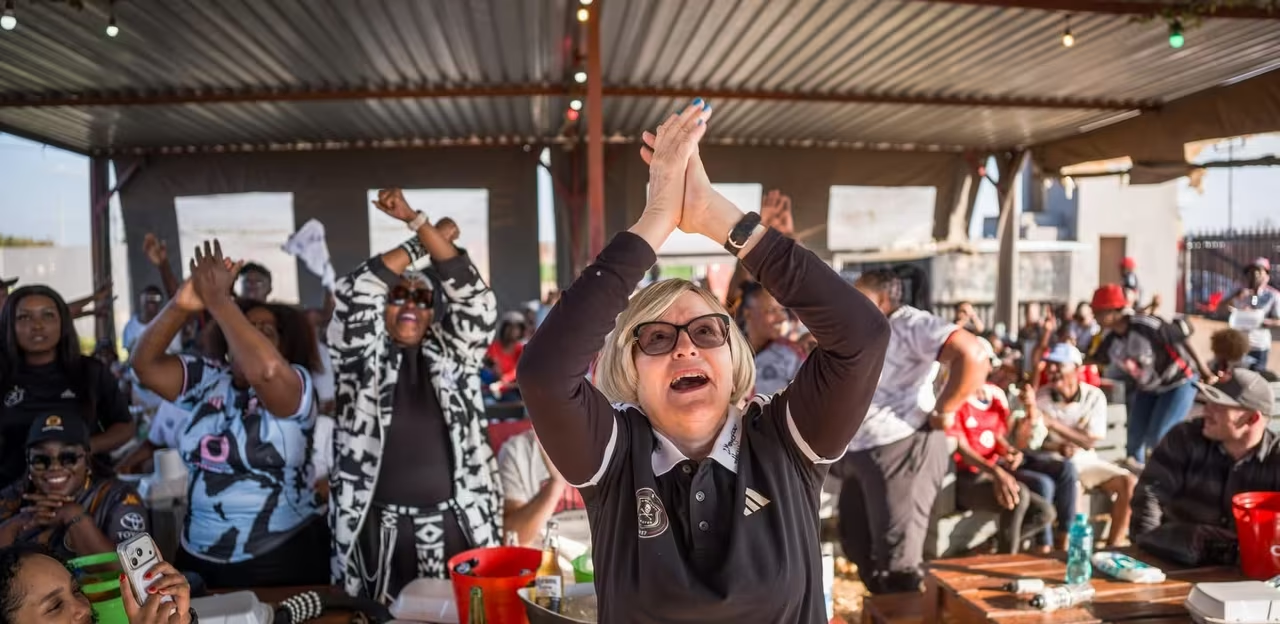
Helen Zille has climbed a hijacked building, floated down flooded streets in an inflatable boat, swum in a pothole and even taken over the DJ booth at a Johannesburg nightclub. If you’ve opened social media during the local election campaign, you’ve probably seen at least one of those clips.
Love it or hate it, Zille’s campaign has become one of the most talked-about of the election season, not because of lengthy policy speeches, but because of a string of highly visual stunts designed to grab attention online.
There is a strategy behind the spectacle. Research on visual political communication shows that images are particularly effective at attracting attention and generating engagement on social media. In an overcrowded feed, a politician standing beside a pothole may be ignored. A politician wearing a snorkel inside one is much harder to scroll past.
Here’s a look at the moments that got South Africans talking, and what message each one was trying to send.
The pothole swim
One of Zille’s earliest viral moments came when she climbed into a water-filled pothole in Douglasdale. The stunt was meant to highlight Johannesburg’s deteriorating roads and years of neglected maintenance.
Supporters praised the video for highlighting an everyday frustration for motorists, while critics accused her of reducing complex service-delivery problems to social-media theatre. The clip quickly spread across TikTok, Facebook and X, becoming one of the defining images of her campaign.
The flood boat
When heavy rain left parts of Soweto flooded, Zille returned with another visual protest. This time she climbed into an inflatable boat and paddled along a flooded residential street. The message was aimed squarely at Johannesburg’s ageing stormwater infrastructure and poor drainage maintenance.
Taking over the DJ booth
In an attempt to reach younger voters, Zille visited a nightclub in Fourways, where she took over the DJ booth, greeted patrons and danced with the crowd. It was a very different image from the one many South Africans associate with the veteran politician.
A nightclub appearance does not guarantee younger voters will support Zille. It does, however, create content likely to reach people who would never attend one of her rallies or watch a full campaign speech.
From sinkholes to satire
As the campaign continued, Zille leaned further into humour. She posted videos joking about residents needing ziplines to cross damaged driveways and rafting through neglected neighbourhoods, using exaggerated scenarios to draw attention to Johannesburg’s crumbling infrastructure.
Behind the jokes was a consistent message: service delivery failures have become so common that they sometimes feel absurd. Rather than listing statistics, the campaign chose visual comedy to make that point.
Zille goes to ekasi
Zille also spent time away from the cameras of formal press conferences. She visited Soweto, stopped at local businesses, ate at a popular shisanyama, and joined residents to watch the Soweto Derby between Orlando Pirates and Kaizer Chiefs.
Like many of her campaign appearances, the visit was designed to show voters a more informal side of the veteran politician while engaging directly with communities beyond the city’s northern suburbs.
The hijacked building
The latest stunt and perhaps the boldest saw Zille climbing a hijacked building in Johannesburg’s inner city. The visit was intended to draw attention to the city’s long-running problem of hijacked and abandoned buildings, many of which have become unsafe, overcrowded and difficult for authorities to reclaim.
Why campaign like this?
Political campaigns have changed dramatically over the past decade. It’s no longer enough to hold rallies or issue press statements. Candidates are increasingly competing for attention in crowded social media feeds, where a 30-second video can reach more people than a traditional political speech.
Communication researchers sometimes refer to this as the “attention economy”, the idea that attention has become one of politics’ most valuable resources. The more people watch, comment and share, the more likely a campaign is to reach voters who might otherwise ignore it.
Whether Helen Zille’s viral strategy translates into votes will only become clear on election day. One thing is already certain, though: in a crowded mayoral race, she has ensured that people are talking about Johannesburg’s problems, even if they’re also talking about how she chose to highlight them.