Student loan system 'fair and reasonable', says Reeves
BBC | 31.01.2026 18:12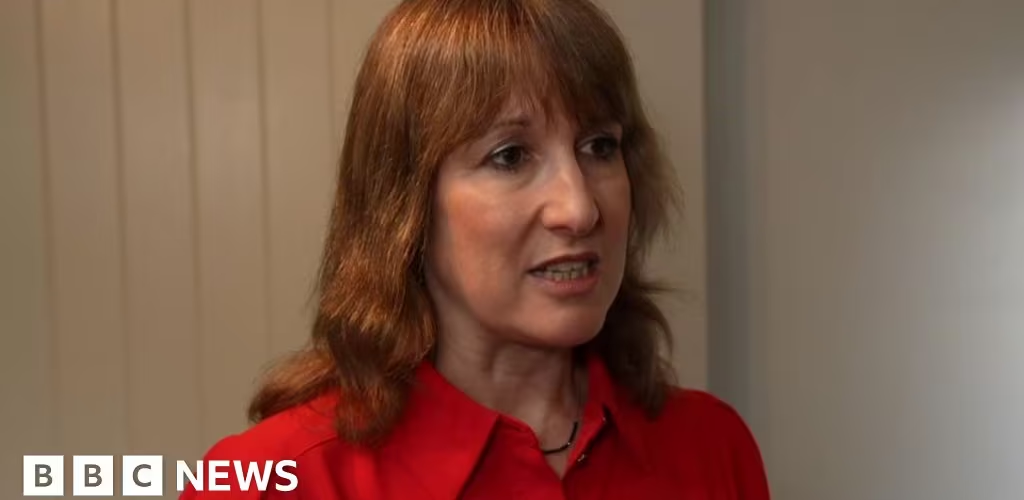
Chancellor Rachel Reeves has described the student loans system as "fair and reasonable" after criticism over the decision to freeze the repayment threshold for some borrowers.
Earlier in the week, personal finance expert Martin Lewis said freezing the threshold at which graduates repay their loans was "not a moral thing" for her to do as it would be treating the debts like tax.
In her November Budget, Reeves announced the salary at which Plan 2 student loans must be paid back would be frozen at £29,385 for three years starting from April 2027.
Speaking to BBC Newsnight, she argued the government's measures were "fair and proportionate" for getting "the balance right between tax and spending".
She said the changes announced in her Budget were bringing the different repayment plans in line with each other.
"So you'll start paying back at the same income level. I think that is fair and reasonable," the chancellor added.
Money Saving Expert founder Lewis had asked the chancellor to "please have a rethink" of her policy as he went on to say she was treating student loans as a tax - which he stressed they are not.
"It's a contract that the government signed with young people who had not been given any education on these loans," Lewis told Newsnight.
"I do not think it is a moral thing for you to do to be freezing the repayment threshold in this way."
Plan 2 loans apply to students who started courses in England and Wales between September 2012 and July 2023. The threshold is currently £28,470 for this plan.
A freeze would mean workers earning above that amount will be dragged into making larger repayments on their student loans than if the thresholds had risen in line with inflation.
Graduates repay 9% of the amount earned above the threshold outlined in their plan.
They do not have to start making payments until the April after leaving their course and payments are made automatically through the tax system.
But Lewis said there was growing anger, particularly among those in England and Wales with Plan 2 loans, because recent higher inflation has resulted in increased interest rates being applied to the loans.
"When we've had high inflation, their interest rates have gone up and that has been particularly painful," Lewis said.
And even though those rates have come down a little, Lewis pointed out, people who took out student loans during this period will have "a lot more" added on top "which makes it more difficult".
Plan 2 loans are charged a rate of interest equal to Retail Prices Index (RPI) inflation, plus up to 3% on top based on earnings. Someone earning £51,245 or more with a Plan 2 loan will currently pay 6.2%.
By contrast, those with Plan 1 and Plan 5 loans, who started university before 2012 and since 2023 respectively, are currently charged 3.2%.
While a higher interest rate does not affect the amount someone repays each month, it makes it harder to reduce the size of the loan, meaning the borrower could repay more over time.
Plan 2 loans were introduced from 2012, at the same time the Conservative-Liberal Democrat coalition government tripled tuition fees to up to £9,000 a year.