Shop closures spark debate over locals and foreigners
Scrolla | 16.07.2026 22:16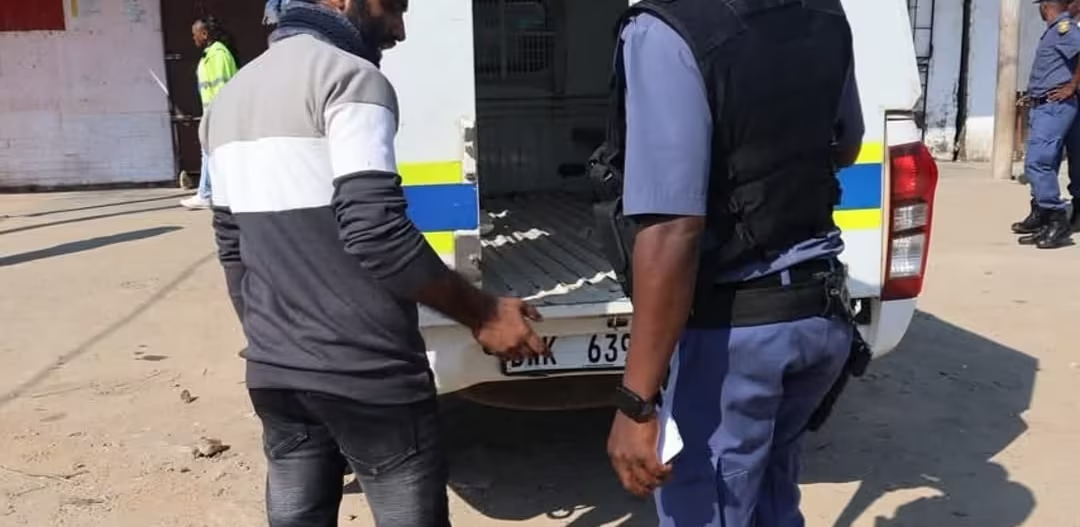
By Nkhensani Mthombeni
• Several businesses in Nkowankowa remain closed two weeks after Greater Tzaneen Municipality shut down shops that failed to meet trading and health regulations.
• Local business owners support action against illegal businesses but say South African traders need more help to comply with municipal rules during tough economic times.
Several businesses in Nkowankowa township outside Tzaneen remain closed almost two weeks after the Greater Tzaneen Municipality launched a major compliance crackdown.
The inspections targeted businesses owned by both South Africans and foreign nationals that were found to be breaking trading, health and municipal regulations.
Among the businesses ordered to close were a national clothing store franchise, butcheries, takeaway outlets, grocery stores and spaza shops.
The inspections formed part of the municipality’s campaign to ensure businesses comply with trading laws, health standards and municipal bylaws.
Municipal officials worked alongside the South African Police Service and the Department of Home Affairs during the operation.
Officials confiscated expired food, seized counterfeit clothing and took several foreign nationals without valid documentation to Ritavi Police Station for verification.
Inspectors also found some businesses operating in dirty and unhygienic conditions.
The crackdown has received mixed reactions from local business owners.
Kulani Mabunda, who owns a chisa nyama in the area and was not affected by the operation, said he supports action against businesses that break the law.
However, he believes South African business owners should receive more support before facing closure.
“The municipality cannot treat local business owners exactly the same as foreigners. If locals are forced to close, the local economy also suffers,” he said.
Mabunda said many small businesses are struggling to survive because of the high cost of living and weak economy.
“Where is a small business owner supposed to get R2,500 to sort out all the paperwork when business is already struggling?” he asked.
He believes the fact that many shops are still closed shows that some owners simply cannot afford to meet all the compliance requirements immediately.
Mabunda also said municipalities should spend more time educating local entrepreneurs about trading regulations before shutting down their businesses.
“This is the first time many of us have experienced inspections like this. Government should teach people what is expected before taking action,” he said.
He questioned why the inspections only started recently.
“They should happen throughout the year, not only when elections are getting closer. But I do support the message that every business must obey the law.”
Greater Tzaneen Municipality began similar inspections in Lenyenye township in June before extending the operation to Nkowankowa.
Municipal officials say more inspections will continue across the municipality in the coming weeks as part of efforts to improve public health, enforce trading laws and create a fair business environment for everyone.
The operation comes as municipalities across South Africa increase inspections of businesses to tackle illegal trading, expired food, counterfeit goods and non-compliance with health and safety regulations.
Pictured above: Greater Tzaneen Municipality officials closed several businesses in Nkowankowa during compliance inspections that also led to expired food and counterfeit goods being confiscated.
Image source: Greater Tzaneen Municipality