Families call for tougher laws on drug-driving killers
BBC | 12.12.2025 08:00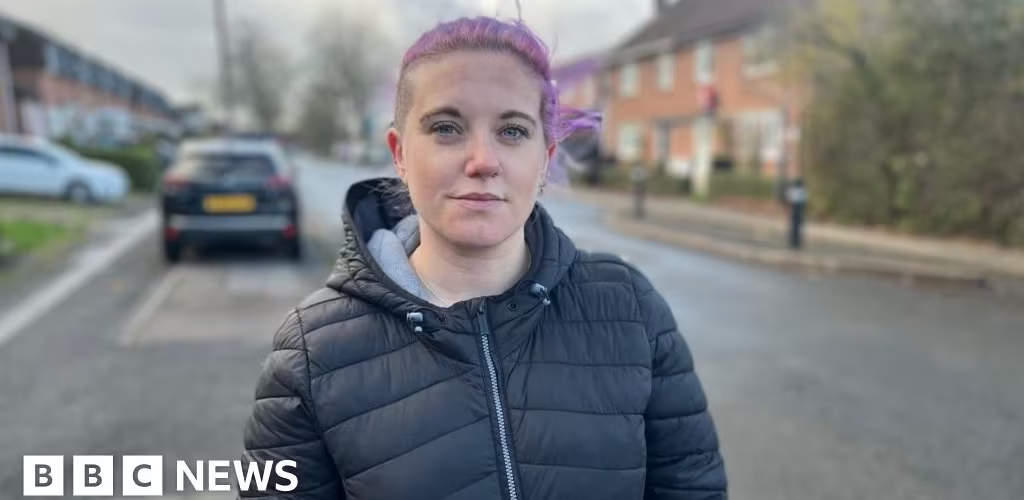
'My dad was killed by a drug-driver. Now I want tougher laws'
Families whose relatives were killed by drug-drivers are demanding police are given new powers to revoke licences at the roadside if they suspect a motorist is over the limit.
Charlie Ward, whose father Steven was killed by a drug-driver, said it was "heartbreaking" he would never walk her down the aisle.
The National Police Chiefs' Council (NPCC) wants the power to impose an immediate ban when a driver has provided a positive roadside saliva drug test, while a further blood test is analysed.
The government said those caught faced tough penalties, including fines and prison sentences.
Steven Ward, 62, died from head injuries in 2024 after being struck by a car just yards from his home in Englefield Green, Surrey.
The driver, Samuel Russell, 37, from Sutton, was more than 10 times over the drug-drive limit and nearly three times over the drink-drive limit.
He was jailed in November after admitting causing death by dangerous driving.
Ms Ward, 31, said it had been "an accident waiting to happen" after discovering in court that Russell had used drugs and alcohol to self-medicate for mental health problems - and that he had a previous drink-drive conviction.
"The man who did it was going too fast and he crossed on to the other side of the road, mounted the pavement and hit my dad from behind as he was walking," Ms Ward said.
"My mum remembers hearing a big bang, because her house was just a few doors down, then she heard the ambulances and saw the helicopter."
Ms Ward, who lives in Leamington Spa, said: "I do believe police officers should be able to take licences if people are testing positive at the roadside.
"It would give families who have something like this happen to them feel there's an immediate support there."
Linzi Stewart's brother Tim Burgess was also killed in 2024 by a reckless driver high on cocaine and alcohol in Cheshire.
The motorist still held a licence despite having been arrested after a crash just days before. He was eventually jailed for 12 years.
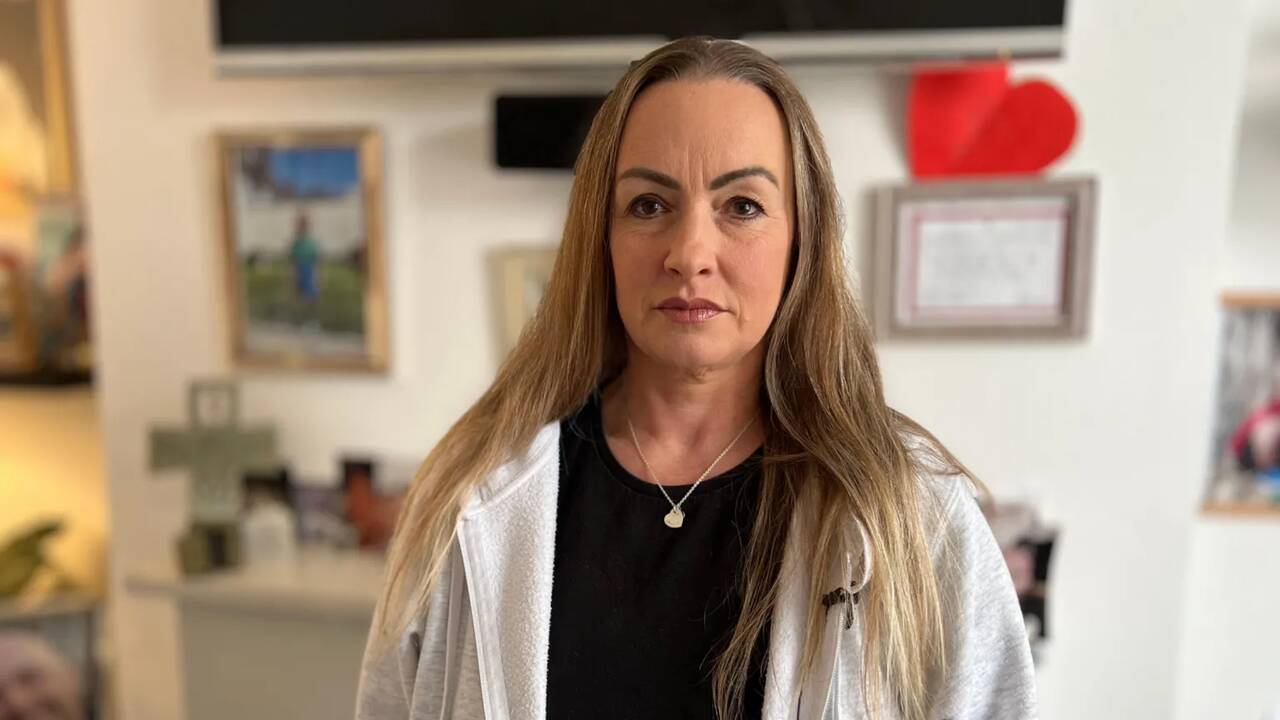
Ms Stewart is campaigning for a change in the law that would see dangerous drivers, and those under the influence of drink or drugs, having their licences revoked, pending trial and sentencing.
"To know he was killed by someone who shouldn't have been on the road, that's what's shocking and the government needs to look at those laws," she said.
Her petition, which has 195,000 signatures, also calls for repeat drink and drug drivers to be remanded in custody until they appear before a magistrate for sentence or committal to crown court.
"I think first offence we need to look at licence revocation, bail conditions, possible curfew and tag, something as a deterrent," she added.
"People think they can just do it and get away with it."
Reporter Ben Moore undergoes a field impairment test to see what suspected drug-drivers face
Government figures show a 78% increase in driver fatalities where drugs were present between 2014 and 2023.
Under the current system, motorists suspected of drug driving can be given a field impairment test, a type of co-ordination test at the roadside, to assess their fitness to drive.
They can also be asked to give a preliminary saliva sample. If that proves positive, a confirmatory blood test is required - but that can take laboratories weeks to analyse.
Ch Supt Marc Clothier, from the NPCC, is calling for the power to stop someone driving while that analysis is carried out.
"We're seeing approximately an eight-week time for most tests to be turned around and come back to us," he said.
"One of the things we have been pushing for is around some sort of road risk prevention notice, or interim disqualification."
"That would allow us to take people off the road and stop them driving if they've provided a positive test at the roadside, whilst we await for that formal analysis and appropriate justice to take place."
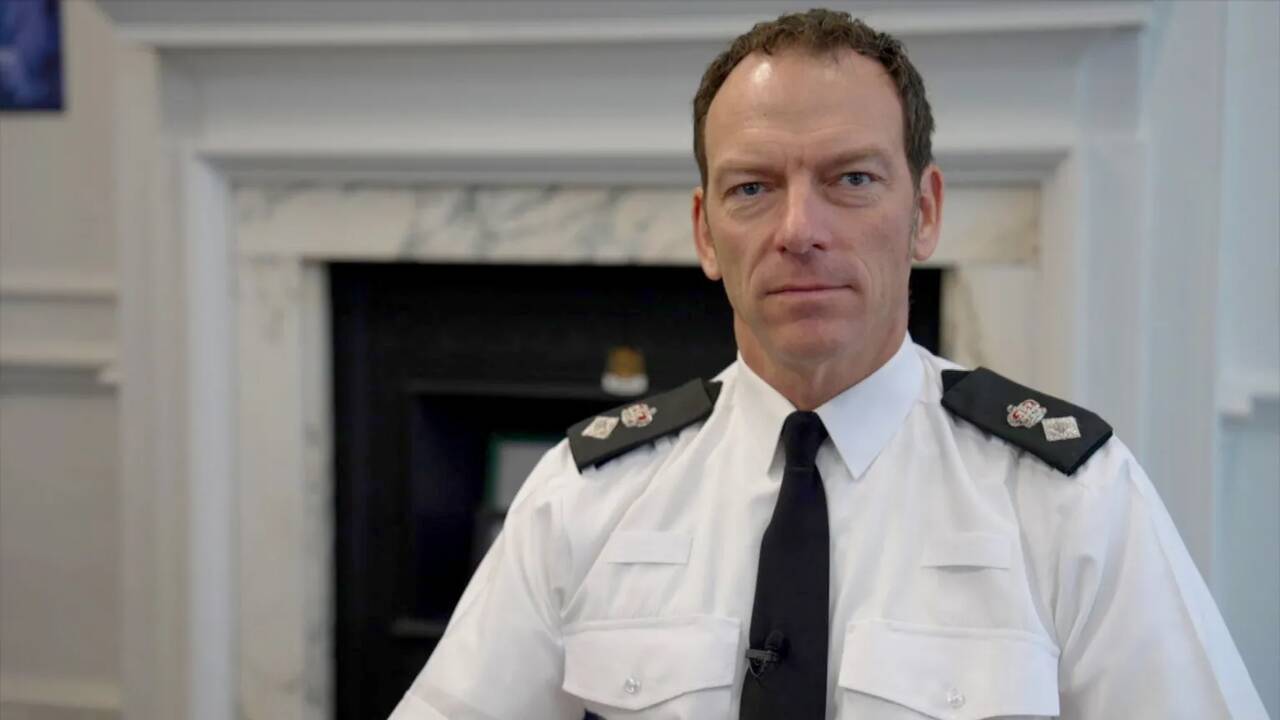
Last year, Sussex Chief Constable and NPCC lead for road policing Jo Shiner, whose father was killed in a crash when she was a teenager, called for stronger, more effective legislation "which enables policing and other agencies to [revoke] the licence of those who offend more quickly".
The Department for Transport said it was working closely with policing partners to improve efficiency while ensuring the integrity of results that support prosecutions.
It said providers were currently reporting results into policing within the six-month statutory time limit and there were no road traffic backlogs in force.
David Barton, a motoring lawyer in Kent, believes there could be more use of existing powers the DVLA already has to sanction a driver with a history of drug taking.
"If they've got a prior record and are a repeat offender, many people would say that is something the police ought to be liaising with the DVLA over," he said.
"If they are a habitual drug abuser, then the DVLA as the regulator has the power to step in and revoke a licence."
Det Sgt Chris Wade, who investigates fatal and serious crashes in Kent and is an impairment instructor, said he had seen a "significant increase" in the number of drug drivers.
"Now we're in a position where vehicles are driving past us and they're taking drugs at the wheel," he said.
"If you'd have told the 19-year-old me when I joined the organisation that was going to happen I wouldn't have believed you.
"The attitudes around drug driving have certainly not caught up to where they were with alcohol."
Ministry of Justice data shows there were 28,179 convictions for selected drug-driving offences in the year ending June 2025.
That is up 14% from the year before, and almost double the 14,889 convictions in the year ending June 2020.
A government spokesperson said: "We are committed to making our roads safer.
"Our new Road Safety Strategy, the first in over a decade, will introduce more measures to keep people safe and our latest THINK! campaign sends a strong warning about the dangers and consequences of drug driving."