Why I Won’t Be Making Giada’s Classic Lasagna Recipe Again
The Kitchn | 16.01.2026 00:00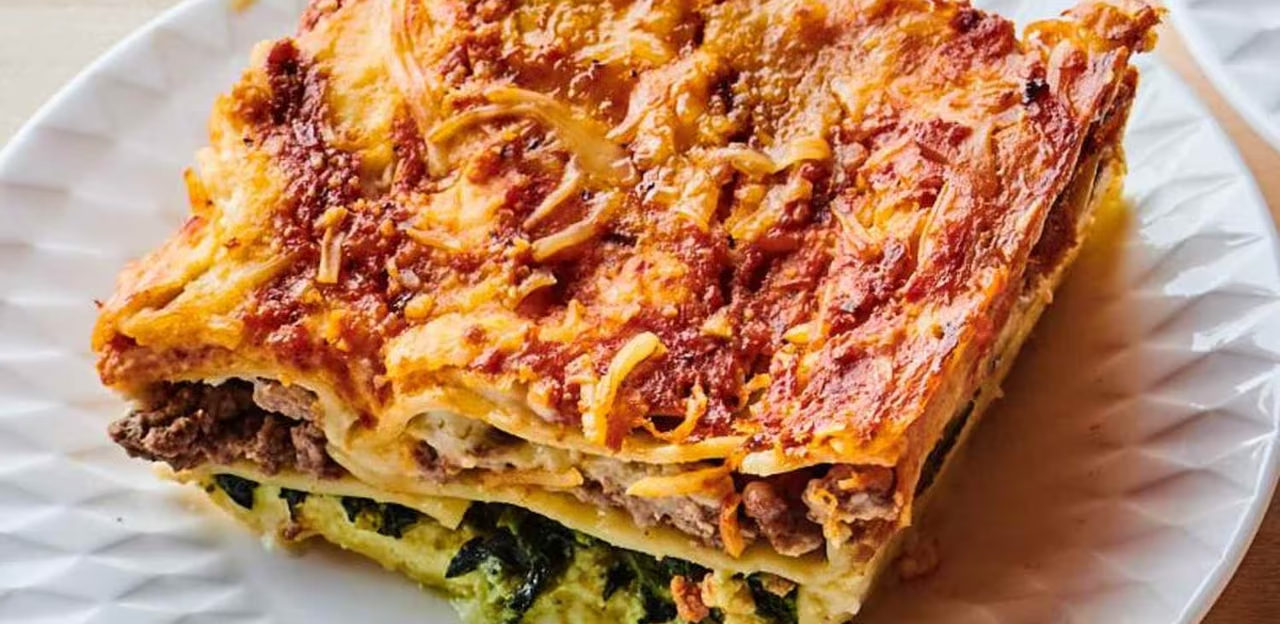
We independently select these products—if you buy from one of our links, we may earn a commission. All prices were accurate at the time of publishing.
Unsurprisingly, one early recipe featured in the first season of her show Everyday Italian was for Classic Italian Lasagna. The recipe has over 500 reviews and a four-star rating. What intrigued me most was how it appeared to marry both Italian and Italian-American vibes in a single beloved dish. The recipe relies on both ricotta cheese and béchamel sauce; it also has a layer of chopped spinach and savory beef crumbles. Could this lasagna recipe be the one I’ve been waiting for? I set aside an afternoon to prepare Giada’s lasagna recipe, and here’s how it went.
The best place to begin making Giada’s Classic Italian Lasagna is what’s listed at the very bottom of her recipe: her “Simple Tomato Sauce,” which takes about an hour to simmer. To make the sauce, sauté chopped onion, garlic, celery, and carrot in a Dutch oven until soft. Add two large cans of crushed tomatoes and dried bay leaves, then simmer uncovered for 1 hour. Remove the bay leaves, taste and add salt and black pepper. If, after seasoning, the sauce is too acidic, add unsalted butter to mellow the flavor. Transfer the sauce to a food processor, then blend until smooth. Set aside to cool completely.
While the tomato sauce simmers, begin the béchamel sauce. In another pot, melt butter, then whisk in flour until the mixture is smooth and the raw flour taste cooks out. Add room temperature milk, making sure to whisk the whole time so that no lumps form. Bring the sauce to a simmer, whisking until it is thickened and creamy. Add freshly grated nutmeg and 1 1/2 cups of the simple tomato sauce. Taste and add salt and white pepper until well-seasoned.
Next, prepare the beef, spinach, and ricotta fillings. Cook ground chuck in extra virgin olive oil until it is browned and broken up into crumbles. Remove the meat from the pan of rendered fat with a slotted spoon and set aside to cool completely.
Still with me? After all that prep, it’s time to assemble Giada’s Classic Lasagna. First spread 1/3 of the béchamel-tomato sauce in the bottom of a 9×13-inch baking dish, and cover with a single layer of cooked lasagna noodles. Spread the entire ricotta mixture over the pasta, then top with the spinach in an even layer. Add more lasagna noodles in a single layer, top with all of the ground beef, and half of the mozzarella cheese. Add another 1/3 of the béchamel sauce, and finish with final layers of pasta, béchamel sauce, mozzarella cheese, and Parmesan cheese.
Cover the baking dish with aluminum foil and place on an aluminum foil-lined baking sheet. Bake until the top is bubbling, about 30 minutes. Remove the foil and bake uncovered until the cheese is browned, about 15 minutes.
Most homemade lasagna recipes require several elements, plenty of dishes, and a significant amount of time spent in the kitchen. I enjoy this type of project cooking, especially when the result is worthy of the work. Yet, in this recipe I noticed unnecessary steps, wasted ingredients, and an excess of dirty dishes. Was it all worth it?
There were several aspects of Giada’s Classic Italian Lasagna I really enjoyed, even after doing a few double takes as I followed the recipe. For one, Giada adds all of the ricotta, all of the spinach, and all of the browned, ground beef at once in their own separate layers. In most other lasagna recipes, the cheese and the meat or vegetable fillings are distributed evenly throughout the layers. Giada’s method made the layers of ricotta, spinach, and beef prominent, which I found that I liked. Each layer was distinctly flavorful whereas the layers of other lasagnas meld into a single, saucy bite.
There is much discussion about whether to use ricotta, béchamel (or gasp, cottage cheese) in lasagna. I’ve never used both ricotta and béchamel sauce at the same time in a single lasagna recipe, and now it’s something I’ll carry forward into every other pan of layered pasta. I loved how the flavor of egg-enriched ricotta stood out in its simplicity. And combining the béchamel and the tomato sauces helped create layers that were easy to slice and not waterlogged as marinara-forward lasagna slices can be.
However, I will not be making Giada’s Classic Italian Lasagna as it is written again. The recipe has several problems, some big and others small.
The biggest problem for me was the potential waste due to the amount of ingredients. To make tomato sauce, you cook the vegetables in a whopping 1/2 cup of extra virgin olive oil and use 2 large cans of crushed tomatoes. (Note: Giada calls for 32-ounce cans of crushed tomatoes, which are unavailable near me. I used 28-ounce cans and rinsed the cans with an extra 8 ounces of water to achieve the same amount of tomato-y liquid.) This is all to yield a recipe that makes 6 1/2 cups of tomato sauce, when you only need 1 1/2 cups for her lasagna. Seriously, I had to reread the recipe several times to make sure that such a small portion of the sauce was used. With 1/2 cup of oil already in the sauce, I found no need to add up to 1/2 stick of butter as well. The sauce was balanced in flavor once I added salt and pepper to the sauce. And adding the butter on top of the lasagna before baking? Totally unnecessary not to mention greasy.
I read recipe comments, just like you do, and many of the negative reviews for this recipe cited a lack of flavor. I’m convinced that the culprit comes down to the seasoning. Giada does not provide a recommendation for the amount of salt to add to any of the lasagna’s elements, and I suspect that a lack of seasoning led to a lackluster flavor. Here’s our guide on learning how to properly add salt to food, but for a TLDR: add salt at every stage of cooking and keep adding until the food tastes like the best version of itself.
- Halve the tomato sauce, or better yet, use store-bought. Only a fraction of the 6 1/2 cups of tomato sauce are used in the recipe. The most obvious option is to freeze the remaining sauce for another use. (I like to freeze extra sauces in portion-friendly silicone containers, like these from Souper Cubes.) Alternatively, halve the recipe to prepare a smaller amount of sauce. Though this will still result in 5 cups extra sauce, you can serve it on the side for folks who like a saucier lasagna slice and freeze any extras. The third option is to use a store-bought sauce. As the sauce is mixed into the béchamel and part of a multi-component recipe, you won’t miss out on flavor but you will gain back some time and reduce the dirty dish pile. If you’re not sure which bottle of marinara sauce is best, these are a few of our favorite store-bought pasta jars.
- Boil fewer lasagna noodles. Giada instructs you to cook 1 pound of lasagna noodles, but I was left with 6 extra noodles. Instead of wasting food or scrambling to find another use for the noodles, simply start with fewer noodles. Here at The Kitchn, we’ve found that you usually need just 15 lasagna noodles for a 9×13-inch baking dish, which is about 2/3 of a 1-pound box.
- Scale back on the olive oil and butter. Olive oil and butter aren’t cheap ingredients, and the amounts called for in this recipe felt excessive to me. Ground chuck is already a fatty cut, so it does not need to fry in 1/4 cup of expensive extra virgin olive oil in order to brown. Scale the oil back to 1 to 2 tablespoons. Also, finishing the top of the lasagna with a few pats of butter is unnecessary and results in greasy slices. Skip this step and let the gooey cheese take the lead.
- Utilize leftovers wisely. If you decide to make Giada’s Classic Italian Lasagna as written and ignore all of my other advice, I suggest you be smart about your leftovers. Instead of tossing the six leftover cooked lasagna noodles, freezing an abundance of tomato sauce, and forgetting about the ricotta left in the container, make meat-free, easy lasagna-roll ups now to enjoy later.