Tsonga People Send Clear Message To Ngizwe Mchunu & Others
iReport South Africa | 04.04.2026 16:09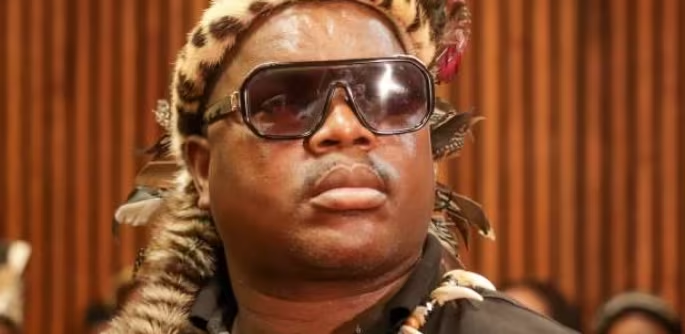
As a result of concerns regarding utterances that were seen to promote tribal differences, the Tsonga community across different provinces has come together to formulate a coordinated reaction. Community leaders, cultural activists, and youth groups have all communicated their opposition to any attempts to incite ethnic animosity or prejudice within South Africa’s diverse community. This opposition has been signalled collectively.
The mobilisation was activated as a result of statements that were widely disseminated across various social media platforms and were attributed to cultural commentator Ngizwe Mchunu. On the basis that these utterances reportedly promoted narratives that could further exacerbate pre-existing tribal divides, they were met with condemnation. There has been a rapid and organised response from members of the Tsonga community across Limpopo, Mpumalanga, and Gauteng. This response reflects a resolve to prevent the escalation of ethnic hostilities.
Community representatives have emphasised that their approach is not confrontational but rather anchored in protecting the concepts of respect, coexistence, and dignity that constitute the foundation of their cultural identity. This is because these ideals are the foundation of their values. As a cautionary illustration of how rapidly incendiary discourse can evolve into broader community conflict if it is not addressed promptly, many people have pointed to the recent instability that has occurred in certain regions of the Eastern Cape.
The fundamental message was conveyed by an elder who was speaking at a community gathering. He said, “We have witnessed similar tensions unfold in other regions, and the outcome is never positive.” We want to make it clear that South Africa is a country that belongs to all of its inhabitants, and that no group should be singled out or disrespected on the basis of their identity.
Several organisations operating within the Tsonga cultural sphere have issued a call to action to national leaders, institutions of civil society, and traditional authority, urging them to take more forceful stances against language that is divisive. They have drew parallels between tribalism and xenophobia, and they have warned that both of these problems have the potential to destabilise communities if they are allowed to flourish uncontrolled.
Statements of worry have not been the only kind of response from the community on this occasion. Hashtags that emphasise solidarity, mutual respect, and the multicultural strength of the nation have become trending across social media platforms. These hashtags have been developed by youth formations as part of digital campaigns that promote unity and cultural pride. The community’s resolve to responding through positive messaging rather than through conflict or antagonism is demonstrated by this constructive strategy, which indicates dedication to the community.
The return of tribal rhetoric amid a period of tremendous socio-economic hardship brings new hazards, according to political observers, despite the fact that tribal rhetoric has been prevalent in South Africa’s public discourse for a considerable amount of time. They emphasise the importance of competent leadership across all sectors in order to defuse tensions before they further rise into public disturbance.
During the course of the ongoing conversation, the Tsonga community has reaffirmed that its stance is not about cultural isolation but rather about safeguarding identity while also enhancing the cohesiveness of the nation. The message that they convey is one that resonates with a wider appeal to all South Africans, which is that unity must take precedence over division, and that dignity must triumph over provocation. The mobilisation of the community is a reflection of the realisation that the prevention of ethnic conflict demands early and immediate action, as well as a dedication to the principles that bind the nation together across its many different cultures and groups.