Democracy and the Heart
Medium | 27.01.2026 20:42
Democracy and the Heart
Follow
4 min read
·
7 hours ago
Listen
Share
I recently read Parker J. Palmer’s Healing the Heart of Democracy which attempts to persuade readers to look beyond our otherness and attempt to restore the social and communal bonds that shaped the early days of American democracy. He lays out a plea to start with our own individual hearts in an attempt to reweave bonds in families, congregations, neighborhoods, classrooms, and various other public spaces while suggesting five habits that may help to return America to its promise of human equality.
I did not expect to have such an adverse reaction to the book. It was a struggle to get through the initial chapters, but I was encouraged to continue. Upon reflection I realized that I was comparing the author’s description of his life with my own reality. I spent 25 years working in international development, attempting to demonstrate the value of democratic systems. Since I am an American who can trace my lineage back five generations, sometimes I try to define myself as a “daughter and citizen” of this country, but then I ponder all the rights and liberties that should be afforded with that distinction…of being an American. Mixed sentiment wells up: confusion, disappointment, longing, frustration, curiosity.
Where did I miss the roadmap to the American dream? Was there a school lesson on a day when I was out sick? (Those were rare, by the way.) Or maybe I would have come across these privileges if I had remained stateside instead of spending the majority of my adulthood abroad in service of my country. And, in case you are wondering — yes, I am a registered, active voter — yet something is off. Based on the encouragement I received to finish the book; I hoped to find answers as I read on.
The book is good even though I was triggered by the first chapter which asks Americans to place our attention on our hearts. The author expounds the importance of the heart being at the center of democracy. He encourages a “cracking open” instead of a “breaking” in order to repair what has been damaged…whoa! He places responsibility on the individual who owns that heart.
Get Croshelle Harris’s stories in your inbox
Join Medium for free to get updates from this writer.
Subscribe
Subscribe
He acknowledges his own personal privilege, and this is what distinguishes us — two Americans experiencing completely different relationships with democracy. We are different genders, races, and religions, coming from different socioeconomic backgrounds.
- One of us is currently married with a family.
- One of us can easily get a home loan and live in a highly desirable neighborhood with good schools.
- One of us never has their professional credentials doubted.
- One of us is not regarded with suspicion when browsing in a pricey shop.
- One of us can safely walk down most any street alone.
Let me step back a minute because to be fair, there are probably some things that we have in common. Both well-educated and widely traveled with many opportunities for exposure to other cultures and distant lands. That did not help quell the feeling that the author and I are undoubtedly experiencing democracy in very different ways.
Furthermore, there is no need for me to read a book to be acutely aware of these differences. While working overseas in some newly democratic nations, I felt it each time I tried to explain how democracy manifested itself back home. Unfortunately, I could not honestly say that all those manifestations were personal. The beauty of America is that my Foreign Service compatriots and I had all traveled very different roads to get to where we were. That meant we each had varied examples to share with our host country partners. But when we all lost our jobs in 2025, explaining democracy as something to uphold became quite difficult even though we all found ourselves in the same situation — regardless of how we got there.
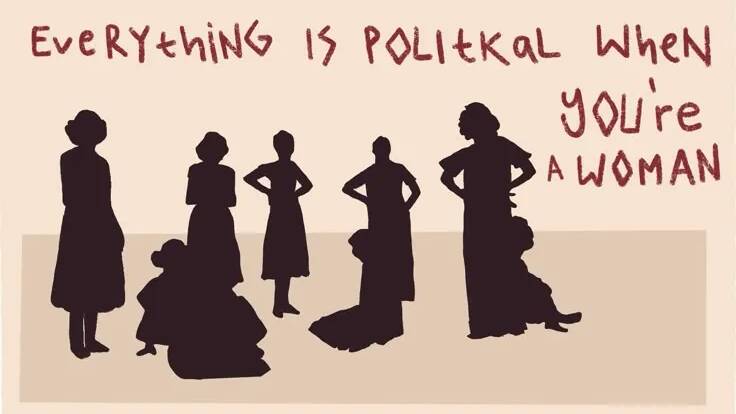
My personal interpretation of the book is that I have to repair a heart that was broken from birth in order to soften it. And isn’t there a risk to heart-centered softening in an environment where you are often not engaged democratically? Or when your participation in the process is not requested, often unconsidered, or even disregarded? What is democracy in an environment where your silence and disconnection is actually preferred?
I wanted to put down this book after the first chapter, but was encouraged to continue reading, so I finished it. I am glad that I did: it is a wonderful aspiration even though it asks us to create something that never truly existed. At least not for everyone. In a time when democracy is being unraveled it is dreamy to think of what it could be if everyone everyday makes the effort necessary to be heart-centered in both the public and private spaces around them. So, I’ll hold the author’s words at my heart’s center, hoping that I can one day experience the country he proposes.