Hugo Broos Takes Aim at Pitso Mosimane in Explosive Bafana Bafana Successor Debate
Diski 365 | 25.08.2026 15:15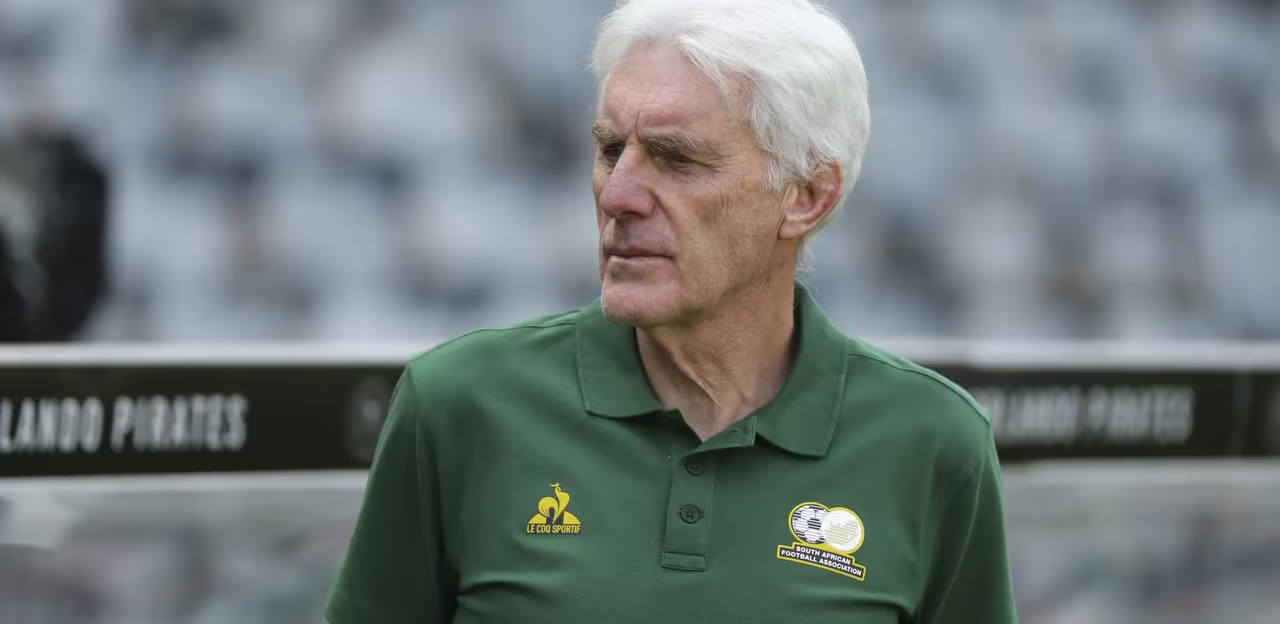
Former Bafana Bafana coach Hugo Broos has reignited debate around the future of South African football after making strong comments about proposed successor Pitso Mosimane. In a revealing interview with Belgian publication Het Nieuwsblad, Broos questioned whether appointing Mosimane would allow the national team to maintain the progress achieved during his five-year tenure. The Belgian coach also raised concerns about the potential influence of club owners and agents on national team selection. His comments have added fresh tension to an already closely watched period for Bafana Bafana as South African football prepares for a new coaching era. Broos left the national team having overseen a period of improved competitiveness and now believes the choices made by the South African Football Association could determine whether that progress continues.
Broos was particularly direct when discussing the possibility of Mosimane taking charge of Bafana Bafana. The experienced South African coach has built an impressive reputation during a career that includes domestic success and an historic CAF Champions League triumph with Mamelodi Sundowns. Despite that record, Broos argued that his appointment could take the national team backwards rather than build on the foundations established during his own tenure. “South Africa still don’t have a coach,” Broos said in the interview with Het Nieuwsblad, before identifying Mosimane as the leading candidate. He then suggested that South Africa could go “five years back in time” if Mosimane takes over. The comments are certain to generate debate because Mosimane remains one of the country’s most decorated and internationally recognised coaches.
A major part of Broos’ criticism centres on the issue of outside influence in national team selection. The former Bafana coach claimed that he had worked to remove interference from agents and club owners during his time in charge. According to Broos, people connected to players would sometimes attempt to influence coaches over squad selections, something he said he refused to tolerate. He explained that he would tell agents directly that he did not discuss selection matters with them. This approach, in his view, helped him maintain control over the selection process and allowed footballing considerations to remain at the centre of his decisions. His comments suggest that maintaining independence from outside interests was one of the principles he considered essential to the progress made by Bafana Bafana.
The remarks are particularly significant because Broos’ tenure was built around establishing a clearer structure within the national team. When he took charge, Bafana Bafana were attempting to recover from years of inconsistent performances and disappointing tournament results. Under his leadership, South Africa gradually developed greater stability and became more competitive against strong opposition. The national team also produced improved performances at major tournaments, giving supporters renewed confidence in the country’s ability to compete internationally. Broos believes that protecting the structures and standards established during his tenure will be critical for the next coach. His concerns about Mosimane therefore appear to be rooted not only in the identity of the potential successor but also in the direction he believes the national team could take.
The latest interview is also notable because it represents another unusually candid moment from Broos since his decision to leave the Bafana Bafana position. In 2024, during an appearance on the Frank & Franky Podcast in Belgium, he revealed that he intended to step down after the Africa Cup of Nations. That announcement reportedly caught South African Football Association president Danny Jordaan by surprise. Broos explained that the constant criticism surrounding the national team had contributed to his decision, while his long periods away from his family in Belgium also became increasingly difficult. His comments at the time showed that his decision was not simply a footballing calculation but involved significant personal considerations. The latest interview provides more insight into how emotionally difficult that decision became as his departure approached.
Broos admitted that he underestimated how difficult it would be to leave a job that he had grown to enjoy. As the end of his tenure drew closer, he said that more people encouraged him to continue and that he became increasingly aware of the consequences his departure would have for members of his staff. He mentioned his driver and assistant coach Helman Mkhalele among those affected by the decision. Mkhalele, in particular, did not want to remain in his position without Broos, according to the former coach. Broos also explained that his wife felt sympathy for Mkhalele and suggested that he consider remaining for another year in a different role. These personal details reveal the extent to which the decision had become more complicated than simply ending a professional contract.
Family considerations remained central to Broos’ decision to leave South Africa. The 72-year-old coach explained that spending long periods away from his family in Belgium had become increasingly difficult, particularly as he grew older and wanted to spend more time with his grandchildren. He had previously described the extended periods away from home as one of the major challenges of managing the national team. The demands of international football can require coaches to travel frequently and spend significant periods preparing for tournaments and qualification campaigns. For Broos, those demands eventually became difficult to reconcile with his personal priorities. His latest comments suggest that even when a possible solution was presented, he struggled to convince himself that continuing was the right choice.
SAFA president Danny Jordaan reportedly attempted to accommodate Broos’ family commitments by offering him greater flexibility over his travel schedule. Broos revealed that Jordaan told him he could choose when he wanted to return to South Africa, potentially allowing him to remain in Belgium for several months between international assignments. According to Broos, he seriously considered the arrangement during the final stages of his tenure. He explained that he could potentially have stayed in Belgium from November until the middle of March and only returned shortly before a match. Despite that flexibility, Broos ultimately felt unable to propose such an arrangement himself because he was uncomfortable with the idea. His decision shows that the question of continuing with Bafana Bafana involved a complicated balance between professional responsibility and personal priorities.
Broos also described how frequently he changed his mind while finalising his departure. During the period when he returned to South Africa to complete the necessary arrangements, he said he reconsidered his decision numerous times. The possibility of continuing was clearly attractive because of the progress made with the national team and the relationships he had built with people around the squad. At the same time, he believed that his personal circumstances meant that the time had come to bring the chapter to an end. He ultimately informed Jordaan that he had decided to leave, describing the moment as one marked by a long silence. That account provides a more personal perspective on a departure that has now opened the door to a new era for Bafana Bafana.
The debate surrounding Broos’ comments and Mosimane’s possible appointment will likely continue because both coaches have strong records and very different approaches to the game. Mosimane has already achieved major success in South African football and has experience coaching outside the country, while Broos leaves behind a national team that he believes has made significant progress. Supporters and football officials will ultimately judge the next coach according to results, performances and the ability to maintain unity within the national setup. The concerns raised by Broos about agents and club owners also raise broader questions about governance, selection independence and the relationship between the national team and domestic football. Any incoming coach will need to establish clear authority while maintaining constructive relationships with clubs and players.
Hugo Broos’ latest interview has therefore added another layer to the conversation surrounding the future of Bafana Bafana. His criticism of Pitso Mosimane is likely to attract strong reactions, particularly because Mosimane is widely regarded as one of South Africa’s most successful coaches. At the same time, Broos’ comments provide insight into the principles he believes helped transform the national team during his tenure. His reflections on leaving also show that his decision was influenced by family commitments, the demands of international management and concern for members of his coaching team. As Bafana Bafana prepare for a new chapter, the challenge will be to preserve the progress already achieved while building a structure capable of producing sustained success. Whether Mosimane eventually takes the job or another coach is appointed, the next phase of South African football will be judged by how effectively it responds to the questions Broos has now placed firmly in the spotlight.