An 'Uber of the Alps': The Swiss ski resort reinventing winter
BBC | 16.12.2025 20:00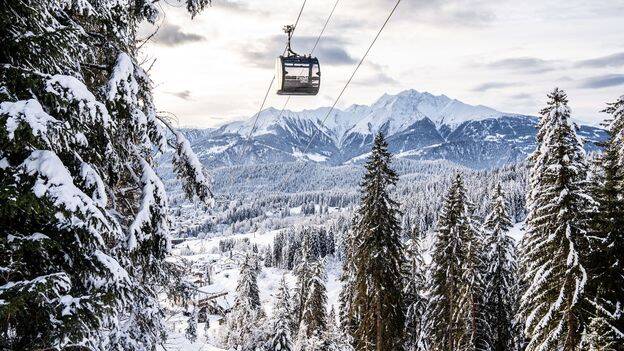
As warming winters threaten the future of snow, Laax has launched some of Switzerland's most ambitious sustainability projects, from on-demand gondolas to CO2-neutral lifts.
From the summit of Crap Sogn Gion, it felt like all of the Alps were on the move. Skiers were carving, snowboarders swooping, tobogganists gliding. But below the rolling clouds, a different sort of winter obsessive was heading to work.
At 2,228m (7309ft), with chairlifts spinning, Reto Fry – environmental manager for the Weisse Arena Group, which owns the resort of Laax, one of Switzerland's largest winter sports destinations – looked out towards the rippling glaciers and meringue peaks of the Unesco-listed Tectonic Arena Sardona. The landscape may be 300 million years old, but right now Fry's job is squarely fixed on the Alps' future.
"We need to find more solutions to solve the climate change problem," he said. Skiers and boarders were making the best of the first snowfalls of the 2025/26 season, but the horizon was roughening around the edges. "Frankly, ski resorts across the Alps are losing huge amounts of their winter season as the climate warms. So, we're all in this together."
But these days, arriving at a Swiss ski resort today isn't always the magical experience one might imagine. New climate scenarios by researchers from MeteoSwiss (Switzerland's Federal Office of Meteorology and Climatology) and ETH Zurich university paint a stark picture: Switzerland is warming twice as fast as the global average, partly due to Alpine geography. According to the study, the country is becoming hotter and drier, facing heavier periods of rainfall and, crucially for winter sports, experiencing less snowfall.
Laax is part of the wider Flims Laax Falera ski area, and Fry suggests starting in its basecamp village. At Riders Hotel and Rocksresort (recently awarded the Best Green Ski Hotel 2025 at the World Ski Awards), every element has been considered, from energy use to waste, to food and beverage measures, to biodiversity, and this is replicated throughout the purpose-built eco-village.
Decarbonised buildings glimmer with solar-panelled architecture. E-vehicles scoot silently. Vertical gardens resemble beanstalks on ski-lift base stations to help nurture bird, bee and insect life. To list every win would take too long, but particular pleasures of staying are its roof gardens, seasonal, plant-based menus (a rarity in Switzerland) and plentiful and free water stations (even rarer). If you turn up with damaged ski gear, a repair service to extend its lifecycle is also offered gratis.
More like this:
The latest transition to a CO2-neutral environment is the introduction of more than 20,000 flowers and perennials in specially designed gardens for the endangered black mud bee. Rarer still, the insect is being encouraged to nest in the rocky facades of the hotel buildings. "The species is under immense pressure," explained Fry, "so to help its comeback, we have created a suitable, diverse habitat that optimally meets the nesting and feeding requirements."
Nature lovers will also find the Senda dil Dragun – the world's longest treetop path – winding through one of more than a dozen special wildlife protection areas. Look out for mountain hare, ibex and eagle, or print trails of more elusive critters such as red deer, chamois, bearded vulture and various species of grouse. Wolf and lynx are also rumoured to have returned.
 Laax
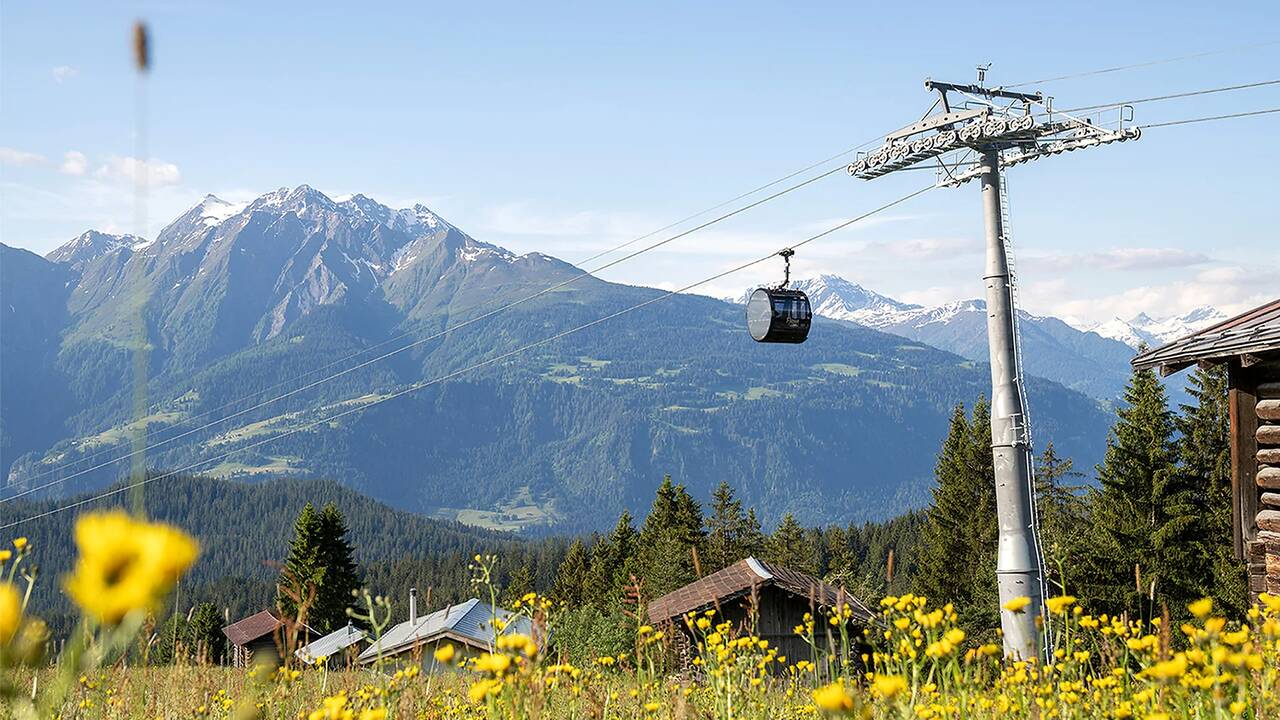
LaaxOnce you strap your skis or board on, another innovation is visible over in neighbouring Flims: the FlemXpress, the world's first on-demand cable car whose fifth and final section opens on 19 December 2025. A sustainable ski lift taxi system, the cutting-edge gondolas only travel when needed, reducing energy consumption by 50% – a radical shift given that around 90% of cabins in conventional lifts travel empty. Like "an Uber of the Alps", as Alicia Martinez, head of business performance for Weisse Arena Group, put it, the new system could "revolutionise mountain transport, but also in cities".
"The Willy Wonka-inspired lift where you push a button and end up where you want to go – we invented it for innovation and guest privacy, but more because of energy consumption," Martinez said. "Ski lifts everywhere consume a huge amount of energy, so this is our first transition away from the traditional winter sports model."
Skiers have always gasped at the grandeur of Laax's mountains, but this swoosh across the skyline is something quite different. The dominant mood, added Martinez, is to send a message that this corner of Switzerland won't hide from its duties to the environment.
Sporting rivalry is common, but part of that obligation is now fostering collaborations and exchanging insights. The present climate crisis has intensified sharing best practice, and, this May, Laax cofounded the Global Sustainability Ski Alliance, an unprecedented collaboration that includes heavyweights such as France's Compagnie des Alpes, Austria's KitzSki and Italy's Kronplatz, as well as resorts in Scandinavia and New Zealand. Collectively the group represents more than 800 ski lifts worldwide, accounting for 25 million skier days per year.
"We have a responsibility to where we live and work, to preserve it and give something back," said Martinez. "It's about showing whoever comes here that we understand what is going on, we're sensitive to our impact on the environment and we are committed to doing something about it. That's an attitude. And, really, it's the most important question we have to answer."
--
If you liked this story, sign up for The Essential List newsletter – a handpicked selection of features, videos and can't-miss news, delivered to your inbox twice a week.