Malema Admits Presence in Tshwane Tender Chats but Denies Leaking List, Lashes Out at Police General
iReport South Africa | 22.03.2026 19:59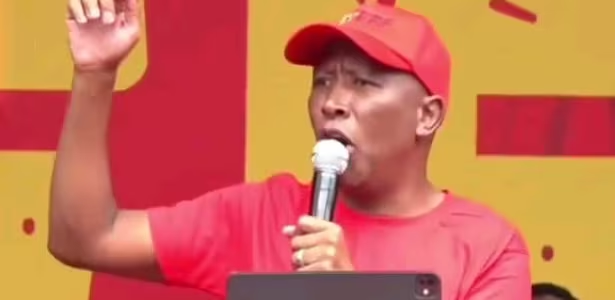
Economic Freedom Fighters (EFF) leader Julius Malema has found himself at the center of a brewing storm regarding procurement irregularities in the Tshwane Metro. While he has acknowledged that his name appears in a series of WhatsApp messages associated with a controversial list of security companies vying for tenders, he has firmly denied any involvement in the circulation of the document. Addressing the mounting speculation, Malema clarified that although his name is present in the communications, he was not the one who sent the list, attempting to draw a line between mere mention and active participation in the alleged tender manipulation.
The statement comes as investigators intensify their scrutiny of tender allocation processes, probing the influence of high-profile figures. However, Malema used the opportunity to pivot from the defensive to the offensive, launching a scathing attack on senior law enforcement leadership. He specifically targeted General Nhlanhla Mkhwanazi, accusing the police official of unjustly dragging the EFF into disputes that do not concern the party. In a fiery rebuke, Malema asserted the party’s independence, stating, “Gen Nhlanhla Mkhwanazi must know that we are not his zombies. He is not our celebrity. He must stop talking about the EFF and me in my absence.”
Malema further alleged that Mkhwanazi has a habit of making unsubstantiated claims, specifically noting that the General frequently accuses another official, General Khan, of corruption while unnecessarily implicating the EFF. Clarifying the nature of his relationships with these figures, Malema admitted to a longstanding acquaintance with General Khan. He explained that Khan had previously facilitated an introduction between himself and Mkhwanazi, but emphasized that this interaction was strictly limited to collaborative efforts surrounding the high-profile murder investigation of rapper AKA. “I do admit that I know Gen Khan very well. He is the one who linked me with Nkhwanazi, but it was for the AKA case,” Malema elucidated.
These remarks have brought underlying tensions between political leaders and law enforcement agencies into sharp relief. Political analysts suggest that this public fallout highlights the delicate and often contentious relationship between political influence and institutional independence, particularly in sensitive areas such as municipal procurement and criminal investigations. While Malema’s admission of being named in the messages may invite further investigative attention, his vehement denial of leaking the list sets the stage for a potentially protracted legal and political confrontation. As the scrutiny deepens, the focus will remain on whether authorities can disentangle the complex web of relationships and accusations that now define this controversy.