“I’m Not Hiding It”: Dr John Hlophe Speaks Out on Visit to Nkandla to See Jacob Zuma
iReport South Africa | 30.03.2026 17:16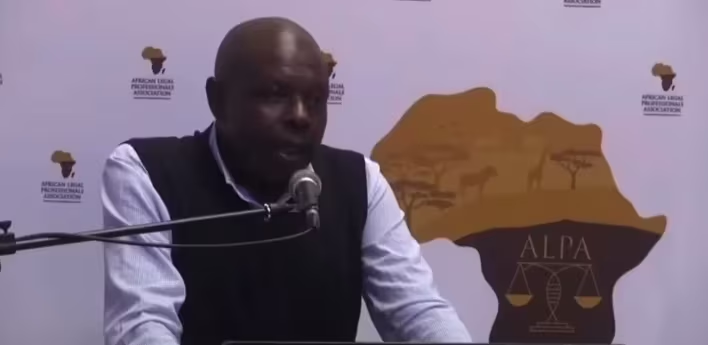
A candid statement by John Hlophe has stirred fresh political debate after he openly confirmed his visit to Nkandla to see former President Jacob Zuma.
Speaking publicly, Hlophe dismissed speculation surrounding his movements, insisting there was nothing secretive about his actions. “The truth is beautiful, I was just walking by myself going to Nkandla to see uBaba (President Zuma), I’m not hiding it,” he said.
His remarks come amid heightened political attention around associations and alliances involving Zuma, whose influence continues to shape conversations within South Africa’s political landscape. Hlophe’s straightforward admission has drawn mixed reactions, with some praising his transparency while others question the implications of such visits.
Political analysts suggest that the statement may carry broader significance, particularly in the context of evolving political alignments and ongoing debates about leadership, loyalty, and influence. Zuma remains a prominent figure, especially in KwaZulu-Natal, where he commands strong support.
Supporters of Hlophe argue that there is nothing unusual about visiting a former head of state, framing the interaction as a personal or respectful engagement. Critics, however, view it through a more strategic lens, suggesting that such encounters may signal deeper political undertones.
The visit has also reignited discussions about Nkandla’s symbolic role in South African politics. Once the focal point of national controversy, the homestead continues to attract attention as a meeting point for influential figures.
As reactions continue to unfold, Hlophe’s statement stands out for its unapologetic tone, reinforcing his position while leaving room for interpretation regarding the broader political context.
Whether viewed as a simple personal visit or a move with wider political implications, the incident highlights the enduring relevance of key personalities and places in shaping the country’s political narrative.