Brazil's lagoon-filled desert you can hike barefoot
BBC | 14.12.2025 21:00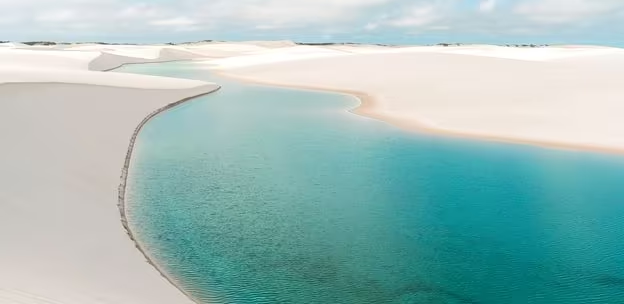
Lençóis Maranhenses looks like a desert, but it's alive with shimmering pools, remote villages and ancient paths that only local guides know how to read.
I was at least 20 steps behind my group – and another 30 behind our guide – when he suddenly stopped, checked his watch and tilted his face toward the sky, as if taking cues from the Sun.
"We must be lost," I thought. Smooth, pale slopes rose and fell in every direction, with glistening teal pools woven between them. It was a landscape with no obvious beginning or end. Then, as if reassured, our guide carried on, following a trail only he could see.
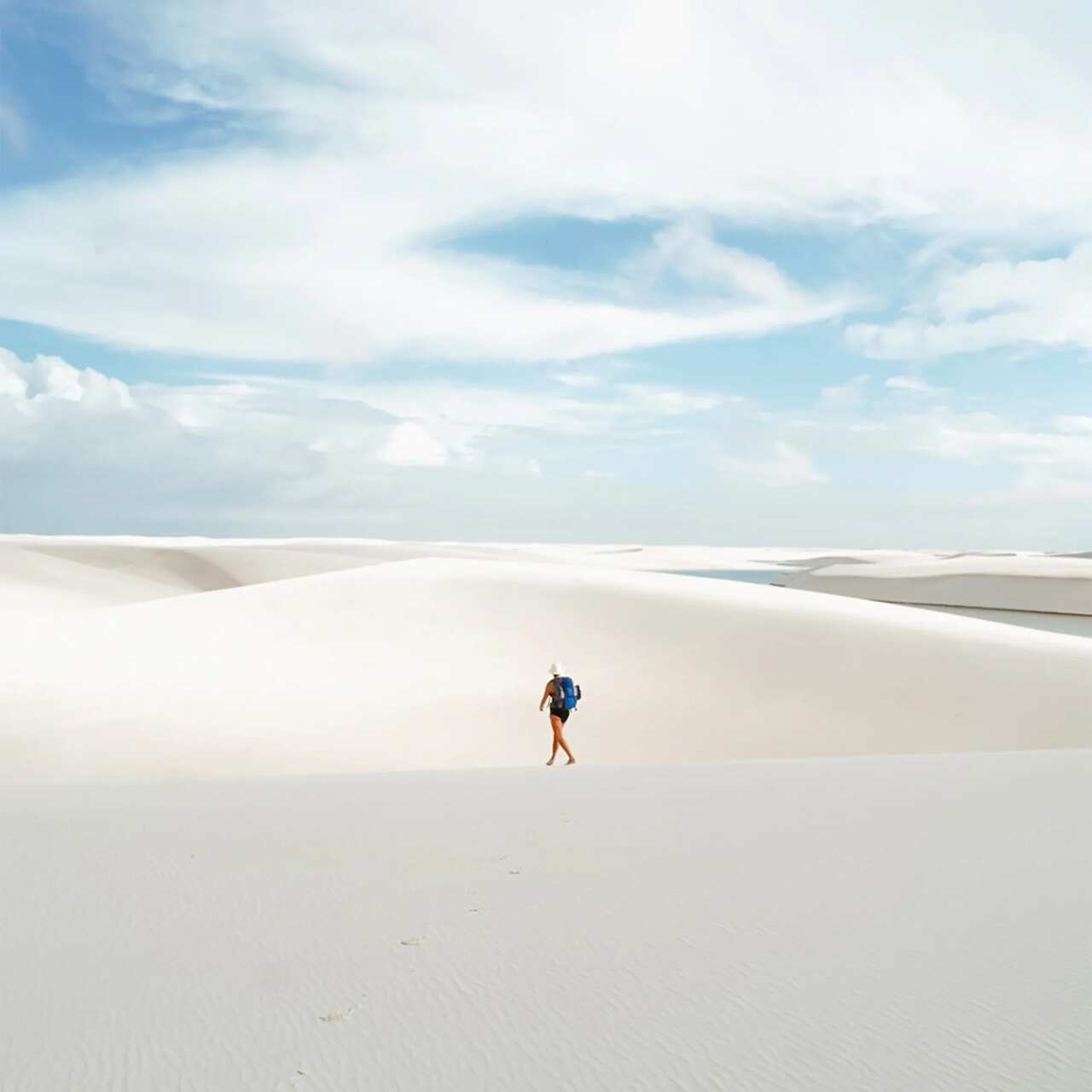
My three friends and I were a few hours into a three-day trek across Lençóis Maranhenses National Park, a humbling expanse of sand in north-eastern Brazil, and I had already lost all sense of direction. I walked in silence, listening to the wind, the rippling water, the sand crunching beneath my feet.
With each step, I sank a few centimetres, forcing my foot to work twice as hard. I kept falling behind, switching from flip-flops to water shoes and finally bare feet as the sand shifted from soft powder to a rock-hard surface baking in the heat. A friend back home had done a similar trek; "You'll feel bones you never knew existed in your feet," they'd warned. I was starting to believe them.
A living, shifting landscape
Bordered by lush vegetation on one side and the Atlantic Ocean on the other, Lençóis Maranhenses is one of Brazil's most unusual ecosystems. Strong coastal winds push sand inland, creating a desert-like landscape that spans 1,500 sq km (579 sq miles), with dunes rising up to 30m (98ft).
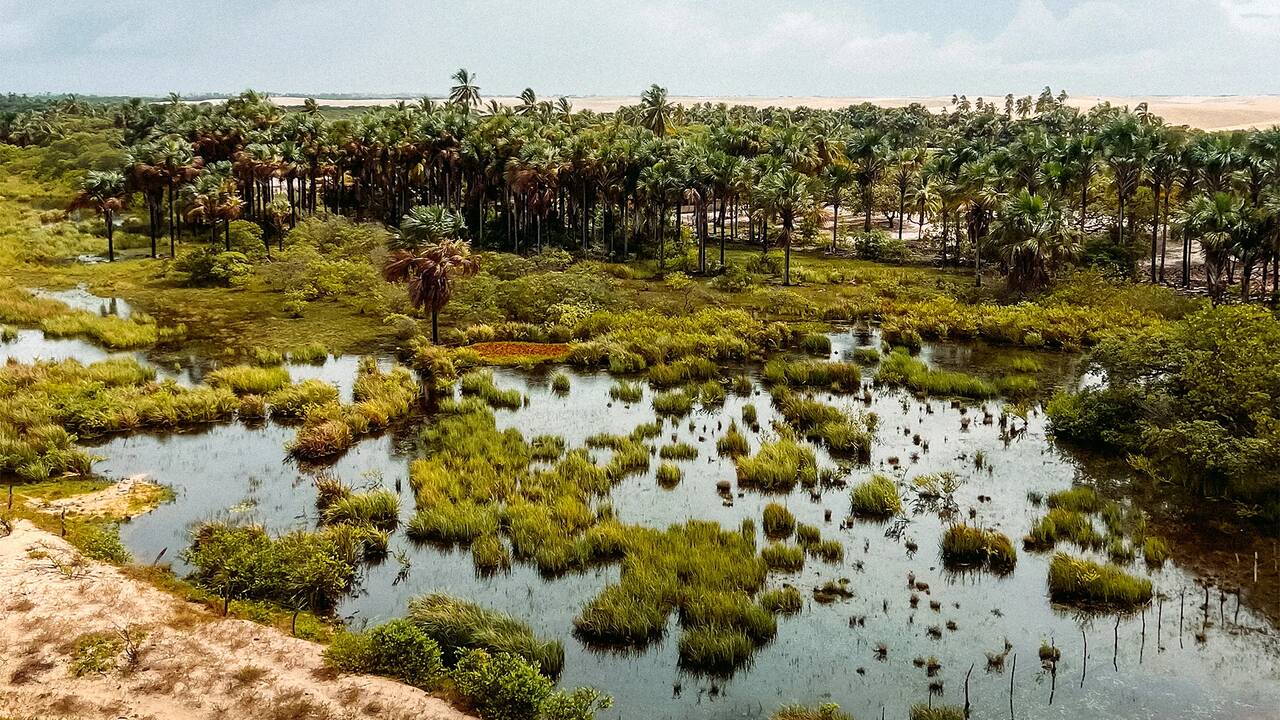
But Lençóis is no desert. During the wet season (January to June), so much rain falls that water settles in natural basins between the dunes. A compact layer of impermeable sediment keeps the rainwater from draining, forming the hundreds of freshwater lagoons that travellers like me come to swim, wade and float in.
Our first day on the dunes began just after sunrise. Our guide, Carlos Otávio Rêgo – known to everyone as Tav – set a steady pace from the start. We quickly reached our first descent, and I awkwardly slid down the sand using my feet as makeshift skis, trying my best not to be the first one to fall.
From below, the dunes took on a different scale – towering ridges and shadowed curves that looked impossible to climb. We passed lagoons so big they stretched on like rivers – and crossed several of them, sometimes holding our packs over our heads in waist-deep water.
A little more than an hour in, it was time for our first dip.
"How's this one?" Tav asked, pointing at a perfect bowl-shaped lagoon, its water so clear it looked polished. I barrelled forward, unable to control my momentum, and crashed in with a loud splash.
It's these ephemeral pools that make Lençois like nowhere else on Earth. It's also what helped earn the park Unesco World Heritage status in 2024. With that recognition came a new global spotlight, said Cristiane Figueiredo, head of the national park. The most recent numbers prove her point: in 2024, Lençóis received a record 552,000 visitors. By September this year, that number had already surpassed 580,000.
A fragile boom
The park is now one of Brazil's most sought-after destinations among international travellers, ranking fourth in 2024 behind only Sugarloaf Mountain, Christ the Redeemer and Iguazu Falls.
The boom has brought new pressures, including infrastructure strain, illegal vehicle access and a surge in luxury real-estate speculation around the park's edges. Protecting Lençóis – and the people who live inside it – falls to Figueiredo.
"We have more than 1,000 families living inside Lençóis Maranhenses," she told me. Her team recently completed a full census and mapping of these communities to better understand what each village needs – and what they can realistically accommodate as visitor numbers rise. She has been visiting villages directly, discussing how they can participate on their own terms and helping establish standards for locally run lodging and rest stops scattered across the dunes.
"To truly get to know this unique environment, there's nothing better than walking," she said. "On foot, you can notice the small things: the shifting sand, the footprints of birds and animals, the tracks they leave behind."
Across the dunes, barefoot
For me, the decision to walk across Lençóis barefoot wasn't just about the physical challenge of facing this wild terrain. It was about coming into contact with this quieter, lesser-known side of the park – the untouched lagoons included.
 Carla Vianna
Our trek began in Lagoa Bonita, a high-dune region near Barreirinhas on the park's western side. From there, we would cross 36km (22 miles) of sand, including two overnight stays in local villages, to finish in Atins, a well-known coastal town that serves as a base for day trippers.
Plan your trip:
Best time to go: June-September when the lagoons are full (July-August are peak).
Where to stay: Barreirinhas, Santo Amaro do Maranhão, and Atins are the most popular gateways for the park. You can organise day trips or treks from each.
How to book: Through a local ecotourism agency (such as Costa Leste Ecoaventura) or directly with a certified tour guide like Tav (@avzareia). They will arrange routes, meals, community stays and luggage transfers.
How long it takes: 3-5 day treks are the most common. Allow a week total including travel and rest days.
How to get there: Fly into São Luís (SLZ). From here, it's 4 hours to Barreirinhas, 5-6 hours to Santo Amaro and 5-6 hours to Atins (by road and boat).
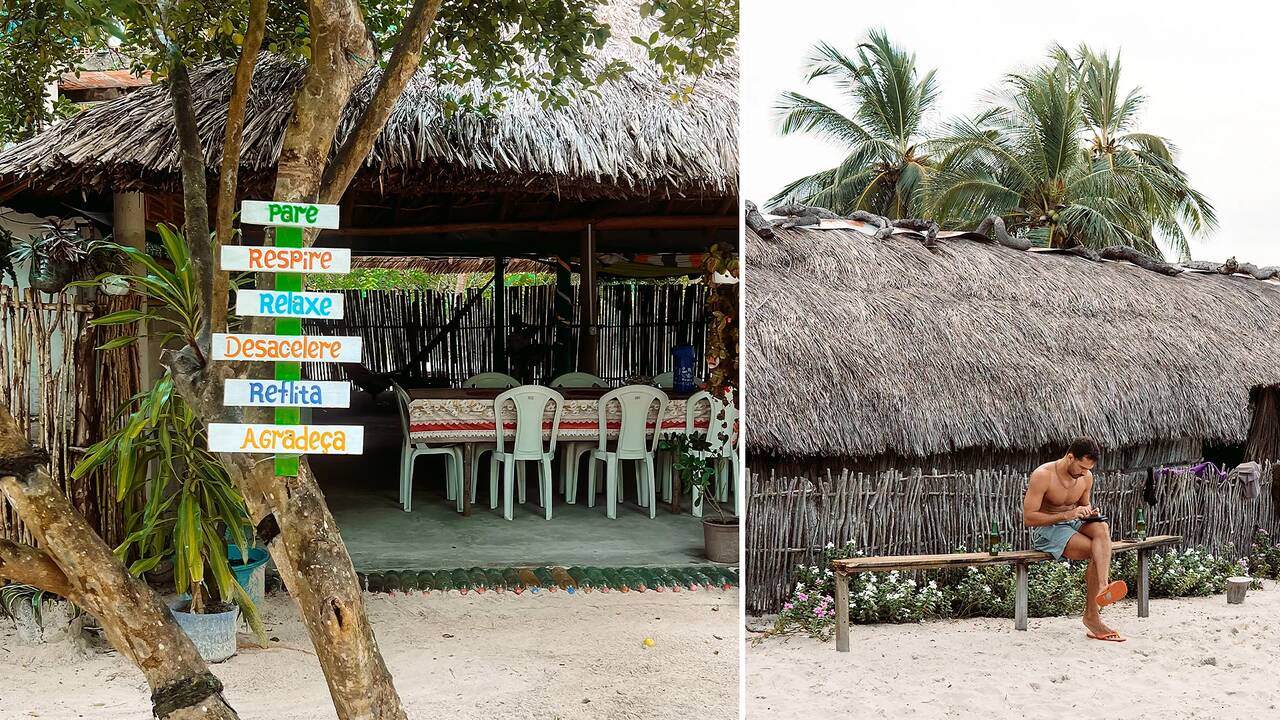
On that initial day, our first sight of the small community of Mucambo finally appeared as a pocket of green against the sand. Trees. We had arrived. Our shelter was simple: colourful hammocks strung beneath a thatched roof, a cold-water shower and just enough electricity to charge our phones. But my eyes went straight to the communal table set with steaming platters of rice, beans and grilled fish. After walking 15km (9 miles) over sand, the sight of lunch felt like salvation.
Wandering the quiet village later that afternoon, we stopped to chat with a family sitting on their porch. There was a young girl there holding a baby goat, which she proceeded to pass around to us. "She doesn't bite!" the girl's mother promised. She handed my friend a small bottle of milk so he could feed it, and we all laughed as the tiny animal wailed for more from her arms. It was an intimate experience, one that's hard to imagine happening if this village were crowded with other hikers.
Tav told me that compared to a year ago, visitor numbers felt exponentially higher this past season from June to September: "There were 120 people inside a single guesthouse in one of the oases." During his busiest weeks, he said, he'd end one trek and start a new one on the same day.
When Tav first began guiding treks across the park, only one route existed. Now, new paths – like the route we were taking – help spread visitors and infrastructure funding more evenly among the families who live here. Figueiredo says this redistribution is exactly what they're working to strengthen. New registration points for trekkers will help track how many people walk each route and how many each village can handle.
A guide who walks by memory
Day two started with a 03:30 wake-up call. It was my first time sleeping in a hammock and I felt surprisingly rested. The dunes were swallowed in darkness when we set out, headlamps clinging to our foreheads.
Once again, I wondered how our guide could possibly find his bearings.
More like this:
Later, Tav told me he grew up on the outskirts of the park. He spent a childhood camping under these very starlit skies and fishing along the coast, tracing the paths of local fishermen. In his early crossings, he'd pick a single dune and aim for it, using that fixed point to navigate.
"Nowadays, it comes naturally," he tells me. "I can close my eyes and remember each dune and each trail. That's what allows us to walk at night, even in complete darkness."
We came across many dried-up lagoons that day, already evaporated for the season. Each time, I'd feel a slight pang of disappointment. But the feeling would quickly fade: Tav knew precisely where to find the shimmering blue pools deep enough to swim.
 Carla Vianna
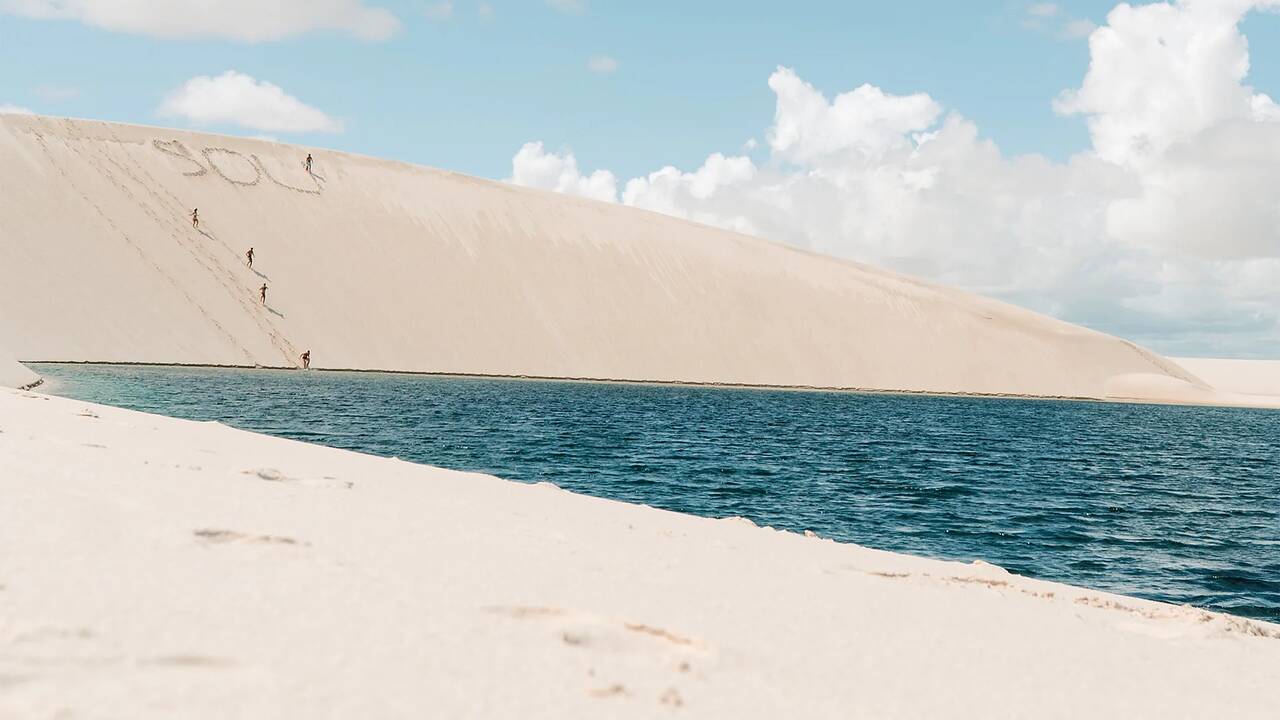
A highlight was an enormous dune that took several minutes to climb up, only to find ourselves propelled in an uncontrollable sprint down toward the water. Meanwhile, Tav carved a phrase into the side of the dune with effortless precision. "Sou das areias," it read – "I am from the sands."
His pride was unmistakable. "This is my home, my office, my place in the world," he told me. That sense of belonging, he said, is what brings him back season after season. "We need to turn our attention back to the traditional communities. Because of everything they've lived through. All the struggle, all the hardship. So they, too, can feel that sense of belonging to this place, to this nature," he said.
By the time we reached our second overnight stop, the community of Baixa Grande, we were no longer alone. Two other hiking groups were also staying the night, including one on a four-day trek . Yet the evening still felt intimate, ending around a small bonfire as Tav played the guitar.
Our final day was a quicker, 5km (3 mile) hike, which meant a slower morning at our community base. When we set off later that afternoon, I sensed it would be the most beautiful stretch yet. Under a cloudless sky, the sand looked bone-white and the lagoons shone bluer than ever.
Despite the beauty of it all, I was ready to return to civilisation when our Jeep transfer appeared in the far distance, signalling the end of our trip. We half-jogged toward it in exaggerated relief. We had officially reached the outer banks of the park, and the rest of the journey would be on four wheels, following the coastline to Atins. I hopped on and turned back toward the dunes. We had just walked 36km (22 miles) across the park, yet within hours there would be no trace of us at all.
Nothing here holds its shape for long. The dunes shift. The lagoons appear and disappear. Footprints vanish. The only constant in Lençóis Maranhenses, I realised, is change – and the people who have learned, over generations, to live with it.