Khayelitsha traders demand water, power and a fair chance
Scrolla | 14.09.2026 18:15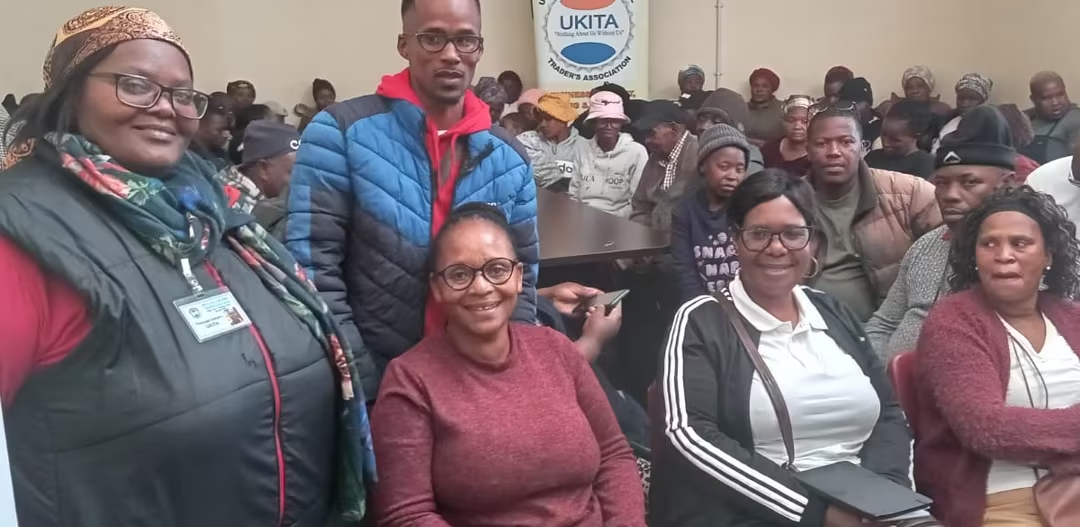
By Buziwe Nocuze
• Thozama Gwente started the United Khula Traders Association in 2009 and helped vendors win a free trading zone two years later.
• Informal traders say they need water, toilets, electricity and easier access to funding instead of being left to run businesses in poor conditions.
For 17 years, Thozama Gwente has been fighting to make sure Cape Town’s street vendors are treated like business people, not forgotten workers.
Gwente started the United Khula Traders Association in 2009 after seeing the daily struggles faced by women trying to make a living as informal traders.
At the time, she was running an internet café from a container in Town Two, Khayelitsha.
She started speaking to vendors about their problems and realised many were fighting the same battles.
“During that time I had an Internet café operating in a container in Khayelitsha township, Town Two section. I then mobilised all the vendors, gathered the information, and an organisation to fight for vendors’ rights was formed,” Gwente said.
Two years later, the organisation scored one of its biggest victories.
In 2011, the area became a free trading zone.
That meant traders no longer had to pay the R180 they had been paying to the City of Cape Town.
For vendors trying to make every rand count, the saving mattered.
“We haven’t achieved all we want, but at least they are saving the R180 money they were paying while they were not getting basic services,” Gwente said.
“We won that, but there’s still a long way to go; there are still challenges and we are still fighting.”
Fight spreads across townships
The organisation now has members in communities including Khayelitsha, Nyanga, Gugulethu and Mfuleni.
When it started, members paid a R150 joining fee and a R20 subscription.
In return, they received training and information about opportunities to help their businesses grow.
But Covid-19 changed things.
Gwente said members stopped paying subscription fees after the pandemic hit, although the organisation continued helping them.
Now the fight is focused on some of the most basic needs.
Gwente said many traders still work without proper water, sanitation and electricity.
She also believes funding programmes are too difficult for ordinary street traders to access.
“There is no funding that they can access to develop their businesses because the requirements for funding are too complicated for traders,” she said.
She said online training programmes also do not work for many informal traders.
Another problem comes when disaster strikes.
Gwente said traders can lose everything if their stalls burn down or another disaster destroys their businesses, with little support available to help them start again.
She wants the City to recognise organisations working directly with informal traders.
“We want the City to acknowledge organisations that are working with traders,” Gwente said.
“The City must assist traders with electricity, water, and sanitation where they are trading.”
She also wants traders to have better opportunities to access funding and turn survival businesses into growing businesses.
Traders say organisation protects them
Second-hand clothing trader Nomsa Moyi believes the organisation has made a difference.
She said traders faced being removed by the Passenger Rail Agency of South Africa last year before the organisation stepped in.
“Last year we were chased away by Prasa; the organisation intervened and we were told to continue working,” Moyi said.
She said workshops organised through the association have also helped traders understand their rights.
“We now know our rights because she arranged workshops where we learned a lot about our rights, and now we are being recognised since we joined Ukita,” she said.
City says it works with traders
The City of Cape Town said its Economic Growth Directorate works with different trader organisations and representative groups across the city.
It said informal traders play an important role in Cape Town’s economy and support many families.
The City said public trading is managed through free trading areas, designated trading bays and council-approved trading plans.
But providing toilets, water, electricity and other infrastructure is not the same in every area.
The City said decisions depend on factors including where traders operate, available infrastructure, land use, technical requirements and available money.
Requests are considered individually by the relevant City departments.
For Gwente, however, the fight is far from over.
She wants informal traders to work in clean and safe places with the basic services they need.
“We have a long way to go, but we will not stop until vendors get what they deserve,” she said.
For thousands of informal traders, a pavement stall or small stand is not simply a side hustle.
It is how they put food on the table.
And Gwente wants the City to give those businesses a fair chance to survive and grow.
Pictured above: United Khula Traders Association founder Thozama Gwente, who has been fighting for street vendors’ rights since 2009.
Image source: Supplied.