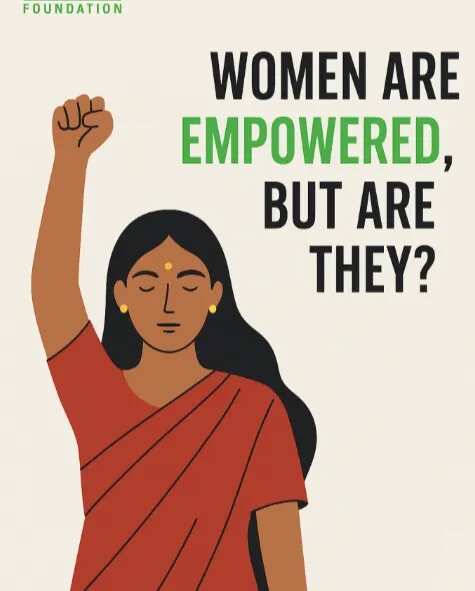
Sometimes I wonder what representation really means. On paper, women are present in local governance. There are reserved seats, elected women sarpanches, women councillors. It looks like progress. But when you look closer, their voices are often missing. In many villages, a woman is elected, but decisions are taken by her husband or a male relative. People even have a name for it — sarpanch pati. That itself says a lot. The position belongs to the woman, but the power quietly slips away from her. She attends meetings, sits through discussions, and yet barely gets to speak. And even when she wants to, it isn’t easy. Many women enter local politics without guidance or training. Not because they aren’t capable, but because no one ever prepared them for leadership. When they hesitate, they’re judged. When they speak confidently, they’re questioned. Either way, they lose. What makes it worse is the cost of speaking up. Women like Chhavi Rajawat faced resistance just for asserting themselves. Dalit women sarpanches in places like Bihar have been threatened or socially boycotted for refusing to be silent. Local politics isn’t just about development — it’s about caste, control, and power. We also forget how deeply women are conditioned to stay quiet. From a young age, many are taught to adjust, not argue. Then suddenly, governance expects them to negotiate, demand, and lead — and punishes them for doing exactly that. Still, whenever women are actually heard, things change. Water, sanitation, basic needs — the issues that affect everyday life — finally get attention. Which makes one thing clear to me: the problem isn’t women. It’s a system that lets them be elected, but not listened to. Until women’s voices matter as much as their presence, local governance will always feel incomplete.