Mabe Accused of Domestic Violence Just Applied for a Protection Order Against His Own Wife
iReport South Africa | 23.03.2026 14:19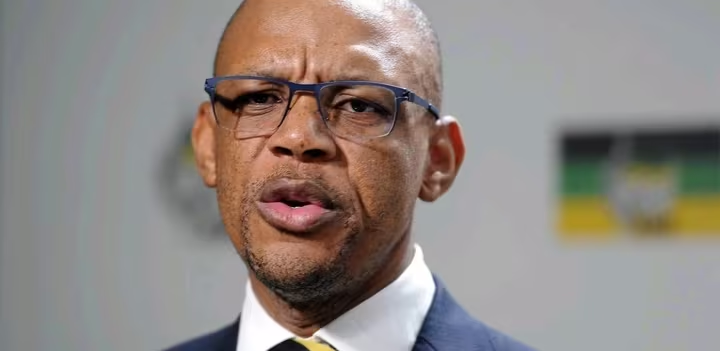
It has been reported that Pule Mabe, a former spokesperson for the African National Congress (ANC), has filed a protective order against his wife in response to claims of domestic assault. Several sources have stated that the request originates from allegations that Mabe’s husband, who was characterised as being “intoxicated” during the occurrences, accused him of engaging in domestic abuse.
The incident was brought to light after Mabe had a direct conversation with a journalist from the Sunday Times, during which he expressed his displeasure and irritation with the ongoing conflict. Despite the fact that Mabe did not disclose a great deal of information regarding the charges, he stressed that he felt obligated to seek legal protection as a result of behaviour that he described as being both dangerous and alarming from his perspective.
Domestic conflicts that include prominent political leaders typically garner a substantial amount of public attention, and this particular instance is not an exception to that rule. Mabe, who was a significant communications role within the African National Congress (ANC) in the past, continues to function as an important player in South African politics. Observers have pointed out that the scenario may have repercussions for his personal reputation as well as for the party’s reputation, particularly in light of the ongoing discussions that are taking place among political leaders over accountability and behaviour.
Protection orders are a regular mechanism in South Africa, according to legal experts, and they are used to avoid potential injury and ensure personal safety. This is especially true when tensions within domestic settings grow. For the purpose of ensuring that all parties continue to be secure while legal processes are ongoing, the law permits the courts to impose restrictions on contact, communication, and physical proximity.
The public comments made by Mabe underscore the personal toll that such arguments may take, highlighting the emotional strain that is involved when household concerns collide with public profiles. He voiced his dissatisfaction with the situation, pointing out that the claims do not bear any resemblance to his behaviour and that he has been cooperative throughout the judicial procedure.
Additionally, the case brings up broader problems of domestic violence, legal remedies, and the appropriate balance between public scrutiny and personal privacy of individuals. Authorities and advocacy groups in South Africa routinely stress the significance of resolving conflicts of this nature through the judicial system. This is done to guarantee that the rights and safety of all those concerned are safeguarded.
Due to the fact that Mabe’s request for a protection order is now being reviewed by the courts, the case has generated a great deal of media coverage. The public is interested in the conclusion of the situation, as well as the potential ramifications it may have for his political future. Analysts warn against drawing conclusions until formal legal findings have been made, pointing out that the procedures of the court are intended to establish facts and ensure the safety of all persons involved.
As the court processes continue, South Africans are paying close attention to the situation in order to better understand how it will develop. They are paying attention to both the personal dynamics of the disagreement as well as the wider impact that it will have on how the public views political individuals who are involved in domestic scandals.