Rhino Poaching Drops by 16% in South Africa
Good Things Guy | 11.02.2026 19:00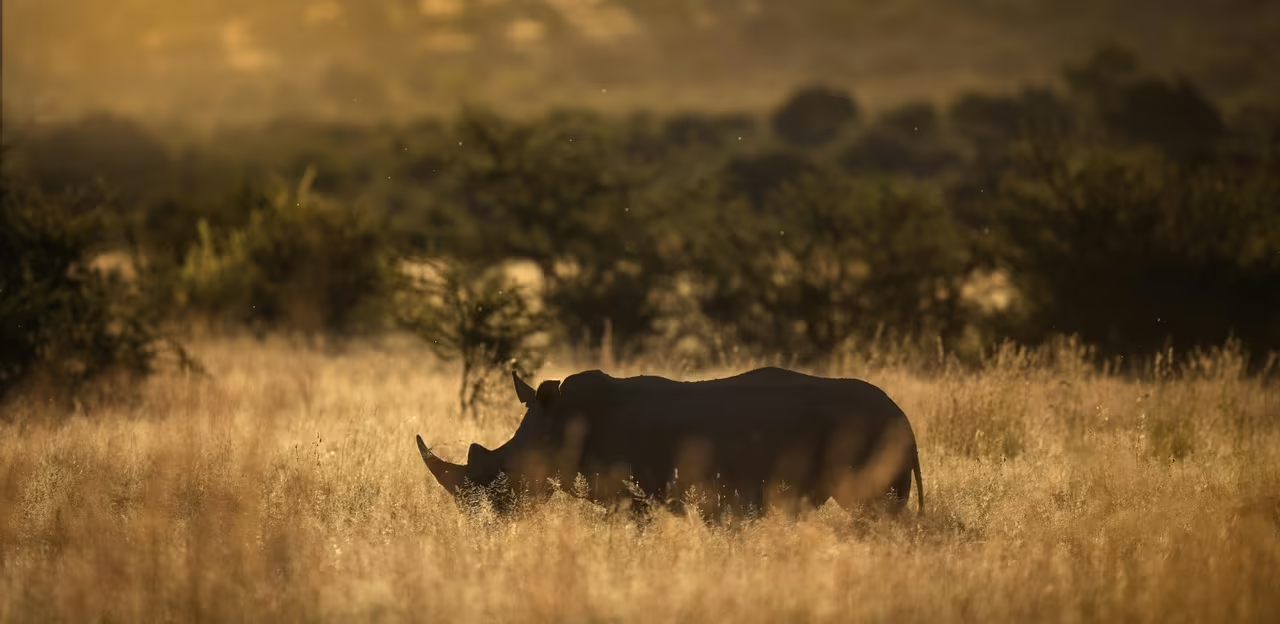
There is still loss. Rhinos still need to be fiercely protected. But in a glimmer of hope, the numbers are moving in the right direction.
South Africa (11 February 2026) – Rhino poaching in South Africa declined by 16% in 2025 compared to 2024. The positive news is thanks to ongoing anti-poaching and anti-trafficking efforts across the country.
“From January to December 2025, 352 rhinos were poached in South Africa, with 266 being killed on state properties and 86 on privately owned parks, reserves or farms. This was a decrease of 68 in comparison to 420 rhinos poached in 2024,” said Minister Aucamp.
Conservation isn’t a straight line. Some areas are seeing improvements, others remain under pressure. But taken nationally, the data shows that sustained, collaborative effort is beginning to make a measurable difference.
Mpumalanga has unfortunately recorded the highest losses, with 178 rhinos poached in 2025, most of them in the Kruger National Park. Kruger alone lost 175 rhinos last year, a sharp increase from 88 in 2024.
But in KwaZulu-Natal, there’s been a shift in the other direction.
Hluhluwe-iMfolozi Park saw poaching numbers drop from 198 in 2024 to just 63 in 2025. Ezemvelo KZN Wildlife attributes this to closer collaboration between conservation authorities and private rhino owners through the Integrated Wildlife Zones programme, alongside the support from partners like WWF, Save the Rhino International, Wildlife ACT and the Peace Parks Foundation.
Strategic dehorning, advanced camera technologies and sensor systems, improved early-warning capability, and strengthened internal integrity processes have all played a role in stabilising pressure on rhino populations in the province.
Conservation isn’t just about boots on the ground. It’s also about courtrooms and financial investigations.
Through the National Integrated Strategy to Combat Wildlife Trafficking (NISCWT), authorities have strengthened collaboration between the National Prosecuting Authority, the Directorate for Priority Crime Investigations, the Environmental Management Inspectorate (the ‘Green Scorpions’), and other specialised units.
That coordination recently led to the conviction of ZM Muiambo (also known as Thomas Chauke), who was found guilty on 19 charges related to illegal rhino hunting and associated crimes. He was sentenced to 20 years’ imprisonment in April 2025.
Cases are increasingly being centralised so courts can see the full scope of syndicate operations and not just isolated incidents. Rhino poaching isn’t random. It’s organised crime. And tackling it as such is critical.
A 16% decline doesn’t mean the crisis is over. 352 rhinos is still far too many. But it does mean that coordinated, intelligence-driven efforts across government, private reserves, NGOs, law enforcement and communities can make a big difference.
South Africa was also recognised internationally for its enforcement efforts last year, receiving the Asia Environmental Enforcement Recognition of Excellence Award for work combatting transboundary environmental crimes.
“South Africa continues to strengthen its international collaboration to curbing rhino poaching and wildlife trafficking. These efforts led to the country receiving the Asia Environmental Enforcement Recognition of Excellence Award late last year, which celebrates excellence in enforcement by government officials, institutions and teams combatting transboundary environmental crimes,” said Minister Aucamp.
“Working together with the South African anti-poaching and anti-trafficking organisations, we remain committed to a balanced, intelligence-driven, and partnership-based approach to rhino protection, recognising that sustained success requires constant adaptation, integrity, and cooperation across all sectors,” he added.