Slavery Didn’t End. It Just Changed Shape.
Medium | 27.01.2026 18:45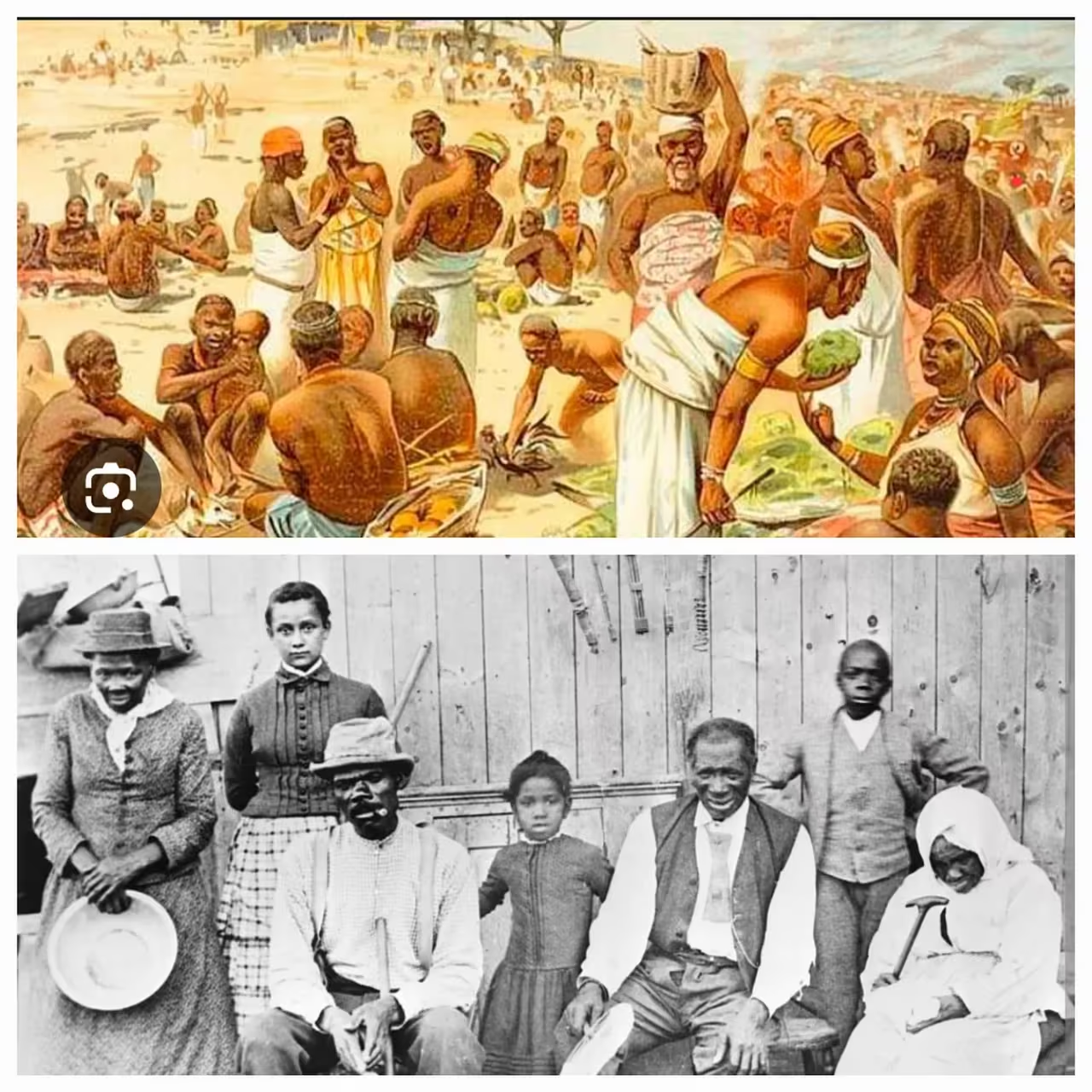
Slavery Didn’t End. It Just Changed Shape.
4 min read
·
1 hour ago
--
Listen
Share
See, a lot of y’all really don’t understand how deeply slavery screwed us up as black people.
Not just historically.
Not just “that was a long time ago.”
I mean psychologically. Culturally. In our day-to-day behavior right now.
People love to say, “Slavery was 400 years ago. Get over it.”
But trauma doesn’t work like that.
Trauma doesn’t disappear because time passed.
Trauma gets inherited — Especially if you cannot see it.
And slavery didn’t just take labor.
It stripped identity.
Religion was forced, not chosen.
Christianity is the biggest example.
I don’t care how comfortable people are with it now — it was not ours.
And before anyone jumps in with “Christianity started in Ethiopia,” let’s be clear: that’s not the same Christianity enslaved Africans were beaten into following in America.
Most enslaved Africans came from West Africa, not Ethiopia. Our spiritual systems were different. Many of them hadn’t even been touched by Christianity yet.
What happened here wasn’t willful conversion.
It was forced erasure.
That alone should be enough for many of you to say: “Yeah, that’s not right.”
People were beaten for praying to their own gods. Renamed. Forced to abandon their languages, beliefs, clothing, customs — everything that made them who they were.
That kind of cultural violence doesn’t just disappear after a few generations. You don’t rip out a people’s identity and expect them to magically “move on.”
The trauma shows up in how we raise our kids.
You can still see it today.
Hyper-strict parenting.
“Yes ma’am, no sir” enforced with fear. Kids getting whooped and insulted instead of talked to.
Obedience valued over autonomy.
We call it “discipline” or “strength.”
But a lot of it is slave conditioning.
Because during slavery, children weren’t just children. They were property. Survival depended on being compliant, quiet, non-threatening. Any behavior that drew attention could get you beaten or killed. So fear became parenting.
And that fear got passed down like tradition.
Before colonization, many African societies lived communally — the “it takes a village” mindset wasn’t just a cute phrase. Kids were corrected, yes, but they were still treated like people. If someone harmed a child, they weren’t protected — they were punished or exiled. Accountability existed.
Now look at us…
We control our kids’ hair. Their clothes. Their speech. Their personalities. Treat them like a doll.
Sometimes it’s about protection in a racist world.
But a lot of it is just unhealed trauma disguised as “discipline.”
Even how we talk about our kids is survival behavior
Here’s something people don’t think about:
During slavery, you couldn’t brag about your child.
If your son looked strong or your daughter looked capable, they could be sold.
So parents downplayed their own kids. “No sir, he’s not that strong.”
“She’s nothing special.”
That wasn’t low self-esteem.
That was how our ancestors survived.
But those habits stick.
And now generations later, some Black parents still struggle to compliment their kids or build them up emotionally.
Not because they don’t love them.
Because somewhere deep down, we inherited the instinct to make ourselves smaller to stay safe.
And that’s trauma talking.
The shame around our bodies isn’t ours either.
Same thing with our bodies, our dancing, our sexuality.
Before colonization, many African cultures didn’t treat bodies like something sinful or shameful. Clothing and housing was practical for the climate.
Dancing was expressive, spiritual, sometimes tied to fertility and celebration. It wasn’t automatically sexualized or policed.
Then colonial Christianity shows up and suddenly everything is “improper,” “ghetto,” “savage,” “Vulgar.”
We internalized shame that wasn’t even originally ours.
And now we police ourselves.
Slavery didn’t just hurt us physically. It rewired us mentally.
That’s the part people miss.
They think slavery was just: “bad things happened back then.”
No.
It reshaped our behavior.
Our mentality.
It taught entire generations to:
suppress themselves
obey without question
downplay their worth
fear authority
prioritize survival over self-expression
Cater to “whiteness.”
And those behaviors don’t vanish when the chains come off.
They become standards or the cause of ‘rebellion’ culture. [Rap, dance, sexuality, Afros etc.]
Then people judge that culture without understanding where it came from.
They call it: “ghetto” “classy” “educated” “proper” “classless”
Without realizing half of it is trauma responses.
Trauma isn’t history. It’s yesterday.
That’s why it frustrates me when people say slavery doesn’t affect us anymore. We’re still living inside systems and behaviors that were created to survive it.
Mentally. Emotionally. Culturally.
You don’t erase something that brutal in a couple generations.
You don’t strip people bare and expect them to come out untouched.
That damage runs deep.
And until we actually admit how deep it goes, we’re going to keep mistaking survival habits for personality, and trauma for Respect and tradition.
Slavery didn’t end.
It just changed shape.
And I thank Kayla Gessyca for inspiring me to write this.