Royals Mzansi: The centuries-old African royal tradition of hiding the next king
Scrolla | 04.09.2026 22:06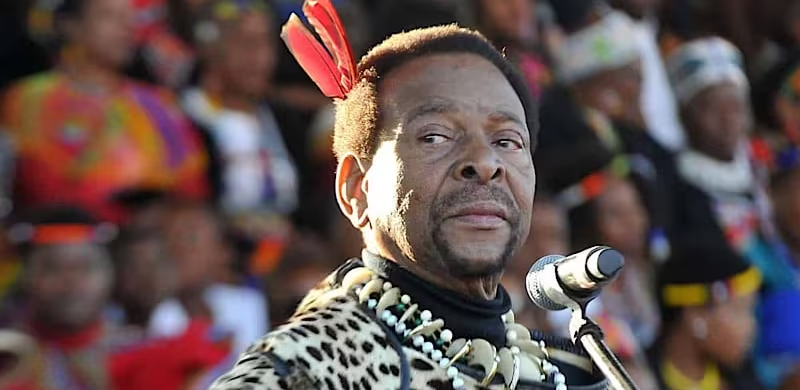
Long before he ruled the Zulu nation, a young king vanished for three years, hiding under a false name to escape assassins. Now, his grandson’s rival is using the same story against another royal heir, writes Celani Sikhakhane in Royals Mzansi.
Hiding an heir to the throne is a long-standing tradition across many African kingdoms, used both to protect royal lineage and to shield young princes and princesses from kidnapping or assassination by rivals within their own family.
This practice has come back into focus this week, during the hearing on the Balobedu throne battle at the Pretoria High Court. Queen Masalanabo Modjadji VII was taken into hiding by the Balobedu after the death of her mother, Queen Makobo Modjadji VI, in 2005, a death that itself raised many questions within the royal family. Those opposing her ascension to the throne have pointed to her time in hiding as a weakness, claiming it left her unfamiliar with the kingdom’s core cultural rituals and its language, Khelobedu, and that she instead grew up learning English and a Western lifestyle disconnected from her kingdom.
The Zulu nation has faced similar tensions. When King Misuzulu kaZwelithini took over the throne from his late father, King Zwelithini kaBhekuzulu, those opposed to his ascension claimed he could not speak isiZulu properly, since he had grown up partly in the United States and in Eswatini with his uncle, King Mswati III.
Those critics may have forgotten that the late King Zwelithini himself spent years in hiding as a young man. Following the death of his father, King Cyprian Bhekuzulu, in 1968, Zwelithini went into hiding amid rumours of assassination, taking refuge in KwaNdebele in the then Northern Transvaal for three years, under the protection of his brother-in-law, Prince Klaas Mahlangu, who was married to his sister, Princess Orah Nonhlanhla kaBhekuzulu. He returned to be installed as king in 1971, after turning 21 and marrying for the first time.
The tradition extends beyond South Africa. In Uganda, during succession tensions with the expansionist Bunyoro-Kitara kingdom, young Prince Kaboyo was hidden for his safety by the Bakonzo people in the Rwenzori Mountains.
He later returned to claim his legacy, establishing the independent Tooro Kingdom and taking the royal title Kasusunkwanzi Olimi I. Regional oral histories recount that armies attempted to capture him, but he remained protected by the Bakonzo in the mountains until it was safe to return.
Pictured above: King Zwelithini kaBhekuzulu, who ascended the throne soon after his return from hiding in the KwaNdebele Kingdom.
Image source: KZN Office of the Premier