Ronaldo's former team-mate gives his testimony in an interview with Kooora: the retirement controversy, the Euro final tears and what the public does not know about the legend
Goal | 13.11.2026 16:13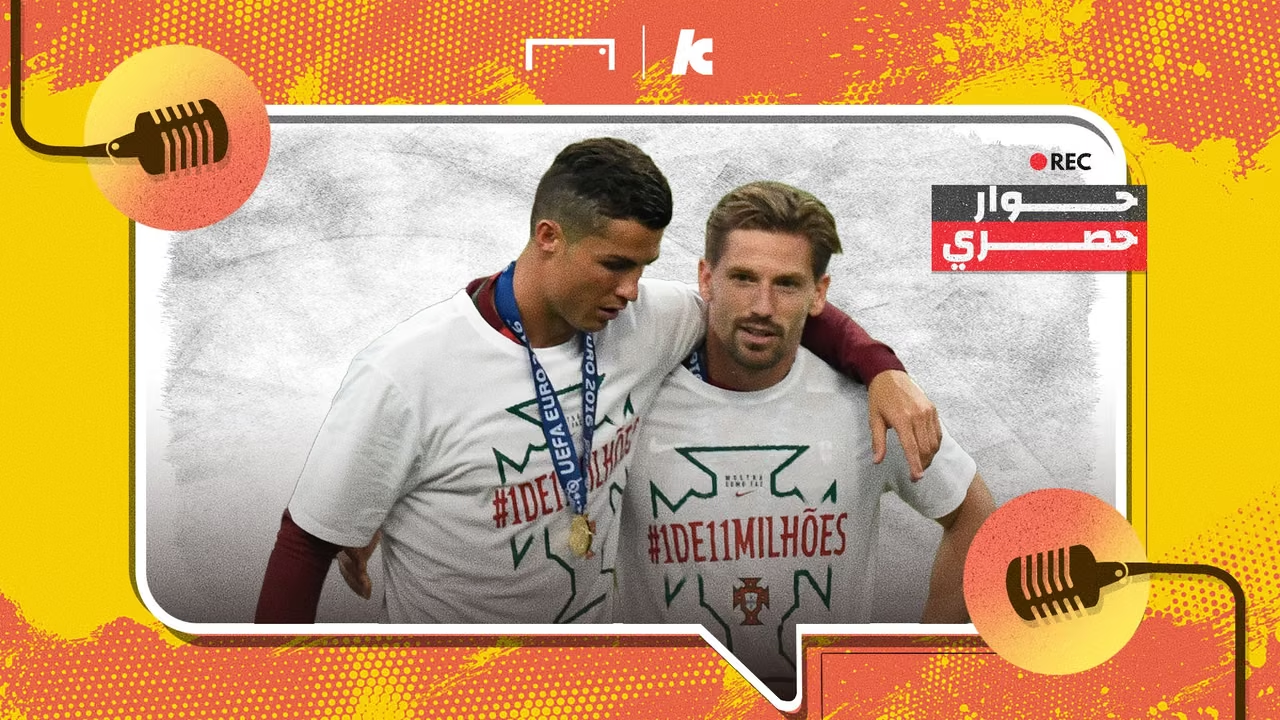
Adrien Silva, the former Portugal international, opens his heart to Kooora and talks about hidden aspects that reveal the other side of Cristiano's personality.
Ronaldo's respect within the national team is beyond doubt: Portugal will remain indebted to him forever
Cristiano wished to bid farewell to the fans from the pitch: I don't think he will coach Portugal in the future
Ronaldo is not arrogant: this is the hidden side of his personality
A player like him cannot be replaced quickly: these three deserve the Portugal captain's armband
He was not a burden on the national team in his final years, but the rhythm of football is merciless
Portugal prepare for their first match of the post-Cristiano Ronaldo era, and "Kooora" has opened the memory of one of the Portuguese legend's most prominent former teammates. In a special and lengthy interview, Adrien Silva, the midfielder who shared years of the international journey with "the Don", reflects on the pair being crowned together with the most precious achievement in Portuguese football history, the European Championship 2016.
The interview lands just hours before Portugal's clash with Denmark in the UEFA Nations League. It will be the first test for the national team without its historic captain, after Ronaldo announced his retirement from international football, ending a career that spanned more than two decades in his country's shirt.
Silva played 26 internationals for Portugal between 2014 and 2018, and Ronaldo featured in 16 of them. He belonged to the generation that led Portugal to the Euro 2016 title.
Beginning his career with Sporting Lisbon, Silva became one of the team's leaders before professional spells in England with Leicester City, France with Monaco and Italy with Sampdoria, alongside other stops in Portugal and the UAE.
In his testimony to "Kooora", Silva addresses Ronaldo's decision to end his international journey, his stance on the controversy surrounding his relationship with coach Jorge Jesus, and whether the retirement is final. He also weighs up the future of the Portugal national team and the player most likely to lead it in the coming phase.
Less visible aspects of Ronaldo's personality inside the dressing room come under the spotlight too. Silva speaks about the way the captain deals with young players, his care for teammates and backroom staff, and how he earned his exceptional status through commitment and work, not merely stardom.
He also pauses at one of the most impactful moments of their careers: the Euro 2016 final, when Ronaldo left the pitch in tears because of injury. Silva was one of the players closest to him in those moments, in a scene captured by the cameras.
Ten years on from that historic night, Silva returns to the details of the conversation that passed between them, and the impact of the captain's departure on his teammates. He reveals how Ronaldo's tears turned from a moment of pain into an added source of motivation for Portugal towards the European title.
Here is the text of the interview:
You played in several European leagues and had different experiences in England, Italy, France and Portugal before moving to the UAE. Which experience changed you most on a personal and professional level, and is there a decision in your career you wish you had taken differently?
My upbringing and the years I spent as a captain at Sporting Lisbon shaped my character, but the move to the Premier League and then playing in Italy and France gave me enormous tactical and personal maturity.
If I could change one thing, it would be the way my transfer to Leicester City went. Those months I spent off the pitch because of 14 seconds (following the closure of FIFA's international transfer system) were an extremely difficult psychological test, although they made me much stronger mentally.
You joined Leicester after their historic Premier League title triumph, but you experienced the team in a completely different phase from the title-winning era. What had changed inside the club when you arrived, and did you feel that the team had lost some of the spirit and character that later contributed to its relegation?
When I arrived, Leicester was already going through a natural transitional period after winning the title. The 2016 achievement was built on chemistry that cannot be repeated and on a very specific collective desire. Over time, expectations changed, some key figures left, and the club began searching for a new playing identity.
I won't say that the character or ambition had disappeared, but we must also bear in mind that you are playing in the most competitive league in the world, and what Leicester achieved is very difficult to repeat.
You were one of Portugal's important players during the knockout rounds of Euro 2016 after not featuring in the group stage. How did you deal psychologically with this change, and did you feel at the time that you had proved something to those who doubted your abilities?
With great calm and focus. In the final stages of an international tournament, everyone is important, including those on the bench. Coach Fernando Santos was very clear with us when he said: we will need everyone.
When the opportunity came against Croatia, I dealt with it with a sense of responsibility, not with a need to silence my critics. At the highest levels of football, you let your performance on the pitch speak for you, and you work for the team.
We move to the matter of Cristiano Ronaldo's international retirement. If you were in his position, would you have taken this decision after the dispute with Jorge Jesus, or would you have separated your dispute with the coach from your relationship with the national team and the fans, and continued until the 2030 World Cup?
These are very personal decisions, involving a huge amount of personal complexity. I know coach Jorge Jesus well, having worked with him, and I know his professionalism and the high standards he sets in his work.
When strong and successful personalities come together like this, it is entirely understandable that there are different points of view about the way forward.
For me, it is not my place to judge the decisions or to take sides. There must be absolute respect for Cristiano's choice and admiration for everything he achieved in the Portugal shirt.
Ronaldo spoke of "promises that were not respected" in his dispute with Jesus, while the coach denied being responsible for the retirement decision. Through your experience within the national team, how do you see the impact of the relationship between the player and the coach on decisions of this magnitude, and can things reach a point where a player's continuation becomes impossible, even if he is still able to contribute?
In elite-level football, you deal daily with the highest degrees of demand. Coaches and the federation always seek to take the best decisions for Portugal's collective success, while the big players also have their own points of view.
When two different points of view clash, this is part of the sport and does not diminish the value of anyone. The most important thing is that mutual respect always prevails, alongside recognition that everyone involved gave their very best for Portuguese football.
Do you think he reached a stage where he felt he no longer held the same status within the Portugal national team, or that his presence was no longer fully welcomed by the players and the coaching staff?
The love and appreciation for Cristiano within the Portugal national team will remain beyond dispute, whether among his teammates, the coaching staff, or the entire structure of the federation. What is happening is the natural passing of time, which brings new tactical dynamics to any team in the world.
Cristiano's status and the respect he commands were never in doubt at all. His legacy is untouchable for every Portuguese.
Ronaldo said in October that he did not intend to retire internationally and would remain available after the end of his suspension period, but he announced his retirement a short time later. What could drive a player with this mentality, and after such a deep connection with the national team, to change his stance so quickly?
Cristiano is a competitor by nature. He lives and breathes football with rare intensity, and is guided by his heart. When an athlete of this magnitude reflects and feels that the right moment has come to close a chapter and open the way for a new one, this decision must be understood and respected more than analysing the precise timing of the announcement. What history will remember is more than two decades of full commitment with the Portugal national team.
Given the relationship between you, did you speak with him after he announced his retirement from international football?
We did not talk about this matter, but it is important to give Cristiano space after a decision of such importance, a decision that received such a great deal of media attention. The feeling I share with him, and which every teammate shares, is deep gratitude and pride in everything we achieved together. Cristiano knows how much affection we hold for him and the unique place he occupies in the history of our country.
Do you think the way his international career ended does not match the magnitude of what he achieved for Portugal, and did he deserve a different farewell with a final match in front of his country's fans, as happened with Messi?
I think everyone would have liked to see Cristiano say farewell on the pitch, as the legend he is, and given everything he did for Portugal. I have no doubt that he himself wanted to end his career on the pitch. But we cannot change what happened.
His true appreciation is etched in the memory of every Portuguese, in the titles he won, and in the global respect he earned for Portuguese football.
In his final years with the national team, was he giving Portugal more than he took from it, or was the team sometimes forced to adapt its style of play around a single star?
Having a player of Cristiano's magnitude is always a privilege for any national team. For years, the team benefited from his exceptional ability to score goals. But as the years pass, every national team needs to achieve a balance between the individual quality of its players and collective harmony.
Cristiano's style of play evolved, and the national team also had to adapt to that, but I don't think that was necessarily a negative thing.
Do you think Ronaldo's retirement is truly final, or is there a possibility of his return if circumstances change, whether through Jesus's departure or developments within the Portuguese Football Federation?
Cristiano is a man of strong convictions. If he took this decision, it certainly came after careful reflection and with a firm feeling that it is a final decision.
The healthiest thing for Portuguese football at this stage is to look ahead, support the ongoing work, and remember his career with the national team with the dignity he deserves.
In a 2022 interview, you said that Ronaldo was capable of continuing to play for another 5 years. Now, after announcing his retirement from international football at the age of 41, do you still believe he is capable of continuing to play football at the highest level, or has time begun to have its say?
What Cristiano has achieved physically and mentally defies all the usual expectations in football. He is an example of professionalism and discipline for every young player around the world. Of course, the rhythm of football today is merciless, and time waits for no one. But his work ethic and determination will continue to inspire the coming generations.
Many legends have gone on to coach their national teams after retiring as players, such as Maradona, Zidane and Beckenbauer. Do you expect to see Ronaldo coach Portugal one day?
I see Cristiano as more suited to global leadership roles, such as an ambassador, an executive, or an investor in sport, where his word and image carry immense global impact.
Coaching requires a very specific routine and a certain level of commitment, but only he will truly know which path he wants to take once he ends his career as a player.
After Ronaldo's departure, does Portugal now have an opportunity to build a more collective team, or has the team lost a player whose impact cannot be replaced no matter how the style of play changes?
You cannot replace a figure of historic impact like Cristiano overnight. However, Portugal currently has an exceptional generation of talent, developed through the outstanding work of the clubs and the federation.
There is enough quality and maturity to build a strong, united team, capable of continuing to compete for the biggest titles on the world stage.
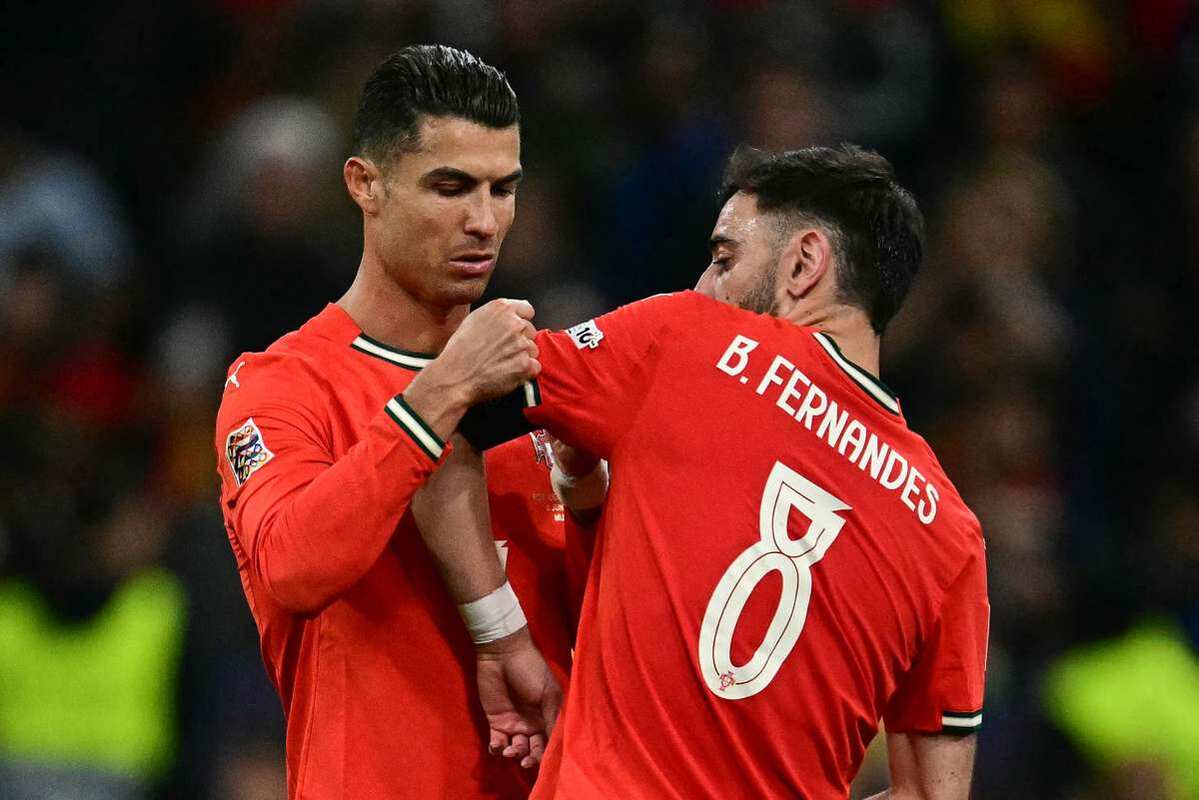
Who do you see as the player best prepared to take on the responsibility of leading the Portugal national team in the post-Ronaldo era?
Portugal is still in a very strong position. Players like Ruben Dias, Bruno Fernandes and Bernardo Silva have shown leadership, character and tactical intelligence on the biggest stages in world football for several years. There will certainly be no problem.
You watched Ronaldo up close for years, trained with him, and shared moments of victory and frustration with him inside the dressing room. What is the most important quality in his personality that the public does not see, but which explains how he managed to maintain his level and motivation throughout all these years?
Everyone knows how dedicated he is in training, but what many people may not realise is the care and consideration he shows towards others inside the dressing room.
The way he welcomes the young players who join the national team for the first time, his sense of humour during the training camps, and the respect he shows for every member of the staff, from the doctors and kit managers to the physiotherapists. This reveals a warm side of him that often remains in the shadow of his public image.
Looking at the period you spent with him in the national team, was Ronaldo really treated differently from the rest of the players, whether by the coaches, the federation or his teammates, and do you think this special status helped him or made dealing with him more complicated?
Cristiano earned his status on the pitch, through his performances, his titles and his commitment towards his country. The secret to everything working so well in the dressing room was simple: he was always the first to lead by example through his hard work, his punctuality and his dedication.
When your captain is the person who works with maximum effort, that naturally earns him the admiration of the entire group.
Do you think the world misunderstood Ronaldo at certain stages because of his great self-confidence or because of his emotional reactions?
At times, his immense self-confidence was misinterpreted. Anyone competing at the highest level needs to believe in himself unconditionally. What some described as arrogance was nothing but genuine ambition and natural frustration from a person who hates losing.
Given your relationship with him, can you reveal a secret about Ronaldo that no one knows?
What impressed me most was his absolute commitment to recovery. During a long tournament, when fatigue begins to accumulate, Cristiano never compromised on his routine of rest, hydration and physical care, even when everyone was celebrating. This focus on the invisible details is what separates good players from the truly great ones.
In the Euro 2016 final, Ronaldo left injured in tears, but Portugal continued to fight until it won the title. How did the atmosphere change in the dressing room and on the pitch after his injury, and did you feel at any moment that the dream of winning the title had ended with his departure?
It was a decisive moment in that final. Seeing our captain leave the pitch in tears after being injured shook the team for a few moments, but it quickly became a huge source of motivation. There was an immediate sense of unity between the players, the coaching staff and the substitutes. We knew we had to rise to the occasion and bring that cup back to Portugal for him too. It was a victory for the group and for the Portuguese spirit.
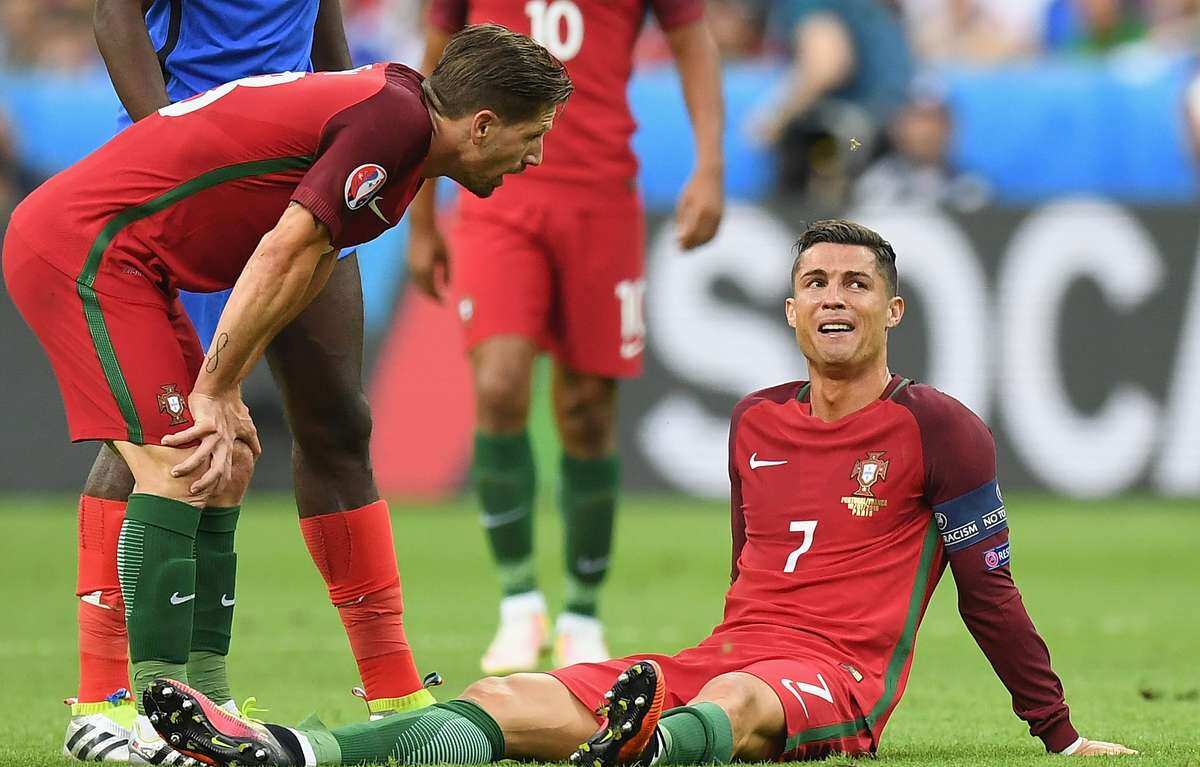
You were close to him the moment he fell in tears after the injury and the cameras captured your conversation. What did you say to each other in that moment, and what was on his mind more: his injury or the possibility of losing the final?
In that moment, what I tried to convey to him was strength and courage. He wanted to continue at any cost. Seeing how much pain he was in gave us all extra strength to keep fighting until the last second.
After 10 years, and with Ronaldo announcing his retirement from international football, how do you view that moment now? Do you see his tears in the 2016 final as summing up his relationship with Portugal more than any number or title?
Those tears in Paris were the purest reflection of the love Cristiano has always carried towards Portugal. Beyond the individual numbers and the awards, the tears showed that what always drove him was the pride of representing our flag. It was wonderful to be part of that achievement alongside him, and Portuguese football's debt to him will remain forever.
I am the Head of shifts and oversee content. I have over 15 years of experience in sports journalism. I studied media and have worked for a number of Arabic print newspapers and websites, but the most significant milestone in my career was joining Kooora, the leading Arabic sports website, in 2016.
I always strive to provide reliable content, backed by numbers and statistics, free from exaggeration. I love the language of numbers because it knows no flattery. I have covered major soccer events, with a special focus on highlighting Arab soccer stars and their impact on the global stage.
Throughout my career, my work has focused on covering soccer—whether Egyptian, Arab, or international—and my interest has now shifted to Saudi soccer, following the massive boom the Kingdom has experienced over the past few years.
I’ve been connected to soccer since childhood. My first memory of the sport dates back to the 1998 World Cup. Although I was only 8 years old at the time, the excitement of the matches drew me in deeply, and I can’t forget Zinedine Zidane’s brilliance in the final and how he led the French national team to its first title in the tournament.
Brazilian Ronaldo was one of the legends who contributed to my passion for soccer at the start of this century; his goal-scoring style was amazing—he never missed in front of the goal. Then Cristiano Ronaldo emerged, and to this day I consider him my favorite player, because he inspired me with a sense of challenge and an unwavering desire to win, and this has been reflected in my writing style.
My articles focus on coverage of the Saudi Pro League, as well as other leagues such as the English Premier League, La Liga, and the UEFA Champions League. I also follow the transfer market closely and try to analyze the deals.
If you asked me what my fondest soccer memory is, I couldn’t think of anything better than the moment Egypt qualified for the 2018 World Cup—especially since it was our first qualification in 28 years, and the first time I’d ever seen my national team compete in the world’s biggest soccer tournament.
As for my all-time favorite lineup, it is as follows: Iker Casillas in goal. Paolo Maldini, Sergio Ramos, Cafu, and Roberto Carlos on defense. Andrés Iniesta, Zinedine Zidane, and Ronaldinho in midfield. Cristiano Ronaldo, Lionel Messi, and Ronaldo Nazário up front.
Throughout my career, I’ve published a number of my favorite analyses and articles on Kooora, including:
A massive budget and a disappointing elimination... Why did Al Ahly fail at the Club World Cup?
Concerns over Salah’s rest and the opening of the black file... Will Liverpool regret the Firts deal?
The Benzema Law rules Al-Nassr... Ronaldo charts his future the French way
Alonso solves Klopp’s puzzle… Arnold: from defensive liability to offensive weapon
You can follow me on my social media platforms via the following links: