Police keep Fadiel Adams transit details secret after Cape Town arrest
iReport South Africa | 06.05.2026 21:44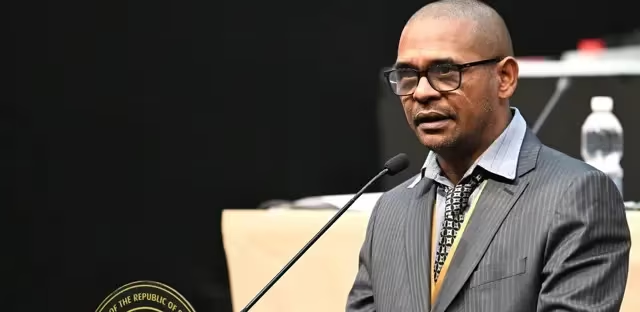
Police say details of Fadiel Adams’ travel will be kept secret for safety reasons following his arrest in Cape Town.
Adams is the leader of the National Coloured Congress and a Member of Parliament. He is being taken to KwaZulu-Natal after his arrest in connection with alleged interference in the murder case of former African National Congress politician Sindiso Magaqa.
He was arrested in Cape Town on Tuesday by members of the Political Killings Task Team. It is believed he and the team spent a night in the Eastern Cape. He is expected to be processed in Durban before his court appearance.
KwaZulu-Natal police confirmed Adams is being transported to the province but said the trip must be kept secret for security reasons due to the nature of the case.
Police spokesperson Robert Netshiunda said the suspect is in transit to the province where he will be processed and make his first court appearance. He added that for safety and security reasons, police cannot divulge the team’s movements or location.
Netshiunda said anyone in police custody becomes the responsibility of the police, and withholding certain details is necessary to avoid risking the operation and to ensure safety.
Adams is due to appear in court soon.
A South African woman residing in Europe has generated significant online debate after sharing allegations of passport fraud involving individuals falsely claiming South African citizenship abroad.
The woman, identified as Lungi and currently based in Germany, posted a video recounting her experiences with migrants in the country. In her account, she alleged that some Zimbabwean nationals have entered Germany using counterfeit South African passports, presenting themselves as legitimate South African citizens. She described a specific encounter with a woman named Privilege, whom she claims is originally from Zimbabwe. According to Lungi, Privilege was able to travel to Germany using a fraudulent South African passport but later faced difficulties when attempting to renew the document through official channels.
The video has circulated widely across social media, prompting mixed reactions from South Africans. Some individuals expressed concern about potential vulnerabilities within South Africa’s documentation systems, warning that such alleged activities could damage the country’s international reputation and complicate travel for legitimate citizens.
Others, however, urged caution, emphasizing that Lungi’s claims remain unverified and should not be interpreted as evidence of a broader trend without formal investigation. Immigration experts often note that anecdotal accounts, while compelling, may not accurately reflect the scale or frequency of such issues.
In her video, Lungi also criticized the Department of Home Affairs, accusing it of failing to adequately safeguard national identity documents. She further suggested that corruption within the system has enabled unauthorized individuals to obtain South African passports, a concern that has surfaced periodically in public discourse.
The Department of Home Affairs has previously acknowledged challenges related to document fraud while also highlighting ongoing efforts to strengthen security measures. These include the introduction of enhanced verification systems and the modernization of documentation processes through digital technologies.
The situation has reignited broader discussions about immigration, identity fraud, and institutional accountability in South Africa. Analysts suggest that such debates often reflect deeper concerns surrounding border control, employment opportunities, and the government’s ability to effectively deliver services—issues that remain central to the country’s ongoing social and political dialogue.