Love Made Them Human, Grief Made Them Dangerous
Medium | 26.12.2025 02:01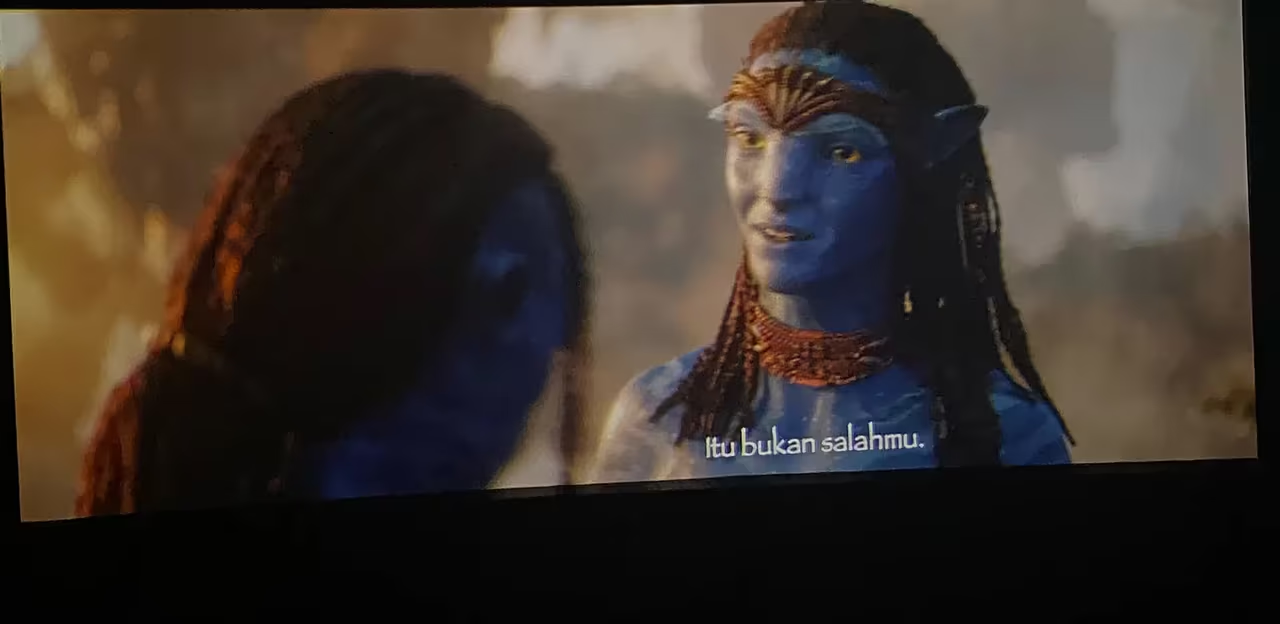
Love Made Them Human, Grief Made Them Dangerous
4 min read
·
Just now
--
Listen
Share
“Sometimes, the hardest truth isn’t about choosing sides – it’s realizing everyone is fighting their own war.”
Watching Avatar 3 didn’t feel like watching a movie. It felt like being forced to sit with grief, identity, faith, family wounds, and choices that don’t come with clean answers.
Every single scene hit.
Not in a dramatic way but in a quiet, sinking, chest-tightening way.
The kind that makes you cry not because it’s loud, but because it’s honest.
What struck me the most is this:
there is no pure evil here. No character feels written just to be hated. Everyone has a reason. Everyone has a wound. Everyone chooses the path they believe is right even when it hurts others.
And somehow… that’s what makes it painful and beautiful at the same time.
Neteyam: The Key That Opened Everything
Neteyam’s death isn’t just a loss – it’s the axis of the entire story.
His death changes everything:
mindsets, perspectives, strength, the way characters see the world and themselves.
He becomes the silent force that pushes everyone into growth they never asked for.
Grief here isn’t rushed.
It’s dissected…
Through Neytiri, we experience the five stages of grief fully:
denial, anger, bargaining, depression, acceptance… all of it lands.
Her anger toward the Sky People is raw and painfully human.
The way she projects that pain onto Spider?
I felt that. Deeply.
Because grief doesn’t come out clean it spills, it misfires, it hurts the wrong people.
Jake Sully: A Father Who Feels, But Struggles to Speak
Jake doesn’t grieve loudly – and that becomes his conflict.
From the outside, it looks like indifference.
Like he’s already moved on.
But deep down?
His mind is chaos…
He’s carrying:
- Grief as a father
- Responsibility as a leader
- Pressure as a protector
- And an identity crisis – a former Sky Person trying to belong as Na’vi
That argument between Jake and Neytiri shattered me.
When he says something along the lines of “Does that mean you also hate me? Our children?” – it’s not an attack.
It’s a man terrified of being rejected for who he was born as.
And yet, what I respect most about their relationship is this:
they never fight with ego.
No yelling. No dominance. No power play.
Just two people hurting differently, trying to meet in the middle.
That’s love.
Messy, quiet, respectful love.
“Grief doesn’t destroy families, silence does.”
Quaritch & Spider: Words, Presence, and the Need to Be Seen
Quaritch is not a hero – but he is not heartless.
His motivation toward Spider isn’t conquest.
It’s connection.
He wants to be a father.
To build a bond.
To be chosen.
And here’s the scary part:
his communication works.
He listens.
He validates.
He makes Spider feel seen.
That’s why Spider wavers – and that’s human.
But in the end, actions speak louder than words.
Jake doesn’t talk much.
But he stays.
He provides safety, presence, and consistency.
And that’s why Spider chooses him.
Not because of promises.
But because of proof.
Aonung & Tsireya: Growth Without Losing Softness
Aonung starts as prideful, rigid, and tradition-bound.
But his arc is about unlearning arrogance.
Watching him slowly open his perspective – especially through Lo’ak and Payakan – shows real maturity.
Not the kind that comes from authority, but from humility.
Tsireya, on the other hand, is emotional intelligence embodied.
She listens before judging.
Feels without overpowering others.
She bridges cultures, pain, and misunderstanding with gentleness – and that gentleness becomes strength.
Together, they represent a future generation that doesn’t inherit hatred blindly.
Lo’ak & Payakan: Breaking Tradition to Protect Life
This arc changed me.
Lo’ak lives in Neteyam’s shadow – the “less perfect” son.
All he wants is to be seen.
And Payakan mirrors him.
Both are labeled as “wrong” because they don’t fit tradition.
Both are punished for choosing action over passivity.
Payakan’s story – being exiled for starting a war after his mother was killed – asks a brutal question:
Is peace still peace if it costs innocent lives?
Sometimes breaking tradition isn’t rebellion —
it’s responsibility.
Lo’ak standing up for Payakan shows that progress often begins with one person willing to be misunderstood.
“Not all who break the rules want chaos – some just want survival.”
Tuk: Innocence as Strength
Tuk doesn’t fight with weapons.
She fights with love.
Her role reminds us of what’s at stake – not victory, not revenge, but family.
She anchors the story emotionally, showing that softness doesn’t mean weakness.
Kiri, Ronal, and Faith
Ronal guiding Kiri felt sacred.
Not loud.
Not dramatic.
Just right.
It reminded me that believing in your calling means trusting that you were chosen for a reason.
And that faith – whether in Eywa or God – works quietly, through people, moments, and intuition.
Eywa didn’t suddenly appear.
Eywa had been there all along.
Just like God.
“Sullys Stick Together” & “Sullys Never Quit”
This isn’t about perfection.
It’s about persistence.
The Sullys don’t always agree.
They don’t always understand each other.
But they stay.
They fight.
They fail.
They grieve.
And they keep choosing each other.
That’s what family really means.
“Maybe the point isn’t winning the war – but surviving it together.”
Avatar 3 isn’t just a film.
It’s about:
- Grief without shortcuts
- Fathers who love differently
- Children who just want to be seen
- Faith that works quietly
- And the courage to question tradition
11/10. No debate.
And honestly?
This film didn’t just tell a story.
It held up a mirror.
Huzzah 🩵🌊✨💙