Travel disruption expected as ice and snow grip UK
BBC | 02.01.2026 10:34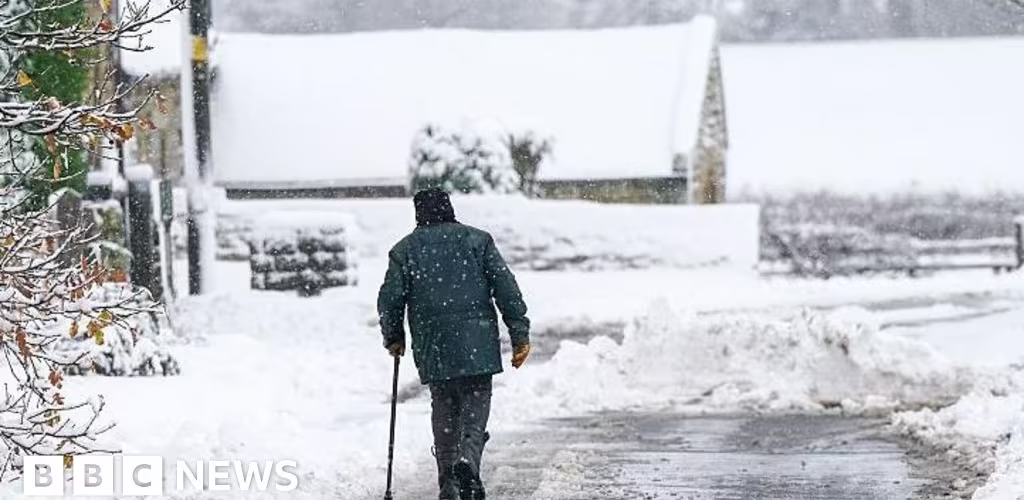
Amber severe weather warnings for snow and several yellow warnings for snow and ice have been issued by the Met Office for areas around the UK on Friday.
While the most severe conditions will be seen in Scotland, all of the UK's nations will be affected with travel disruption expected.
With lower temperatures, amber cold health alerts from the UK's Health Security Agency (UKHSA) cover the whole of England.
The amber warning for snow comes into effect for parts of Scotland at midday on Friday and could result in vehicles being stranded, rural communities being cut off, and rail and air cancellations.
Areas affected by the warning include Angus, Perth and Kinross, Grampian, Aberdeenshire, Moray and parts of the Highlands.
Snow showers will become more frequent during the day. Accumulations of 10-20cm are likely at low levels with 30-40cm possible on high ground with some drifting and blizzards.
The Met Office has urged people to plan routes carefully and to pack essentials in your car in the event of delays. Key items to bring include warm clothing, water, a blanket and ice-scraper.
The amber warnings in Scotland are currently due to be in effect until midday on Saturday.
Ch Supt Scott McCarren, Police Scotland's head of road policing, said: "Our advice is to plan ahead and consider if your journey is really necessary during the bad weather or if it can be delayed until conditions improve."
Yellow warnings for snow and ice came into force for large parts of England, Northern Ireland and Wales at midnight on Thursday, remaining until midday on Friday in England and Wales, and 10:00 GMT in Northern Ireland.
As much as 5cm of snow is possible in a few areas, including the higher ground of north Wales, north-west England and the north-west Midlands, the Met Office added.
Amber cold health alerts from the UKHSA for the whole of England will be in place until 12:00 on 6 January.
The alerts warn of a rise in deaths particularly among elderly and vulnerable people.
Other consequences of cold weather include temperatures inside hospitals and care homes dropping below the levels recommended for assessing health risks, and challenges for people keeping indoor temperatures at the recommended 18C, according to the UKHSA.
Stay up to date with the latest forecast on the BBC Weather website or app as details are likely to change.