“The conflict over me harms everyone”: Serbia coach Veljko Paunovic once became a political issue in the Bundesliga
Goal | 13.11.2026 08:19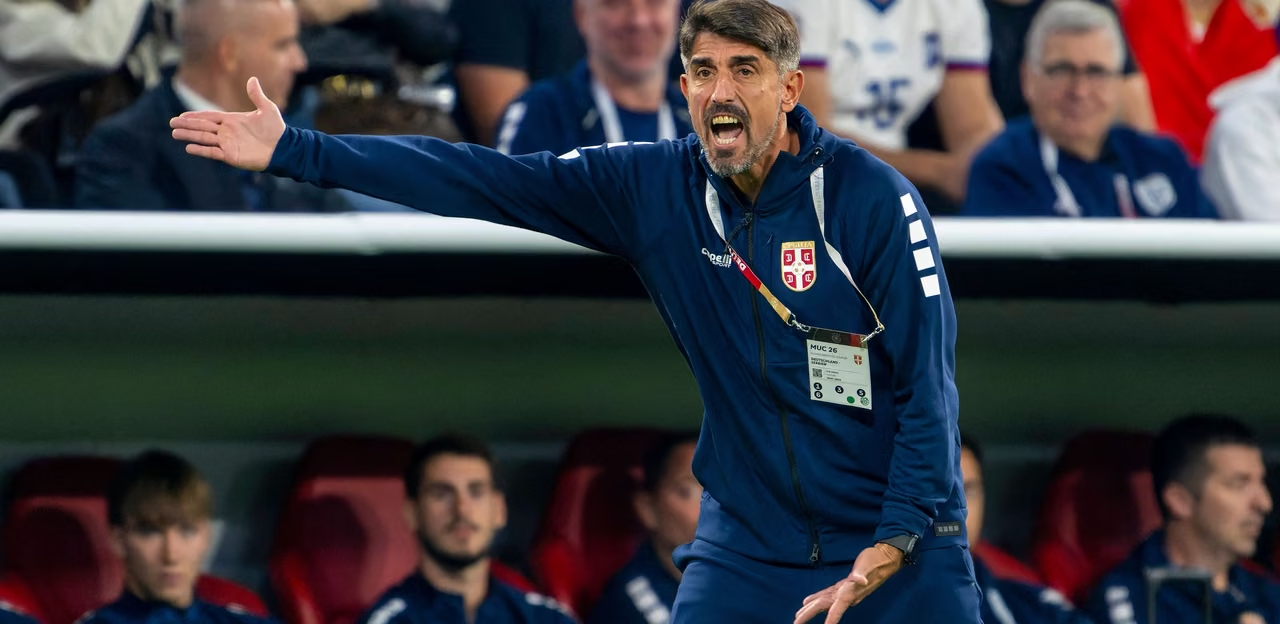
A Bundesliga legend wanted to sign Veljko Paunovic so badly that he risked a rift with his bosses. It was not worth it.
Ask Serbia national team coach Veljko Paunovic about January 2005 and he would probably make a swift exit. Mention Hannover 96 and the memories are unlikely to improve.
Towards the end of the winter transfer window in 2004/05, Paunovic became a point of contention at the Bundesliga club from Lower Saxony. Hannover were enjoying a good campaign under Ewald Lienen, having returned to the top flight for a third season after a lengthy absence. At the end of January 2005, they sat sixth after 19 matches and were on course for European qualification.
No urgent need to strengthen, then. Ilja Kaenzig, Hannover's manager at the time and now managing director of VfL Bochum, saw little point in winter transfers anyway. He believed they added value only in the rarest of cases, so his rule at 96 was simple: no winter signings. Martin Kind, then chairman of the supervisory board, agreed, though Lienen eventually persuaded him otherwise.
Ewald Lienen remembered Veljko Paunovic at Hannover
Lienen saw it differently. The legendary coach, also known for spells at Hansa Rostock, 1. FC Cologne and FC St. Pauli, wanted a new striker midway through the season who could guarantee goals. Hannover already had Thomas Christiansen, Daniel Stendel, Roman Wallner, Leandro and Jiri Kaufmann, but none scored reliably. By the end of the season, Stendel and playmaker Jiri Stajner would be the club's leading league scorers with just six goals each.
One name stuck in Lienen's mind: Paunovic. He knew the then 27-year-old striker from the 2002/03 season, when he had coached him at Spanish second-division club CD Tenerife and seen his goalscoring qualities up close. Kaenzig pointed to the "intact team structure" and did not want to jeopardise it with Hannover so well placed in the table. Lienen pushed the transfer through anyway. Shortly before the window closed, 96 announced: Paunovic is coming.
"I know how contentious this was. But I'll give everything to convince the other side that Ewald Lienen and I were right," said the Serb, who arrived from Atletico Madrid. Paunovic had not been a regular for the Colchoneros, who were going through a difficult period and were far from the consistent LaLiga force they are today. He had not scored in ten appearances in the first half of the season. Kaenzig's scepticism was understandable even without his general aversion to winter signings.
Paunovic would have become Hannover's highest earner
"There is no financial risk for the club. I'll prove that by the summer," Paunovic said on his arrival. For his first half-year at 96, until the summer of 2005, he was reportedly set to earn a comparatively modest €15,000 a month. Atletico had also terminated his contract because of the Rojiblancos' financial difficulties at the time, so 96 paid no transfer fee. Paunovic had, however, signed an 18-month contract until the summer of 2006, with an option for another year. From the start of the 2005/06 season, he was set to become Hannover's highest earner on around €1 million a year.
His compatriot Mladen Krstajic, then a centre-back at Schalke 04, raised expectations: "He's a superb player. Excellent on the ball, really strong in the air, quick enough." S04 were still pushing Bayern Munich hard at the top of the Bundesliga and would finish as runners-up. According to Krstajic, they had wanted Paunovic too: "It's a shame. He would have strengthened us as well."
Could Paunovic have delivered at Schalke? At Hannover, amid the tensions over his arrival, he struggled to settle. "We've only been together for four days, so not everything can click yet," he said after an uneven Bundesliga debut in a 3-1 home defeat by Borussia Dortmund in early February 2005. Lienen had put his chosen player straight into the starting line-up as the lone striker, but Paunovic failed to impress.
"I need more time so that the other players understand what I do, and I understand what they do," Paunovic said, asking for patience. Two more disappointing starts followed: a 0-0 draw at Freiburg and a 4-1 home defeat by Werder Bremen. As spring 2005 approached, he was still having no impact on Hannover's play.
Discontent over Paunovic gradually grew at Hannover
"It was clear from the start that he isn't another Andriy Shevchenko," Lienen said in defence of his player. Shevchenko was one of the world's best strikers at the time and had won the Ballon d'Or in 2004. "We have to give him time. Then he'll still be a great help to us."
In mid-March 2005, Paunovic finally helped Hannover, setting up the winner in a 2-1 home victory over Borussia Mönchengladbach. It proved to be the last of his mere seven appearances in a 96 shirt. Shortly afterwards, an interview with kicker in which he criticised the club's leadership brought his brief spell in Germany to an end.
"I knew they didn't know me. I didn't know they were against me. Or that they would use me in a conflict with the coach," Paunovic said, aiming his criticism at Kaenzig and Kind. "For a club to function, people must not work against each other. Anyone who doesn't understand that harms the club."
Lienen escaped his criticism. "The conflict over me harms everyone. The team too. Otherwise, we could have played better, perhaps I could have as well. But I didn't cause the conflict." Paunovic had reportedly already discussed a quick departure within the squad. His compatriot and midfield orchestrator Nebojsa Krupnikovic was also set to leave in the summer of 2005, giving Paunovic another reason not to stay in Hannover much longer.
Veljko Paunovic at Hannover 96: Just seven appearances, but plenty of bridges burned
Just around two months after Lienen brought him in against the wishes of the club's bosses, Paunovic's spell at 96 was over. Hannover had at least arranged an agreement to terminate his contract in the summer of 2005 when he signed, sparing them further costs from the transfer flop. Had the current Serbia coach stayed, he would have become their highest earner.
Instead, Paunovic returned to the Spanish capital in the summer of 2005 and signed for Madrid suburban club Getafe. After a brief return to his hometown club Partizan Belgrade, he initially retired at the end of 2008, aged just 31. A six-month spell with Philadelphia Union in MLS followed in 2011 before he ended his playing career for good in early 2012.
Coaching came next. Paunovic first took charge of Serbia's under-18 national team, then assumed responsibility for the under-20s in 2014. In the summer of 2015, he sensationally led a side featuring future stars Sergej Milinkovic-Savic, Andrija Zivkovic, Nemanja Maksimovic and Milos Veljkovic to the Under-20 World Cup title. Serbia beat Brazil 2-1 after extra time in the final.
Schweinsteiger compared Paunovic with Guardiola
A few months later, Paunovic took charge of MLS club Chicago Fire, where he coached Bastian Schweinsteiger, among others. He made a concerted effort to recruit the 2014 World Cup winner, visiting him in Manchester in 2016 during Schweinsteiger's time at United. "I was really impressed," the Bayern legend told the New York Times of the Serb, comparing him with one of the greatest coaches of all time, under whom he had once played at Bayern: "We had a very good conversation. He reminds me of Pep Guardiola in many ways. In how he wants his team to play and in his ideas about the game," Schweinsteiger said of Paunovic.
Paunovic stayed in Chicago until the end of 2019, then coached in England (Reading FC), Mexico (Deportivo Guadalajara and Tigres UANL) and Spain (Real Oviedo). At the end of October 2025, he took over the Serbia national team from former playmaking icon Dragan Stojkovic, with failure to qualify for the 2026 World Cup almost impossible to avoid.
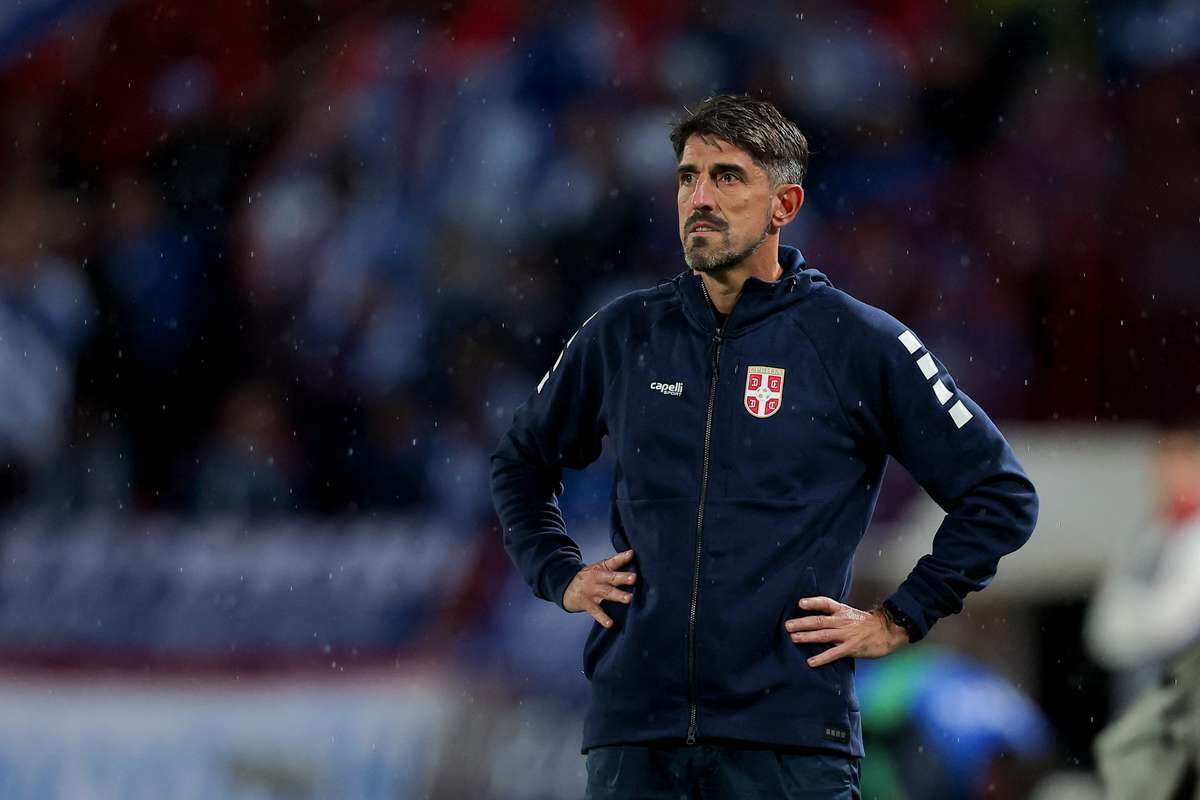
An expected 2-0 defeat in England on Paunovic's debut ended the World Cup dream. Albania, in second place and a play-off spot, were now definitively out of reach. Paunovic's task was to build a young, competitive side capable of qualifying for major tournaments again.
So far, the results have not helped his cause. In ten matches, Serbia have recorded only two narrow 2-1 wins, against Latvia and Saudi Arabia. They lost the other eight, including each of their four Nations League appearances to date.
After the 2-0 defeat against Germany in Munich in early October, Paunovic stressed that the result had been expected, particularly against opponents such as Germany and the Netherlands. "We are Serbia, a small country, and it takes time to establish a system," he fumed when a reporter questioned the disappointing results. "Everyone close to us knows that we're working to turn the bad mood around," he said, emphasising that he had taken over the team in a difficult situation. "We've brought our leaders back, added talented players and are building a new system. But that takes time."
Can Paunovic get Serbian football back on track?
While Serbia had little chance in Germany, they showed genuine promise in narrow 2-1 defeats at home and away against the Netherlands and against a strong Greece side. Paunovic has brought back former Ajax star Dusan Tadic, now 37 and at NEC Nijmegen, after an absence of more than two years. His former Under-20 World Cup hero Milinkovic-Savic is also playing for Serbia again under Paunovic, who is relying on other experienced players such as Zivkovic, Maksimovic and Aleksandar Mitrovic.
Centre-back Strahinja Pavlovic (AC Milan) and goalscorer Dusan Vlahovic (Besiktas), both big names in their mid-20s, are expected to play key roles in Serbian football's future. Paunovic also wants to develop top talents Aleksander Stankovic (21, Inter Milan), Vasilije Kostov (18, Red Star Belgrade) and Mihajlo Cvetkovic (19, RSC Anderlecht) gradually.
A statement performance against Germany on Friday would help Paunovic's standing in Serbia. It would also give him something positive to associate with Germany, as long as nobody mentions Hannover.